
抗菌药物管理与感染控制干预措施对黎巴嫩一家三级医疗中心重症监护病房耐药率的影响
The Impact of Antimicrobial Stewardship and Infection Control Interventions on Resistance Rates in the ICU of a Tertiary Care Center in Lebanon.
作者信息
Rizk Nesrine A, Zahreddine Nada, Haddad Nisrine, Ahmadieh Rihab, Hannun Audra, Bou Harb Souad, Haddad Sara F, Zeenny Rony M, Kanj Souha S
机构信息
Division of Infectious Diseases, Department of Internal Medicine, American University of Beirut Medical Center, Beirut 1107 2020, Lebanon.
Infection Control and Prevention Program, American University of Beirut Medical Center, Beirut 1107 2020, Lebanon.
出版信息
Antibiotics (Basel). 2022 Jul 7;11(7):911. doi: 10.3390/antibiotics11070911.
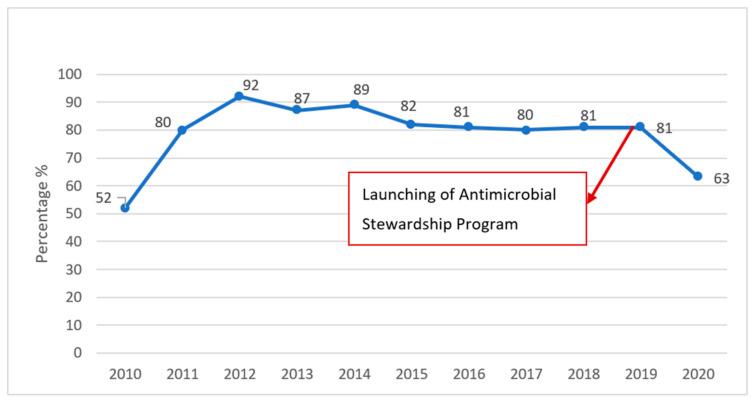
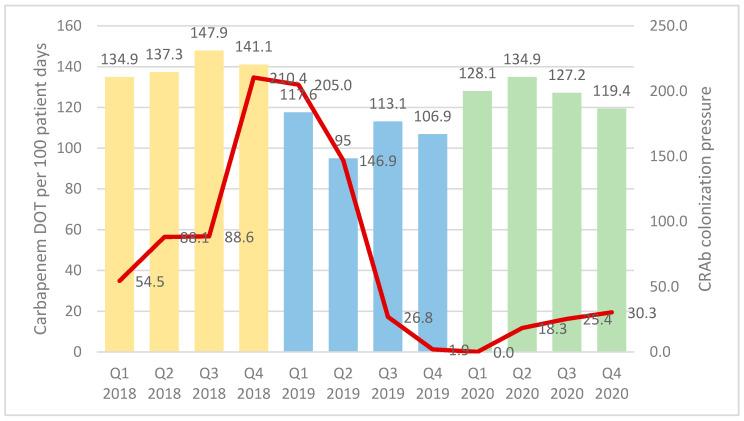
Antimicrobial resistance is a serious threat to global health, causing increased mortality and morbidity especially among critically ill patients. This toll is expected to rise following the COVID-19 pandemic. Carbapenem-resistant (CRAb) is among the Gram-negative pathogens leading antimicrobial resistance globally; it is listed as a critical priority pathogen by the WHO and is implicated in hospital-acquired infections and outbreaks, particularly in critically ill patients. Recent reports from Lebanon describe increasing rates of infection with CRAb, hence the need to develop concerted interventions to control its spread. We set to describe the impact of combining antimicrobial stewardship and infection control measures on resistance rates and colonization pressure of CRAb in the intensive care units of a tertiary care center in Lebanon before the COVID-19 pandemic. The antimicrobial stewardship program introduced a carbapenem-sparing initiative in April 2019. During the same period, infection control interventions involved focused screening, monitoring, and tracking of CRAb, as well as compliance with specific measures. From January 2018 to January 2020, we report a statistically significant decrease in carbapenem consumption and a decrease in resistance rates of isolated . The colonization pressure of CRAb also decreased significantly, reaching record low levels at the end of the intervention period. The results indicate that a multidisciplinary approach and combined interventions between the stewardship and infection control teams can lead to a sustained reduction in resistance rates and CRAb spread in ICUs.
抗菌药物耐药性是对全球健康的严重威胁,尤其在重症患者中导致死亡率和发病率上升。预计在新冠疫情之后,这一损失还会增加。耐碳青霉烯类肠杆菌(CRAb)是全球导致抗菌药物耐药性的革兰氏阴性病原体之一;它被世界卫生组织列为关键优先病原体,与医院获得性感染及疫情爆发有关,尤其是在重症患者中。黎巴嫩最近的报告显示CRAb感染率不断上升,因此需要制定协同干预措施来控制其传播。我们旨在描述在新冠疫情之前,黎巴嫩一家三级护理中心的重症监护病房中,抗菌药物管理和感染控制措施相结合对CRAb耐药率和定植压力的影响。抗菌药物管理计划于2019年4月推出了一项碳青霉烯类药物节约倡议。同期,感染控制干预措施包括对CRAb进行重点筛查、监测和追踪,以及遵守特定措施。从2018年1月到2020年1月,我们报告碳青霉烯类药物的消耗量在统计学上显著下降,分离菌的耐药率也有所下降。CRAb的定植压力也显著降低,在干预期结束时达到创纪录的低水平。结果表明,多学科方法以及管理团队和感染控制团队之间的联合干预可以持续降低重症监护病房中的耐药率和CRAb传播。



 Zotero 插件