
用于胶质母细胞瘤治疗的金属基纳米结构治疗策略——最新进展
Metal-Based Nanostructured Therapeutic Strategies for Glioblastoma Treatment-An Update.
作者信息
Gawel Agata M, Singh Ravi, Debinski Waldemar
机构信息
Histology and Embryology Students' Science Association, Department of Histology and Embryology, Faculty of Medicine, Medical University of Warsaw, Chalubinskiego 5, 02-004 Warsaw, Poland.
Department of Cancer Biology, Wake Forest School of Medicine, Winston-Salem, NC 27157, USA.
出版信息
Biomedicines. 2022 Jul 5;10(7):1598. doi: 10.3390/biomedicines10071598.
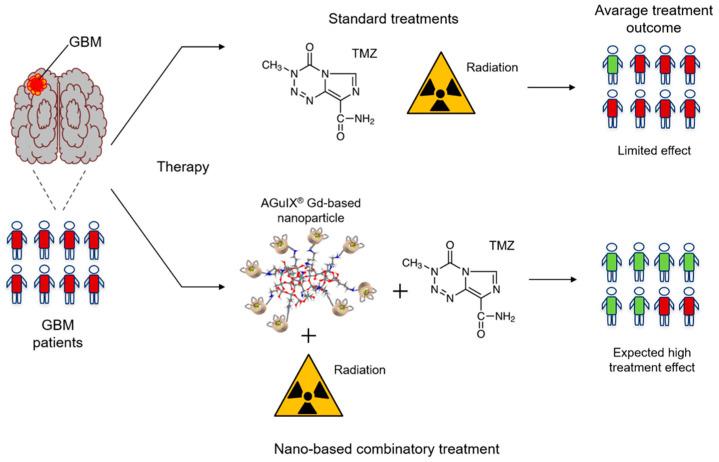
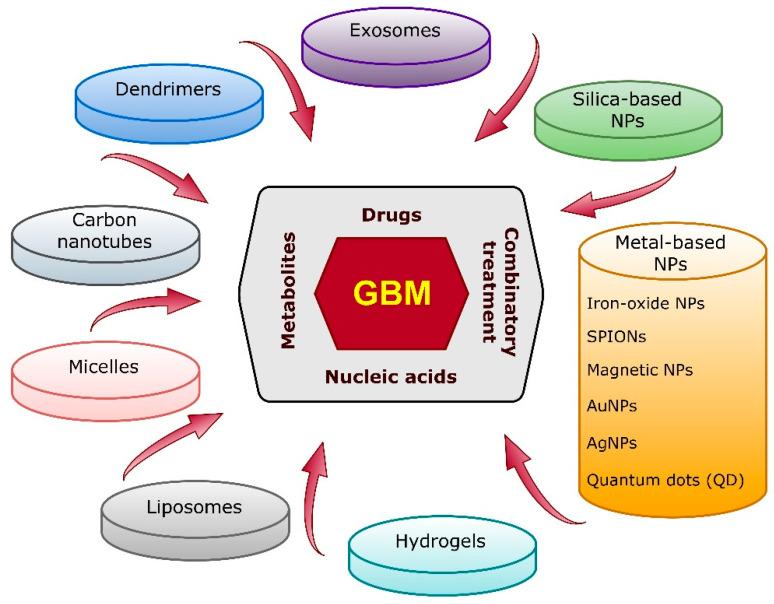
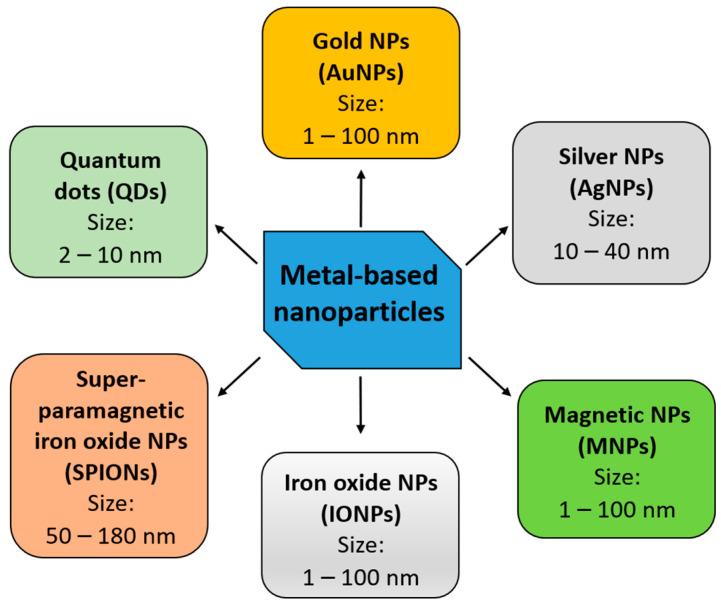
Glioblastoma (GBM) is the most commonly diagnosed and most lethal primary malignant brain tumor in adults. Standard treatments are ineffective, and despite promising results obtained in early phases of experimental clinical trials, the prognosis of GBM remains unfavorable. Therefore, there is need for exploration and development of innovative methods that aim to establish new therapies or increase the effectiveness of existing therapies. One of the most exciting new strategies enabling combinatory treatment is the usage of nanocarriers loaded with chemotherapeutics and/or other anticancer compounds. Nanocarriers exhibit unique properties in antitumor therapy, as they allow highly efficient drug transport into cells and sustained intracellular accumulation of the delivered cargo. They can be infused into and are retained by GBM tumors, and potentially can bypass the blood-brain barrier. One of the most promising and extensively studied groups of nanostructured therapeutics are metal-based nanoparticles. These theranostic nanocarriers demonstrate relatively low toxicity, thus they might be applied for both diagnosis and therapy. In this article, we provide an update on metal-based nanostructured constructs in the treatment of GBM. We focus on the interaction of metal nanoparticles with various forms of electromagnetic radiation for use in photothermal, photodynamic, magnetic hyperthermia and ionizing radiation sensitization applications.
胶质母细胞瘤(GBM)是成人中最常被诊断出且最致命的原发性恶性脑肿瘤。标准治疗方法无效,尽管在实验性临床试验的早期阶段取得了有前景的结果,但GBM的预后仍然不佳。因此,需要探索和开发旨在建立新疗法或提高现有疗法有效性的创新方法。实现联合治疗的最令人兴奋的新策略之一是使用负载化疗药物和/或其他抗癌化合物的纳米载体。纳米载体在抗肿瘤治疗中表现出独特的特性,因为它们能够高效地将药物输送到细胞中,并使所递送的货物在细胞内持续积累。它们可以注入GBM肿瘤并在其中保留,并且有可能绕过血脑屏障。最有前景且研究广泛的纳米结构治疗剂之一是金属基纳米颗粒。这些治疗诊断纳米载体显示出相对较低的毒性,因此它们可用于诊断和治疗。在本文中,我们提供了关于金属基纳米结构构建体在GBM治疗中的最新进展。我们重点关注金属纳米颗粒与各种形式的电磁辐射的相互作用,以用于光热、光动力、磁热疗和电离辐射增敏应用。

 Zotero 插件