
深入黑暗:单细胞病毒基因组学探索深海世界。
Into the Dark: Exploring the Deep Ocean with Single-Virus Genomics.
机构信息
Department of Physiology, Genetics and Microbiology, University of Alicante, 03690 Alicante, Spain.
Centre for Genomic Regulation (CRG), The Barcelona Institute for Science and Technology (BIST), PRBB Building, 08003 Barcelona, Spain.
出版信息
Viruses. 2022 Jul 21;14(7):1589. doi: 10.3390/v14071589.
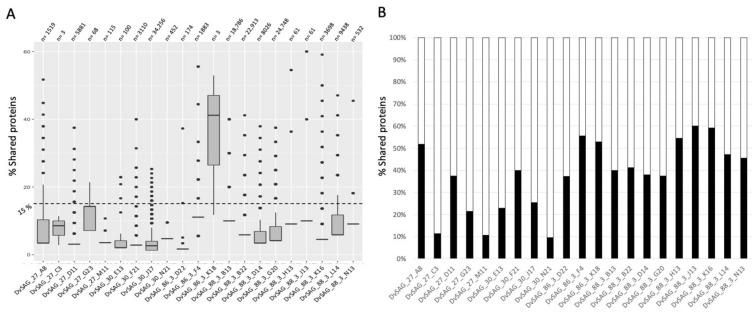
Single-virus genomics (SVGs) has been successfully applied to ocean surface samples allowing the discovery of widespread dominant viruses overlooked for years by metagenomics, such as the uncultured virus vSAG 37-F6 infecting the ubiquitous spp. In SVGs, one uncultured virus at a time is sorted from the environmental sample, whole-genome amplified, and sequenced. Here, we have applied SVGs to deep-ocean samples (200-4000 m depth) from global Malaspina and MEDIMAX expeditions, demonstrating the feasibility of this method in deep-ocean samples. A total of 1328 virus-like particles were sorted from the North Atlantic Ocean, the deep Mediterranean Sea, and the Pacific Ocean oxygen minimum zone (OMZ). For this proof of concept, sixty single viruses were selected at random for sequencing. Genome annotation identified 27 of these genomes as bona fide viruses, and detected three auxiliary metabolic genes involved in nucleotide biosynthesis and sugar metabolism. Massive protein profile analysis confirmed that these viruses represented novel viral groups not present in databases. Although they were not previously assembled by viromics, global fragment recruitment analysis showed a conserved profile of relative abundance of these viruses in all analyzed samples spanning different oceans. Altogether, these results reveal the feasibility in using SVGs in this vast environment to unveil the genomes of relevant viruses.
单病毒基因组学(SVGs)已成功应用于海洋表面样本,发现了多年来被宏基因组学忽略的广泛存在的优势病毒,例如感染普遍存在的 spp. 的未培养病毒 vSAG 37-F6。在 SVGs 中,一次从环境样本中分离出一种未培养的病毒,进行全基因组扩增和测序。在这里,我们将 SVGs 应用于来自全球 Malaspina 和 MEDIMAX 考察队的深海样本(200-4000 米深度),证明了这种方法在深海样本中的可行性。从北大西洋、深地中海和太平洋缺氧区(OMZ)共分选了 1328 个病毒样颗粒。为此概念验证,随机选择了 60 个单病毒进行测序。基因组注释确定其中 27 个基因组为真正的病毒,并检测到参与核苷酸生物合成和糖代谢的三个辅助代谢基因。大规模蛋白谱分析证实,这些病毒代表了数据库中不存在的新型病毒群。尽管它们以前没有通过病毒组学组装,但全球片段招募分析显示,在所有分析的样本中,这些病毒的相对丰度具有保守的特征,这些样本跨越不同的海洋。总之,这些结果表明,在这个广阔的环境中使用 SVGs 来揭示相关病毒的基因组是可行的。



 Zotero 插件