
正选择和热响应转录组揭示了十字花科沙漠模式植物——海乳草的适应性特征。
Positive selection and heat-response transcriptomes reveal adaptive features of the Brassicaceae desert model, Anastatica hierochuntica.
机构信息
Albert Katz International School for Desert Studies, Ben-Gurion University of the Negev, Sde Boqer Campus, Midreshet Ben-Gurion, 8499000, Israel.
Department of Biological Sciences, Louisiana State University, Baton Rouge, LA, 70803, USA.
出版信息
New Phytol. 2022 Nov;236(3):1006-1026. doi: 10.1111/nph.18411. Epub 2022 Aug 26.
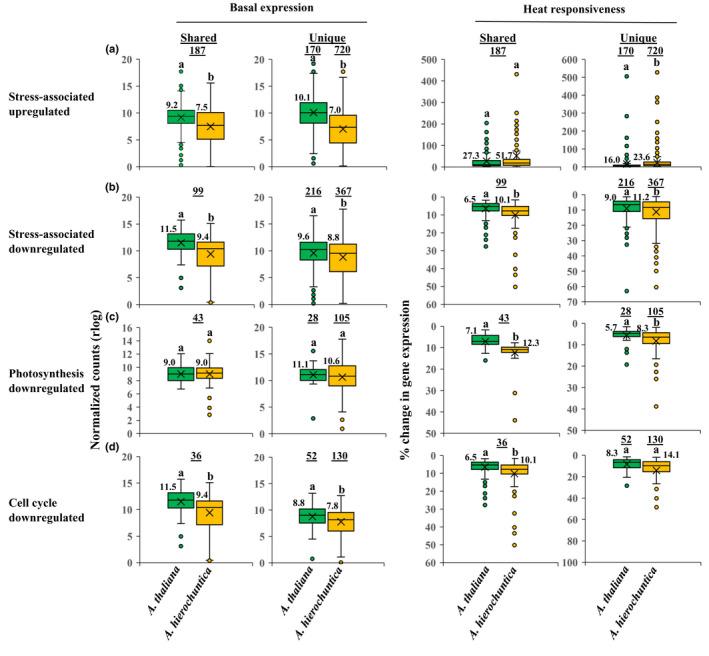
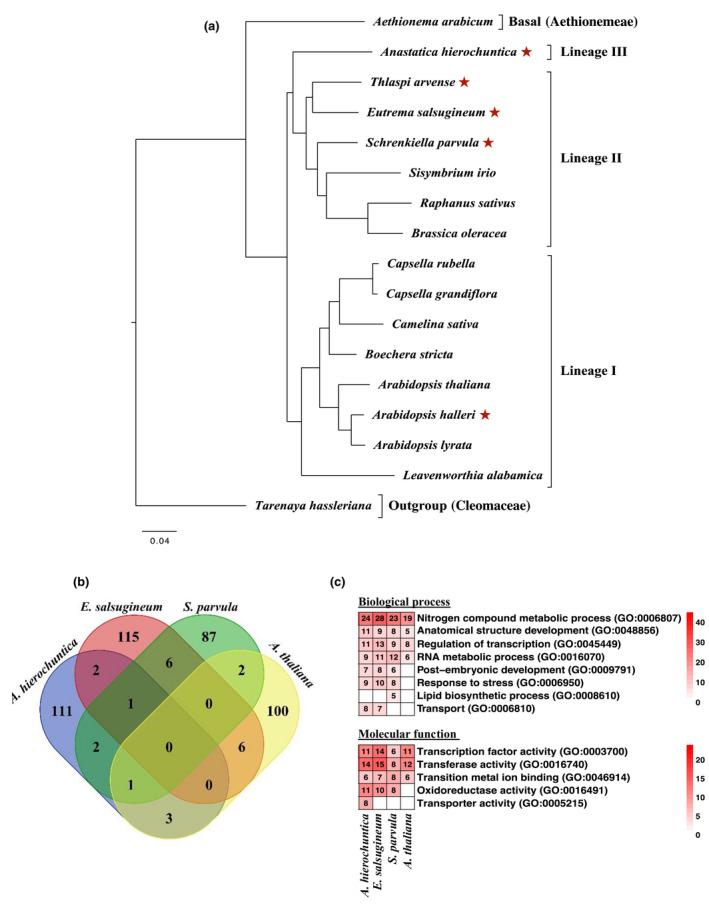
Plant adaptation to a desert environment and its endemic heat stress is poorly understood at the molecular level. The naturally heat-tolerant Brassicaceae species Anastatica hierochuntica is an ideal extremophyte model to identify genetic adaptations that have evolved to allow plants to tolerate heat stress and thrive in deserts. We generated an A. hierochuntica reference transcriptome and identified extremophyte adaptations by comparing Arabidopsis thaliana and A. hierochuntica transcriptome responses to heat, and detecting positively selected genes in A. hierochuntica. The two species exhibit similar transcriptome adjustment in response to heat and the A. hierochuntica transcriptome does not exist in a constitutive heat 'stress-ready' state. Furthermore, the A. hierochuntica global transcriptome as well as heat-responsive orthologs, display a lower basal and higher heat-induced expression than in A. thaliana. Genes positively selected in multiple extremophytes are associated with stomatal opening, nutrient acquisition, and UV-B induced DNA repair while those unique to A. hierochuntica are consistent with its photoperiod-insensitive, early-flowering phenotype. We suggest that evolution of a flexible transcriptome confers the ability to quickly react to extreme diurnal temperature fluctuations characteristic of a desert environment while positive selection of genes involved in stress tolerance and early flowering could facilitate an opportunistic desert lifestyle.
植物对沙漠环境及其特有热应激的适应在分子水平上理解甚少。天然耐热的十字花科物种 Anastatica hierochuntica 是一种理想的极端生物模型,可以识别出已进化的遗传适应性,使植物能够耐受热应激并在沙漠中茁壮成长。我们生成了一个 A. hierochuntica 参考转录组,并通过比较拟南芥和 A. hierochuntica 转录组对热的反应,以及检测 A. hierochuntica 中被正选择的基因,来鉴定极端生物适应性。这两个物种在响应热时表现出相似的转录组调整,并且 A. hierochuntica 转录组不存在组成型热“应激就绪”状态。此外,A. hierochuntica 的全局转录组以及热响应直系同源物的基础表达水平较低,而热诱导表达水平较高。在多种极端生物中被正选择的基因与气孔开放、养分获取和 UV-B 诱导的 DNA 修复有关,而那些特有的 A. hierochuntica 基因则与其光周期不敏感、早花表型一致。我们认为,灵活的转录组进化赋予了植物快速应对沙漠环境中典型的极端日温度波动的能力,而涉及胁迫耐受和早花的基因的正选择可能有助于沙漠中的机会主义生活方式。



 Zotero 插件