
MHC 非依赖的 αβT 细胞:胸腺选择和 MHC 限制方面的经验教训。
MHC-independent αβT cells: Lessons learned about thymic selection and MHC-restriction.
机构信息
Lymphocyte Development Section, Experimental Immunology Branch, National Cancer Institute, National Institutes of Health, Bethesda, MD, United States.
Department of Biological Hematology, Centre Hospitalier Universitaire (CHU) Montpellier, Montpellier, France.
出版信息
Front Immunol. 2022 Jul 14;13:953160. doi: 10.3389/fimmu.2022.953160. eCollection 2022.
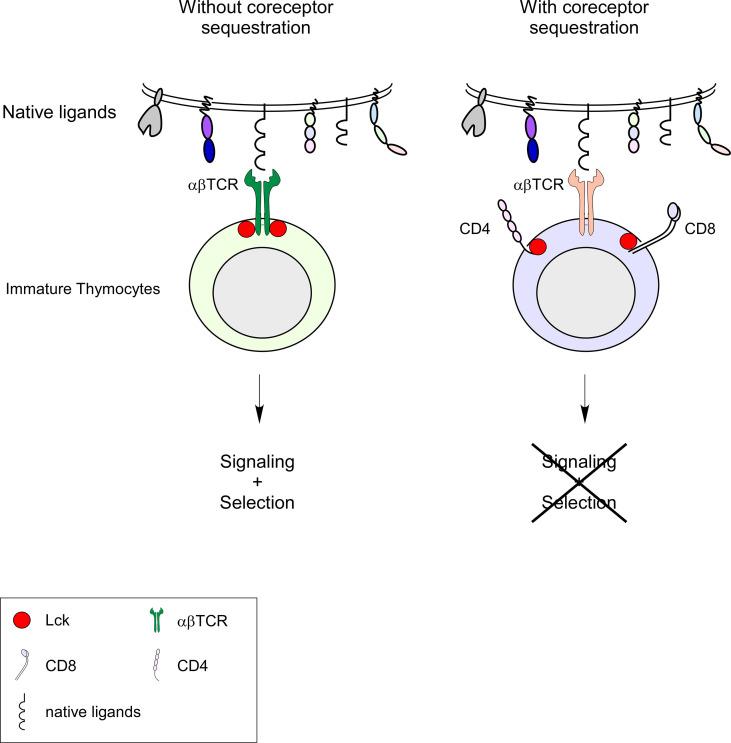
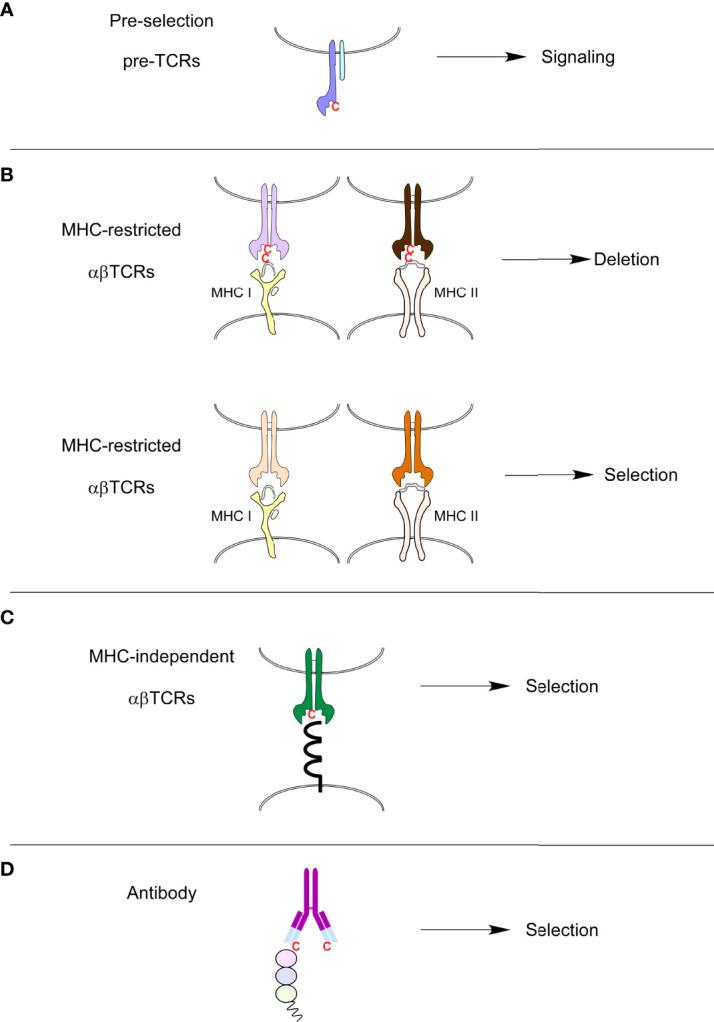
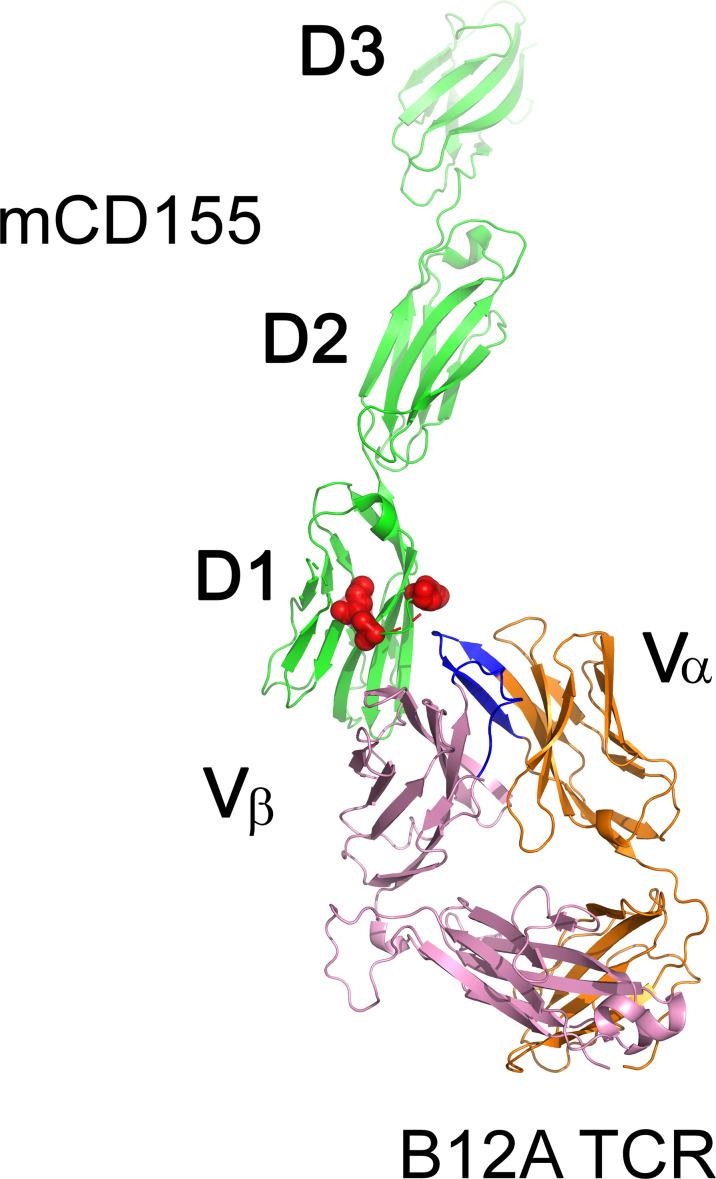
Understanding the generation of an MHC-restricted T cell repertoire is the cornerstone of modern T cell immunology. The unique ability of αβT cells to only recognize peptide antigens presented by MHC molecules but not conformational antigens is referred to as MHC restriction. How MHC restriction is imposed on a very large T cell receptor (TCR) repertoire is still heavily debated. We recently proposed the selection model, which posits that newly re-arranged TCRs can structurally recognize a wide variety of antigens, ranging from peptides presented by MHC molecules to native proteins like cell surface markers. However, on a molecular level, the sequestration of the essential tyrosine kinase Lck by the coreceptors CD4 and CD8 allows only MHC-restricted TCRs to signal. In the absence of Lck sequestration, MHC-independent TCRs can signal and instruct the generation of mature αβT cells that can recognize native protein ligands. The selection model thus explains how only MHC-restricted TCRs can signal and survive thymic selection. In this review, we will discuss the genetic evidence that led to our selection model. We will summarize the selection mechanism and structural properties of MHC-independent TCRs and further discuss the various non-MHC ligands we have identified.
理解 MHC 限制性 T 细胞 repertoire 的产生是现代 T 细胞免疫学的基石。αβT 细胞只能识别 MHC 分子呈递的肽抗原而不能识别构象抗原的独特能力被称为 MHC 限制。MHC 限制如何施加于非常庞大的 T 细胞受体(TCR)repertoire 仍然存在很大争议。我们最近提出了选择模型,该模型假设新重排的 TCR 可以在结构上识别各种抗原,从 MHC 分子呈递的肽到细胞表面标志物等天然蛋白质。然而,在分子水平上,核心受体 CD4 和 CD8 将必需的酪氨酸激酶 Lck 隔离,使得只有 MHC 限制性 TCR 能够发出信号。在没有 Lck 隔离的情况下,MHC 非依赖性 TCR 可以发出信号,并指导生成能够识别天然蛋白配体的成熟的 αβT 细胞。因此,选择模型解释了为什么只有 MHC 限制性 TCR 能够发出信号并在胸腺选择中存活。在这篇综述中,我们将讨论导致我们选择模型的遗传证据。我们将总结 MHC 非依赖性 TCR 的选择机制和结构特性,并进一步讨论我们已经鉴定的各种非 MHC 配体。

 Zotero 插件