
知识和实践的基本新生儿护理和相关因素的妇女在埃塞俄比亚:系统评价和荟萃分析。
Knowledge and practice of essential newborn care and associated factors among women in Ethiopia: systematic review and meta-analysis.
机构信息
Department of Midwifery, College of Health Sciences, Debre Tabor University, Debre Tabor, Ethiopia.
School of Public Health, College of Health Sciences, Woldia University, Woldia, Ethiopia.
出版信息
Reprod Health. 2022 Aug 4;19(1):172. doi: 10.1186/s12978-022-01480-0.
BACKGROUND
In developing countries, including Ethiopia the risk of neonatal death can be easily prevented and avoided by implementing essential newborn care with simple, low cost, and a short period time immediately after delivery. However, the problem is still persisting due to lack of adequate maternal and newborn care practice. Hence, this review aimed to estimate the pooled prevalence of women's knowledge and practice of essential newborn care and its associated factors in Ethiopia using systematic review and meta-analysis.
METHOD
An intensive literature search was performed from PubMed, Google Scholar, EMBASE, HINARI, Scopus, and Web of Sciences from April 1-30, 2021. Data were extracted by using a pre-tested and standardized data extraction format. The data were analyzed by using STATA 14 statistical software. I tests assessed heterogeneity across the included studies. A random-effect model was used to estimate the pooled prevalence of knowledge and practice of essential newborn care.
RESULTS
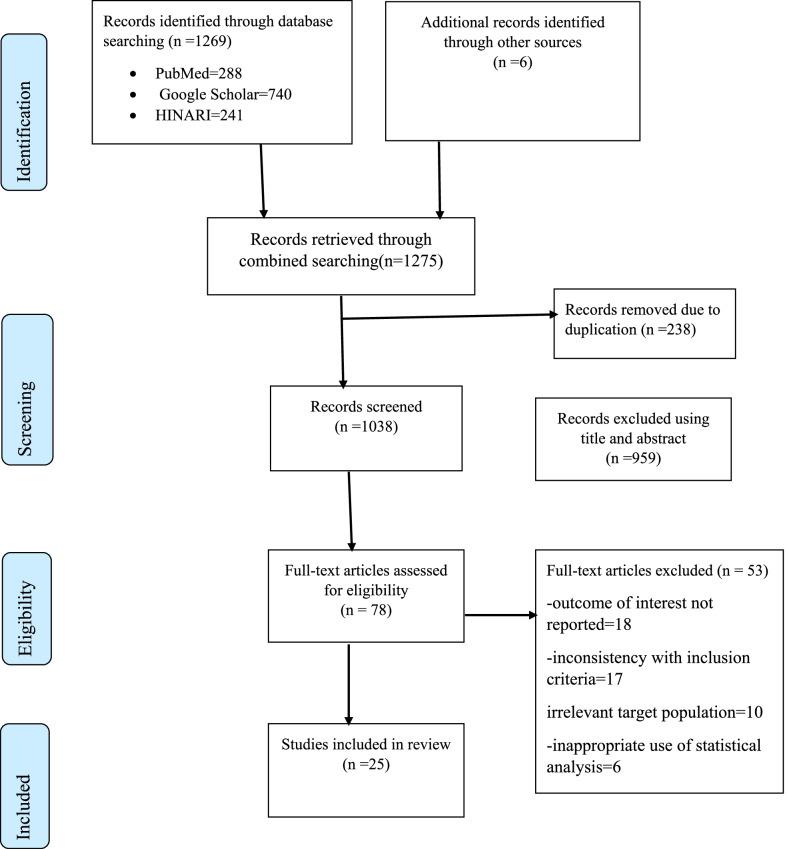
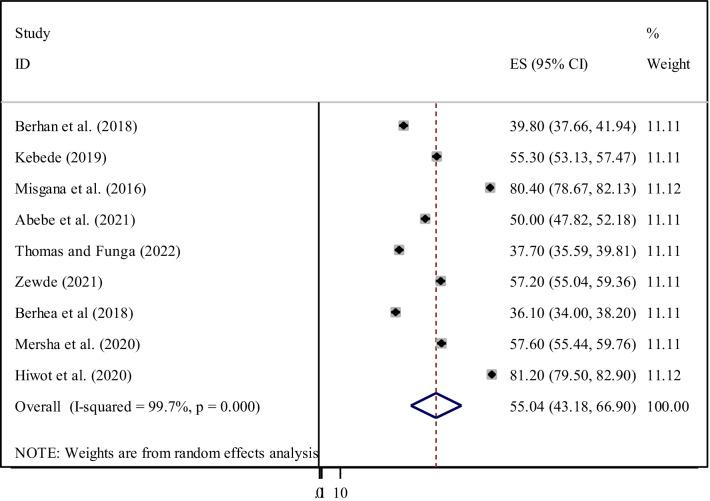
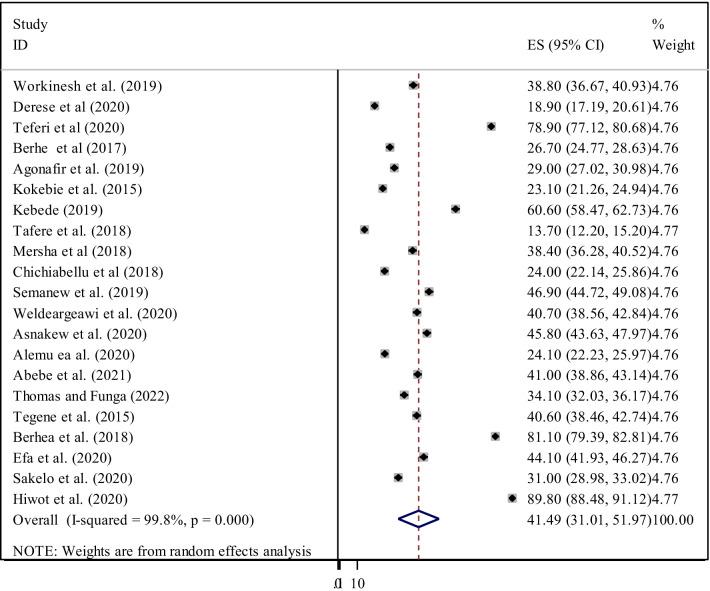
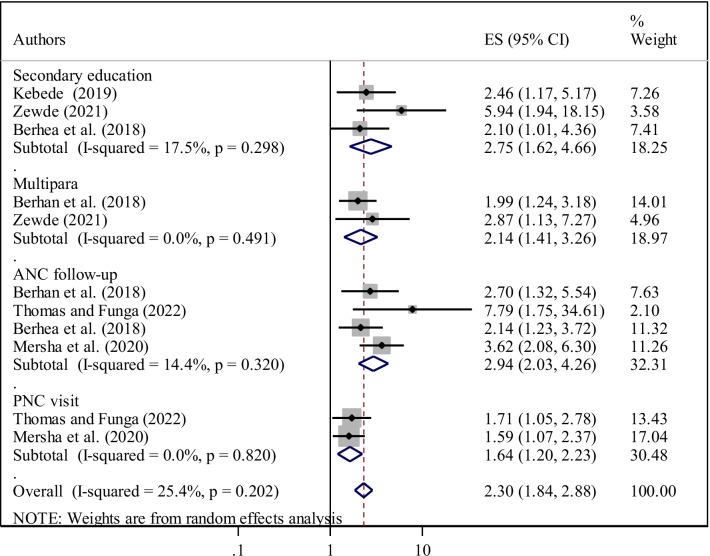
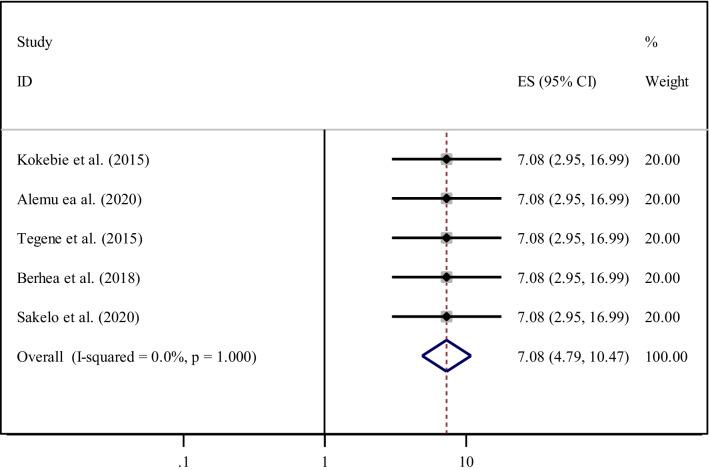
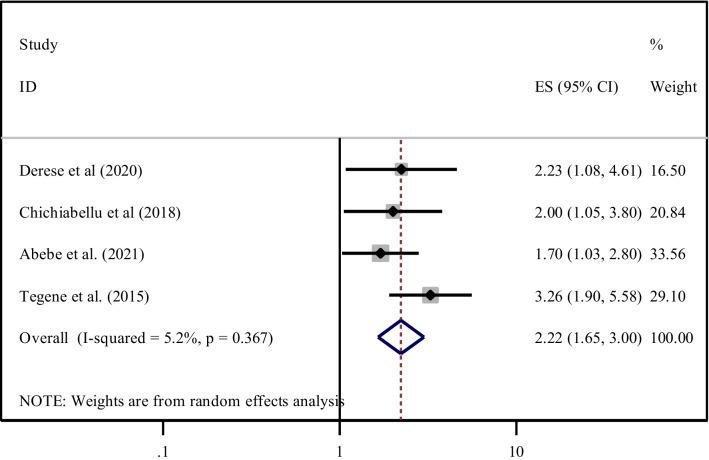
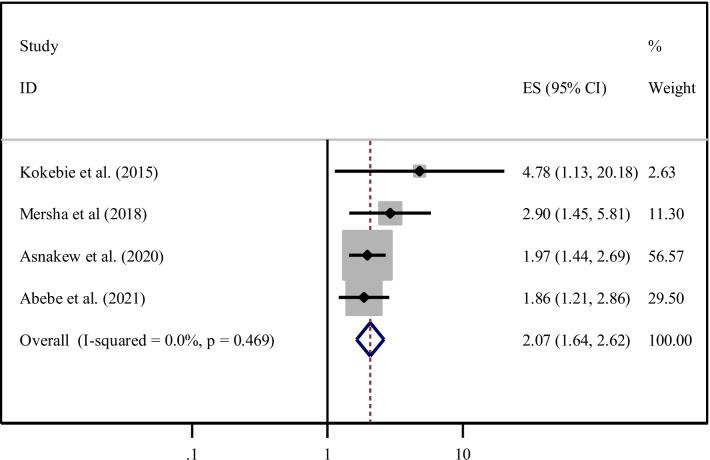
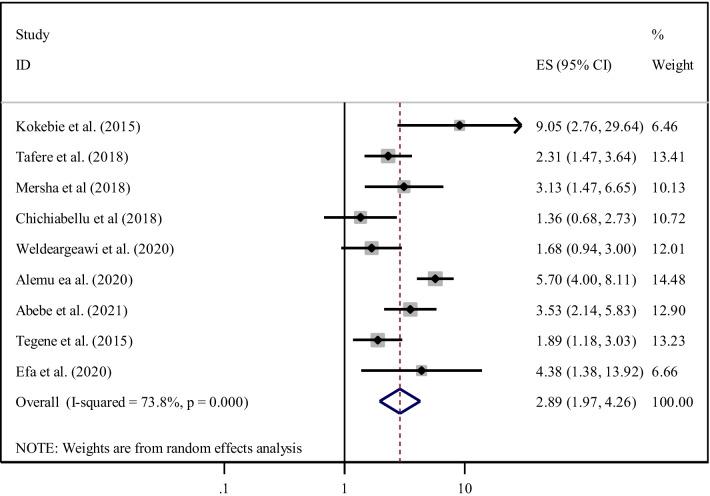
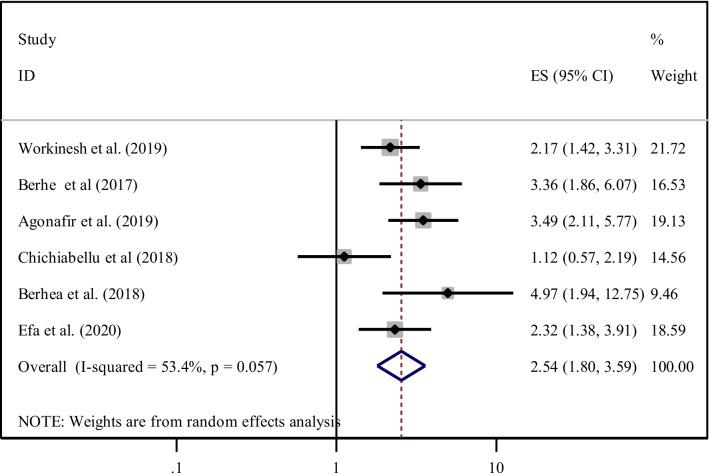
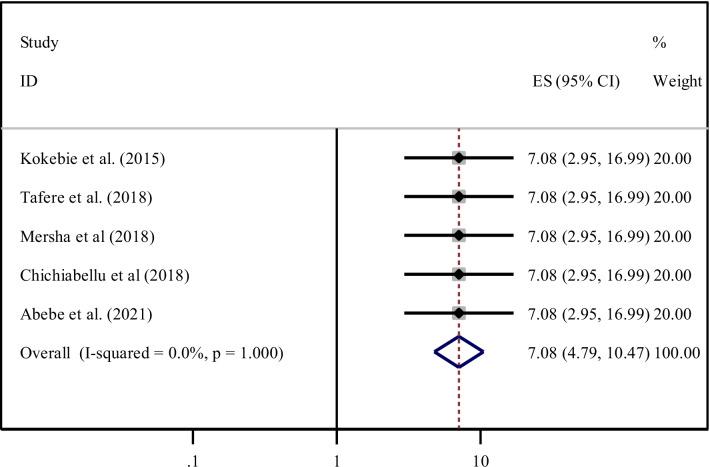
From 1275 identified studies, 25 articles were included. The national pooled prevalence of essential newborn care knowledge and practice among women was 55.05% and 41.49% respectively. Secondary education (AOR = 2.75, 95% CI 1.62, 4.66), multiparity (AOR = 2.14, 95% CI 1.41, 3.26), antenatal care (AOR = 2.94; 95% CI 2.03, 4.26), and postnatal follow-up (AOR = 1.64, 95% CI 1.20, 2.23) were significantly associated with knowledge level whereas; primary education (AOR = 7.08, 95% CI 4.79, 10.47), urban residency (AOR = 2.22, 95% CI 1.65, 3.00), attending monthly meetings (AOR = 2.07, 95% CI 1.64, 2.62), antenatal care (AOR = 2.89, 95% CI 1.97, 4.26), advised during delivery (AOR = 2.54, 95% CI 1.80, 3.59), postnatal follow-up (AOR = 7.08, 95% CI 4.79, 10.47) and knowledge (AOR = 2.93; 95% CI 1.81, 4.75) were statistically significant with essential newborn practice.
CONCLUSIONS
The current systematic review and meta-analysis findings reported that the level of knowledge and practice of essential newborn care among Ethiopian women was low. Therefore, improvement of essential newborn through the provision of community-based awareness creation forum, improving antenatal and postnatal care follow up, education on essential newborn care to all pregnant and postnatal women are very important. Trial registration Prospero registration: CRD 42021251521.
背景
在发展中国家,包括埃塞俄比亚在内,通过实施简单、低成本、分娩后即刻即可完成的基本新生儿护理,可以轻松预防和避免新生儿死亡的风险。然而,由于缺乏充分的母婴护理实践,这个问题仍然存在。因此,本综述旨在通过系统评价和荟萃分析,评估埃塞俄比亚妇女对基本新生儿护理知识和实践的认知和实践的总体流行率及其相关因素。
方法
从 2021 年 4 月 1 日至 30 日,从 PubMed、Google Scholar、EMBASE、HINARI、Scopus 和 Web of Sciences 进行了深入的文献检索。使用预测试和标准化的数据提取格式提取数据。使用 STATA 14 统计软件分析数据。I 检验评估了纳入研究之间的异质性。使用随机效应模型估计基本新生儿护理知识和实践的总体流行率。
结果
从 1275 项已确定的研究中,纳入了 25 篇文章。埃塞俄比亚妇女对基本新生儿护理知识和实践的全国总体流行率分别为 55.05%和 41.49%。接受过中等教育(AOR=2.75,95%CI 1.62-4.66)、多胎生育(AOR=2.14,95%CI 1.41-3.26)、产前护理(AOR=2.94;95%CI 2.03-4.26)和产后随访(AOR=1.64,95%CI 1.20-2.23)与知识水平显著相关,而接受过初等教育(AOR=7.08,95%CI 4.79-10.47)、城市居住(AOR=2.22,95%CI 1.65-3.00)、每月参加会议(AOR=2.07,95%CI 1.64-2.62)、产前护理(AOR=2.89,95%CI 1.97-4.26)、分娩时接受建议(AOR=2.54,95%CI 1.80-3.59)、产后随访(AOR=7.08,95%CI 4.79-10.47)和知识(AOR=2.93;95%CI 1.81-4.75)与基本新生儿护理实践有统计学意义。
结论
目前的系统评价和荟萃分析结果报告称,埃塞俄比亚妇女对基本新生儿护理知识和实践的认知水平较低。因此,通过提供基于社区的意识创造论坛、改善产前和产后护理随访、向所有孕妇和产后妇女提供基本新生儿护理教育等方式,改善基本新生儿护理非常重要。试验注册 Prospero 注册:CRD42021251521。


 Zotero 插件