
埃塞俄比亚产后妇女早期新生儿沐浴做法及其决定因素:一项系统评价和荟萃分析
Early newborn bathing practice and its determinants among postpartum women in Ethiopia: a systematic review and meta-analysis.
作者信息
Eyeberu Addis, Getachew Tamirat, Kebad Ayenachew, Debella Adera
机构信息
School of Nursing and Midwifery, College of Health and Medical Sciences, Haramaya University, Harar, Ethiopia.
School of Environmental Health, College of Health and Medical Sciences, Wollo University, Dessie, Ethiopia.
出版信息
BMC Pregnancy Childbirth. 2024 Jan 27;24(1):87. doi: 10.1186/s12884-024-06280-x.
BACKGROUND
Early baby bathing has a major negative impact on the newborn's health. Even though early newborn bathing has numerous detrimental effects on neonatal health, evidence has provided little attention on the current level of practice. Furthermore, there is a dearth of data regarding the overall effects of early newborn bathing in Ethiopia, which would be helpful to program and policy designers. This meta-analysis aimed to ascertain the level of early bathing practice and its determinants among postpartum women in Ethiopia.
METHODS
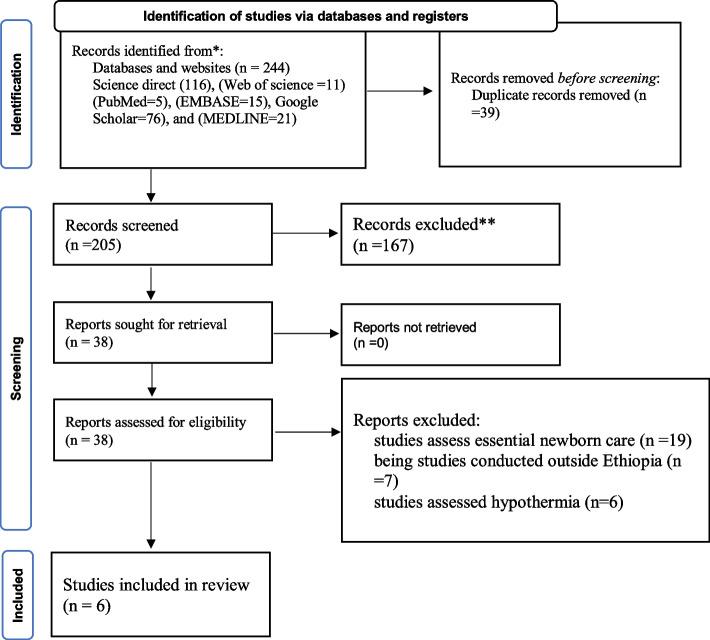
All articles were searched from the Web of Sciences, CINAHL (EBOSCO), Science Direct, MEDLINE, PubMed, Google Scholar, and Google websites from inception to October 10, 2023. The meta-analysis was performed using Stata version 18. The summary estimates with 95% CI were estimated using the random effect model with the Der Simonian Liard method. Heterogeneity was explored using Galbraith plot, Cochrane Q statistics, I2 statistics, and test of theta. To deal with the observed heterogeneity, subgroup analysis, sensitivity analysis, and meta-regression were done.
RESULTS
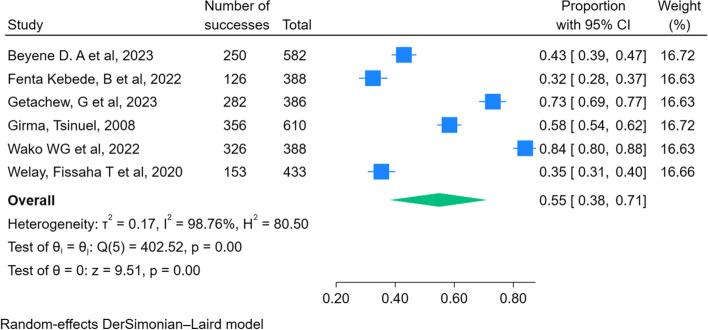
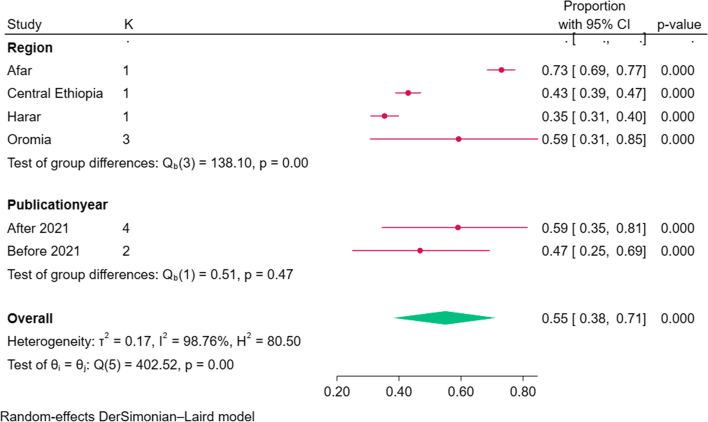
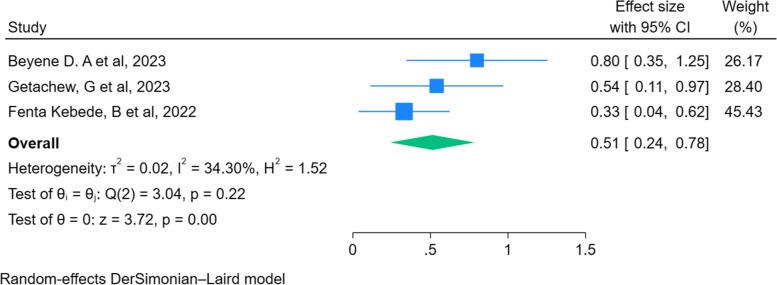
This meta-analysis included a total of 2787 postpartum women. The pooled level of early newborn bathing practice among postpartum women in Ethiopia was 55% [95% CI: 38-71]. Based on subgroup analysis by region, the highest level of early newborn bathing practice was among studies conducted in the Afar region which was 73% (95% CI: 69-77). There is a significant association between maternal level of education and early newborn bathing practice among postpartum women in Ethiopia (AOR = 0.51, 95% CI: 0.24, 0.78).
CONCLUSIONS
In this meta-analysis, the overall estimate illustrates that more than half of postpartum women practice early newborn bathing in Ethiopia. Maternal level of education was significantly associated with early newborn bathing practice. Thus, both the government and all the concerned stakeholders should take coordinated action to boost information dissemination and awareness creation among postpartum women thereby reducing the practice of early newborn bathing and alleviating consequences of early newborn bathing.
背景
早期给婴儿洗澡对新生儿健康有重大负面影响。尽管早期给新生儿洗澡对新生儿健康有诸多不利影响,但现有证据很少关注当前的实际做法水平。此外,关于埃塞俄比亚早期给新生儿洗澡的总体影响的数据匮乏,而这些数据对项目和政策制定者会有所帮助。这项荟萃分析旨在确定埃塞俄比亚产后妇女早期洗澡的做法水平及其决定因素。
方法
从科学网、CINAHL(EBSCO)、科学Direct、MEDLINE、PubMed、谷歌学术和谷歌网站搜索了从创刊到2023年10月10日的所有文章。使用Stata 18版本进行荟萃分析。采用Der Simonian Liard方法的随机效应模型估计95%置信区间的汇总估计值。使用Galbraith图、Cochrane Q统计量、I²统计量和theta检验探索异质性。为处理观察到的异质性,进行了亚组分析、敏感性分析和荟萃回归。
结果
这项荟萃分析共纳入2787名产后妇女。埃塞俄比亚产后妇女早期给新生儿洗澡的综合做法水平为55%[95%置信区间:38 - 71]。根据按地区进行的亚组分析,早期给新生儿洗澡做法水平最高的是在阿法尔地区进行的研究,为73%(95%置信区间:69 - 77)。埃塞俄比亚产后妇女的母亲教育水平与早期给新生儿洗澡的做法之间存在显著关联(比值比 = 0.51,95%置信区间:0.24,0.78)。
结论
在这项荟萃分析中,总体估计表明,埃塞俄比亚超过一半的产后妇女有早期给新生儿洗澡的做法。母亲教育水平与早期给新生儿洗澡的做法显著相关。因此,政府和所有相关利益攸关方应采取协调行动,加强对产后妇女的信息传播和意识培养,从而减少早期给新生儿洗澡的做法,减轻早期给新生儿洗澡的后果。

 Zotero 插件