
erbB2/Her2 依赖性下调乳腺癌细胞中促进细胞死亡的蛋白 BLNK 是三维乳腺肿瘤生长所必需的。
ErbB2/Her2-dependent downregulation of a cell death-promoting protein BLNK in breast cancer cells is required for 3D breast tumor growth.
机构信息
Departments of Pediatrics & Biochemistry and Molecular Biology, Dalhousie University, Halifax, NS, Canada.
Department of Pharmacology, Department of Pediatrics, Dalhousie University, Halifax, NS, Canada.
出版信息
Cell Death Dis. 2022 Aug 6;13(8):687. doi: 10.1038/s41419-022-05117-9.
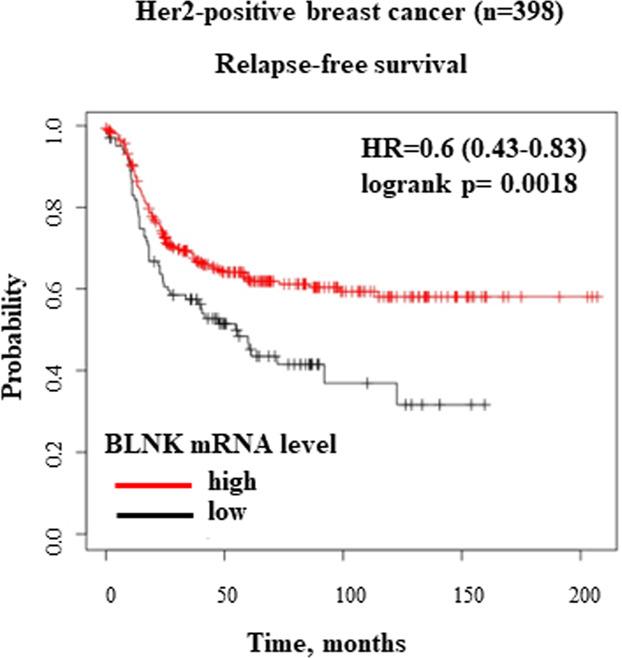
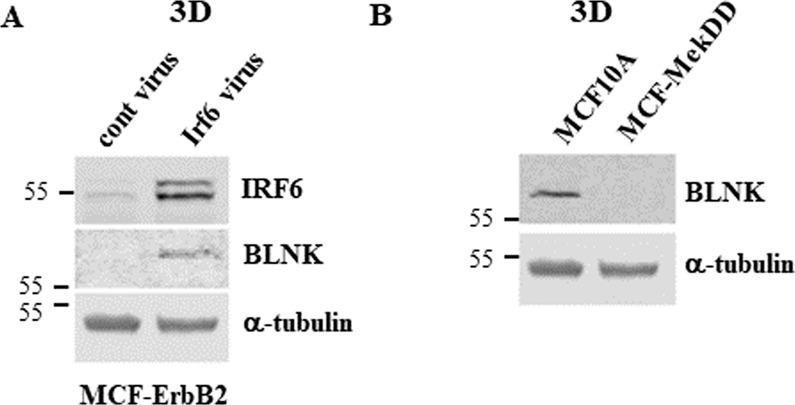
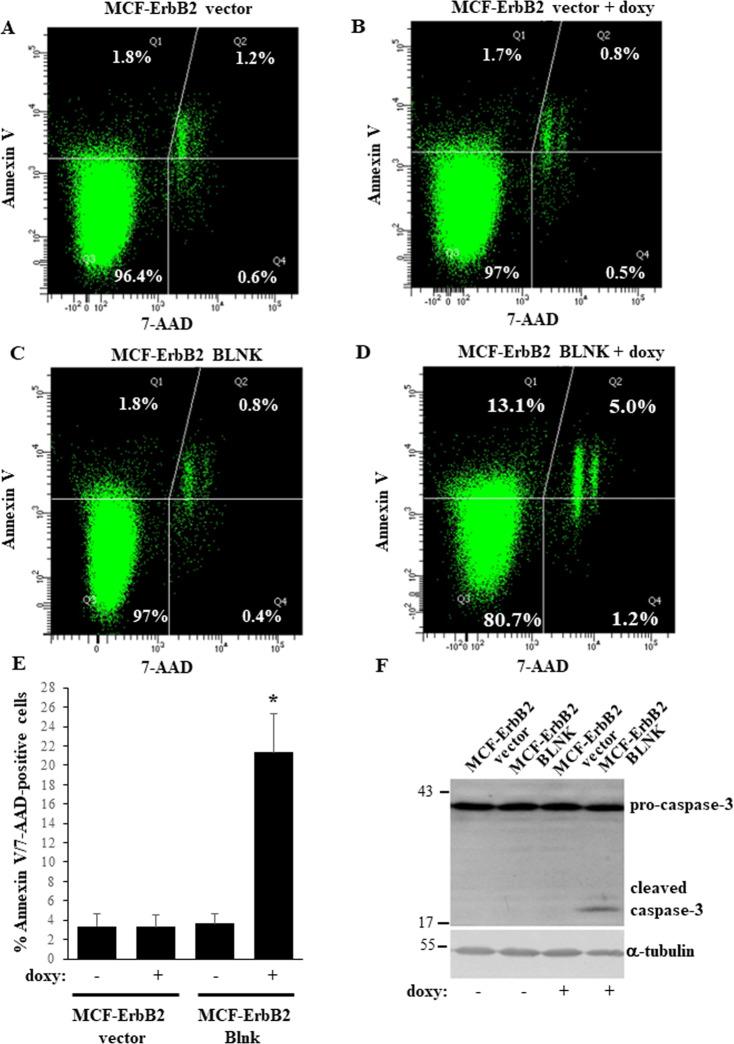
A significant proportion of breast cancers are driven by ErbB2/Her2 oncoprotein that they overexpress. These malignancies are typically treated with various ErbB2-targeted drugs, but many such cancers develop resistance to these agents and become incurable. Conceivably, treatment of ErbB2-positive cancers could be facilitated by use of agents blocking oncogenic signaling mechanisms downstream of ErbB2. However, current understanding of these mechanisms is limited. The ability of solid tumor cells to resist anoikis, cell death triggered by cell detachment from the extracellular matrix (ECM), is thought to be critical for 3D tumor growth. In an effort to understand the mechanisms of ErbB2-driven breast cancer cell anoikis resistance we found that detachment of non-malignant breast epithelial cells from the ECM upregulates a cell death-promoting tumor suppressor adapter protein BLNK and that ErbB2 blocks this upregulation by reducing tumor cell levels of transcription factor IRF6. We further observed that trastuzumab, a therapeutic anti-ErbB2 antibody, upregulates BLNK in human trastuzumab-sensitive but not trastuzumab-resistant ErbB2-positive breast cancer cells. Moreover, we established that BLNK promotes anoikis by activating p38 MAP kinase and that ErbB2-dependent BLNK downregulation blocks breast cancer cell anoikis. In search for pharmacological approaches allowing to upregulate BLNK in tumor cells we found that clinically approved proteasome inhibitor bortezomib upregulates IRF6 and BLNK in human breast cancer cells and inhibits their 3D growth in a BLNK-dependent manner. In addition, we found that BLNK upregulation in human ErbB2-positive breast cancer cells blocks their ability to form tumors in mice. Furthermore, we used publicly available data on mRNA levels in multiple breast cancers to demonstrate that increased BLNK mRNA levels correlate with increased relapse-free survival in a cohort of approximately 400 patients with ErbB2-positive breast cancer. In summary, we discovered a novel mechanism of ErbB2-driven 3D breast tumor growth mediated by ErbB2-dependent BLNK downregulation.
相当一部分乳腺癌是由过度表达的 ErbB2/Her2 癌蛋白驱动的。这些恶性肿瘤通常采用各种 ErbB2 靶向药物治疗,但许多此类癌症对这些药物产生耐药性,变得无法治愈。可以想象,通过使用阻断 ErbB2 下游致癌信号机制的药物,可能会促进 ErbB2 阳性癌症的治疗。然而,目前对这些机制的了解有限。实体肿瘤细胞抵抗失巢凋亡(细胞从细胞外基质(ECM)上分离时触发的细胞死亡)的能力被认为对 3D 肿瘤生长至关重要。为了了解 ErbB2 驱动的乳腺癌细胞失巢凋亡耐药的机制,我们发现非恶性乳腺上皮细胞与 ECM 分离会上调促进细胞死亡的肿瘤抑制适配器蛋白 BLNK,而 ErbB2 通过降低肿瘤细胞转录因子 IRF6 的水平来阻断这种上调。我们进一步观察到,曲妥珠单抗,一种治疗性抗 ErbB2 抗体,可上调人曲妥珠单抗敏感但不耐曲妥珠单抗的 ErbB2 阳性乳腺癌细胞中的 BLNK。此外,我们发现 BLNK 通过激活 p38 MAP 激酶促进失巢凋亡,而 ErbB2 依赖性 BLNK 下调可阻止乳腺癌细胞失巢凋亡。在寻找可上调肿瘤细胞中 BLNK 的药物方法时,我们发现临床批准的蛋白酶体抑制剂硼替佐米可上调人乳腺癌细胞中的 IRF6 和 BLNK,并以 BLNK 依赖的方式抑制其 3D 生长。此外,我们发现人 ErbB2 阳性乳腺癌细胞中 BLNK 的上调可阻止其在小鼠中形成肿瘤的能力。此外,我们使用公开的多种乳腺癌 mRNA 水平数据证明,在大约 400 名 ErbB2 阳性乳腺癌患者的队列中,BLNK mRNA 水平的增加与无复发生存率的增加相关。总之,我们发现了一种新的 ErbB2 驱动的 3D 乳腺癌肿瘤生长机制,该机制由 ErbB2 依赖性 BLNK 下调介导。





 Zotero 插件