
病毒介导的细胞程序性死亡的激活和抑制。
Viral-mediated activation and inhibition of programmed cell death.
机构信息
Department of Pathobiology, Ontario Veterinary College, University of Guelph, Guelph, Canada.
出版信息
PLoS Pathog. 2022 Aug 11;18(8):e1010718. doi: 10.1371/journal.ppat.1010718. eCollection 2022 Aug.
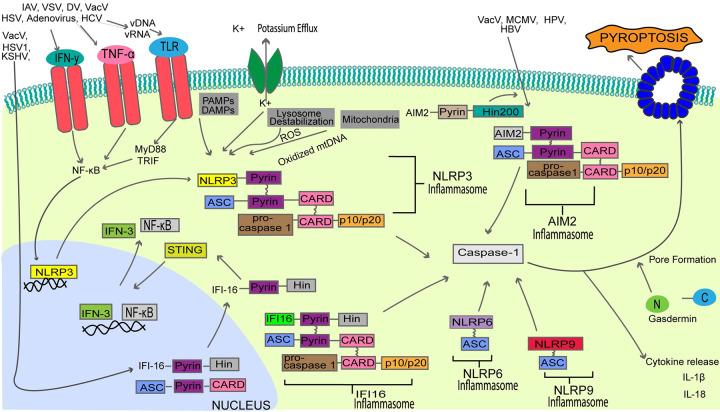
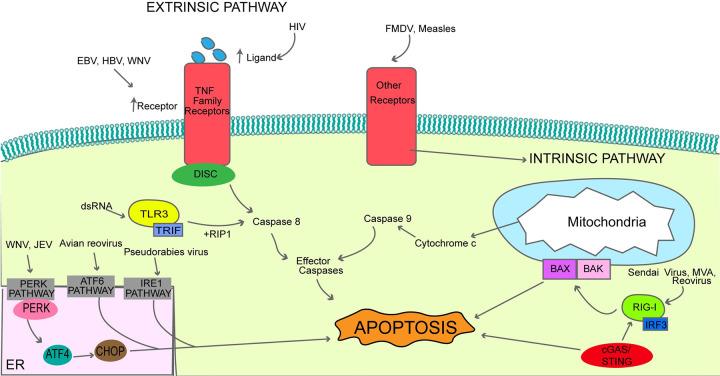
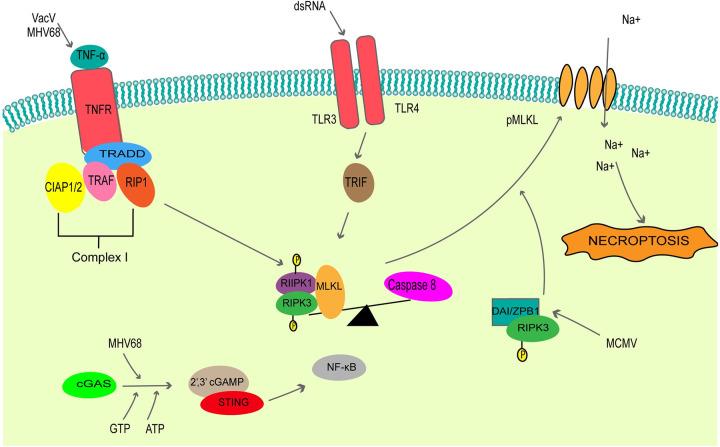
Viruses are ubiquitous intracellular genetic parasites that heavily rely on the infected cell to complete their replication life cycle. This dependency on the host machinery forces viruses to modulate a variety of cellular processes including cell survival and cell death. Viruses are known to activate and block almost all types of programmed cell death (PCD) known so far. Modulating PCD in infected hosts has a variety of direct and indirect effects on viral pathogenesis and antiviral immunity. The mechanisms leading to apoptosis following virus infection is widely studied, but several modalities of PCD, including necroptosis, pyroptosis, ferroptosis, and paraptosis, are relatively understudied. In this review, we cover the mechanisms by which viruses activate and inhibit PCDs and suggest perspectives on how these affect viral pathogenesis and immunity.
病毒是普遍存在于细胞内的遗传寄生虫,严重依赖感染细胞来完成其复制生命周期。这种对宿主机制的依赖迫使病毒调节各种细胞过程,包括细胞存活和细胞死亡。病毒已被证实能激活和阻断迄今为止已知的几乎所有类型的程序性细胞死亡(PCD)。在受感染的宿主中调节 PCD 对病毒发病机制和抗病毒免疫有多种直接和间接的影响。病毒感染后导致细胞凋亡的机制已得到广泛研究,但包括细胞坏死、细胞焦亡、铁死亡和副凋亡在内的几种 PCD 方式的研究相对较少。在这篇综述中,我们介绍了病毒激活和抑制 PCD 的机制,并提出了这些机制如何影响病毒发病机制和免疫的观点。
 Zotero 插件