
环硅酸锆钠治疗挪威和瑞典慢性肾脏病高钾血症患者的成本效果分析。
Cost effectiveness of sodium zirconium cyclosilicate for the treatment of hyperkalaemia in patients with CKD in Norway and Sweden.
机构信息
AstraZeneca, Södertälje, Sweden.
Karolinska Institutet, Stockholm, Sweden.
出版信息
BMC Nephrol. 2022 Aug 12;23(1):281. doi: 10.1186/s12882-022-02903-7.
BACKGROUND
Hyperkalaemia is common in patients with chronic kidney disease (CKD) and is associated with a range of adverse outcomes. Historically, options for management of chronic hyperkalaemia in the outpatient setting have been limited. Novel oral potassium binders provide a safe, effective therapy for maintenance of normokalaemia in patients with CKD, but despite being approved for reimbursement in many countries, prescription data indicate uptake has been slower than anticipated. This analysis aimed to demonstrate the value to patients and the healthcare system of the potassium binder sodium zirconium cyclosilicate (SZC) for treatment of hyperkalaemia in patients with CKD in Norway and Sweden.
METHODS
A published simulation model reflecting the natural history of CKD was adapted to the Norwegian and Swedish settings and used to predict long-term health economic outcomes of treating hyperkalaemia with SZC versus usual care.
RESULTS
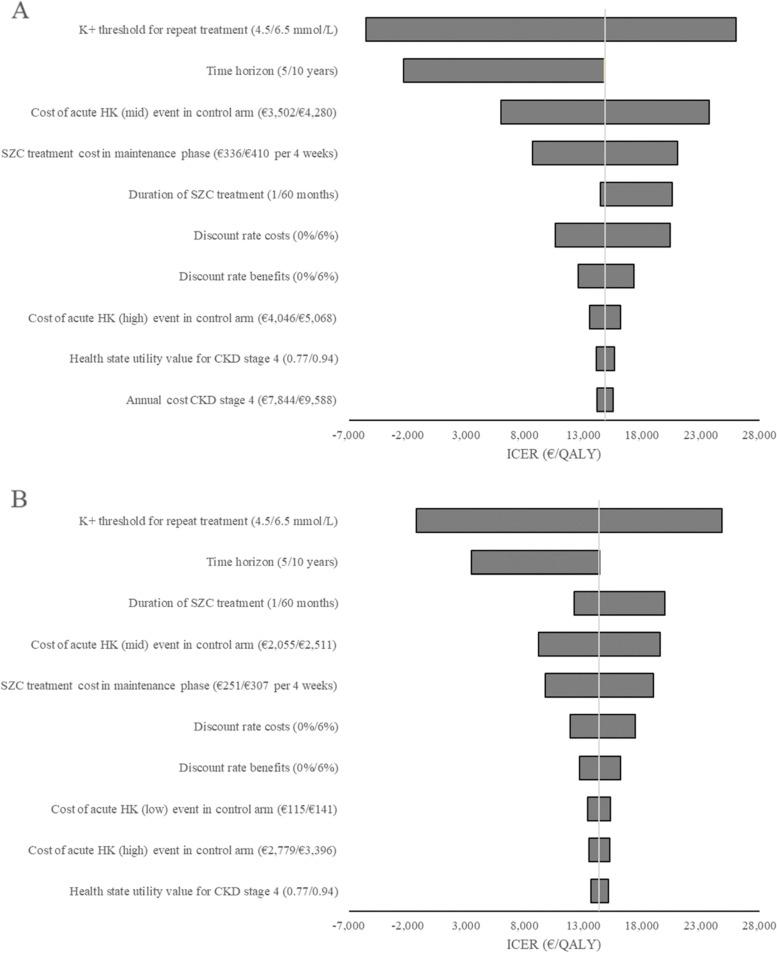
SZC was highly cost effective compared to usual care in Norway and Sweden, with incremental cost-effectiveness ratios of €14,838/QALY in Norway and €14,352/QALY in Sweden, over a lifetime horizon. The acquisition cost of SZC was largely offset by cost savings associated with reductions in hyperkalaemia events and hospitalisations; a modest overall increase in costs was predominantly attributable to costs associated with gains in life years compared with usual care. SZC remained cost effective in all scenarios examined.
CONCLUSIONS
SZC was estimated to be cost effective for treating hyperkalaemia. Consequently, improving access to a clinically effective, safe and cost-effective therapy, such as SZC, may result in considerable benefits for CKD patients with hyperkalaemia.
背景
高钾血症在慢性肾脏病(CKD)患者中很常见,与一系列不良结局相关。历史上,门诊慢性高钾血症的治疗选择有限。新型口服钾结合剂为 CKD 患者维持正常血钾水平提供了安全有效的治疗选择,但尽管在许多国家获得了报销批准,处方数据表明其采用率低于预期。本分析旨在展示在挪威和瑞典,用于治疗 CKD 患者高钾血症的钾结合剂硅酸锆钠(SZC)为患者和医疗保健系统带来的价值。
方法
我们对反映 CKD 自然史的已发表模拟模型进行了调整,以适应挪威和瑞典的情况,并用于预测使用 SZC 治疗高钾血症与常规护理相比的长期健康经济结果。
结果
在挪威和瑞典,与常规护理相比,SZC 具有成本效益,在挪威的增量成本效益比为 14838 欧元/QALY,在瑞典为 14352 欧元/QALY,在终生范围内。SZC 的购置成本在很大程度上被与减少高钾血症事件和住院相关的成本节约所抵消;与常规护理相比,总成本的适度增加主要归因于与获得的生命年数相关的成本增加。在所有检查的情况下,SZC 仍然具有成本效益。
结论
SZC 被估计为治疗高钾血症具有成本效益。因此,改善获得临床有效、安全且具有成本效益的治疗方法,如 SZC,可能会为高钾血症的 CKD 患者带来巨大的益处。

 Zotero 插件