
缺氧诱导因子-1α在肾纤维化代谢重编程中作用的分子机制
Molecular mechanisms underlying the role of hypoxia-inducible factor-1 α in metabolic reprogramming in renal fibrosis.
作者信息
Wei Xuejiao, Hou Yue, Long Mengtuan, Jiang Lili, Du Yujun
机构信息
Department of Nephrology, The First Hospital of Jilin University, Changchun, China.
Department of Physical Examination Center, The First Hospital of Jilin University, Changchun, China.
出版信息
Front Endocrinol (Lausanne). 2022 Jul 25;13:927329. doi: 10.3389/fendo.2022.927329. eCollection 2022.
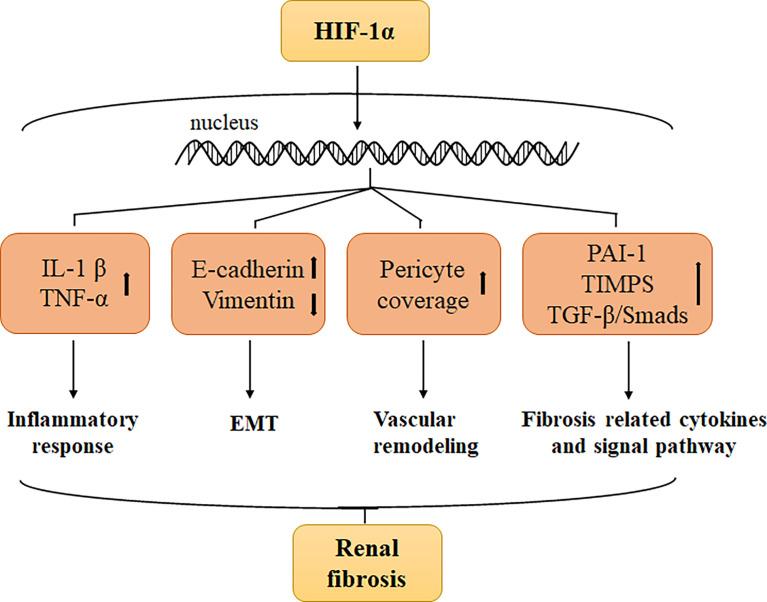
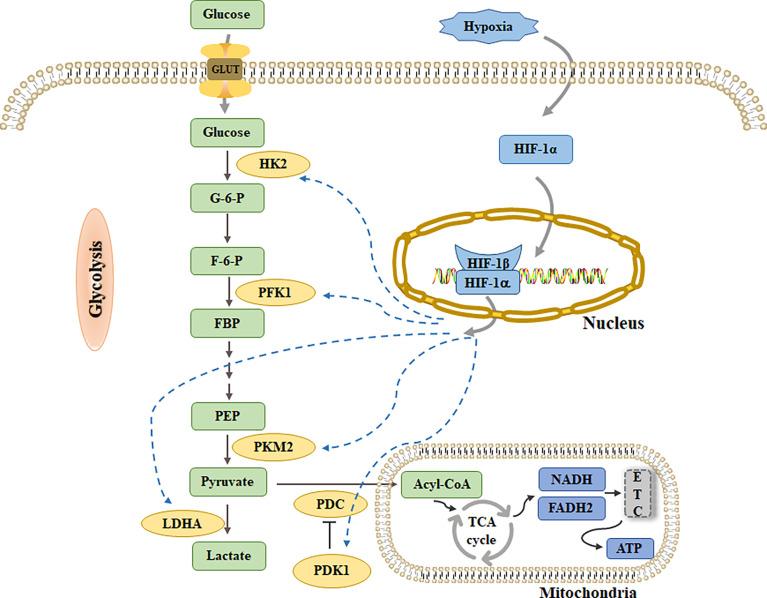
Renal fibrosis is the result of renal tissue damage and repair response disorders. If fibrosis is not effectively blocked, it causes loss of renal function, leading to chronic renal failure. Metabolic reprogramming, which promotes cell proliferation by regulating cellular energy metabolism, is considered a unique tumor cell marker. The transition from oxidative phosphorylation to aerobic glycolysis is a major feature of renal fibrosis. Hypoxia-inducible factor-1 α (HIF-1α), a vital transcription factor, senses oxygen status, induces adaptive changes in cell metabolism, and plays an important role in renal fibrosis and glucose metabolism. This review focuses on the regulation of proteins related to aerobic glycolysis by HIF-1α and attempts to elucidate the possible regulatory mechanism underlying the effects of HIF-1α on glucose metabolism during renal fibrosis, aiming to provide new ideas for targeted metabolic pathway intervention in renal fibrosis.
肾纤维化是肾组织损伤和修复反应紊乱的结果。如果纤维化未得到有效阻断,会导致肾功能丧失,进而引发慢性肾衰竭。代谢重编程通过调节细胞能量代谢促进细胞增殖,被认为是一种独特的肿瘤细胞标志物。从氧化磷酸化向有氧糖酵解的转变是肾纤维化的一个主要特征。缺氧诱导因子-1α(HIF-1α)是一种重要的转录因子,可感知氧状态,诱导细胞代谢的适应性变化,在肾纤维化和葡萄糖代谢中发挥重要作用。本综述聚焦于HIF-1α对与有氧糖酵解相关蛋白质的调控,并试图阐明肾纤维化过程中HIF-1α对葡萄糖代谢影响的可能调控机制,旨在为肾纤维化的靶向代谢途径干预提供新思路。

 Zotero 插件