
奥雷巴替尼(HQP1351),一种对 T315I 突变慢性髓性白血病患者耐受良好且有效的酪氨酸激酶抑制剂:开放标签、多中心 1/2 期试验的结果。
Olverembatinib (HQP1351), a well-tolerated and effective tyrosine kinase inhibitor for patients with T315I-mutated chronic myeloid leukemia: results of an open-label, multicenter phase 1/2 trial.
机构信息
National Clinical Research Center for Hematologic Disease, Peking University People's Hospital, Peking University Institute of Hematology, No. 11 South Street of Xizhimen, Xicheng District, Beijing, 100044, China.
Union Hospital, Tongji Medical College, Huazhong University of Science and Technology, Wuhan, 430022, Hubei, China.
出版信息
J Hematol Oncol. 2022 Aug 18;15(1):113. doi: 10.1186/s13045-022-01334-z.
BACKGROUND
BCR-ABL1 mutations confer resistance to tyrosine kinase inhibitors (TKIs) in chronic myeloid leukemia (CML). Olverembatinib is a new potent BCR-ABL1 TKI with preclinical activity against T315I-mutated CML. In phase 1/2 studies, we explored the safety and efficacy of olverembatinib in Chinese adults with TKI-resistant CML in the chronic phase (CML-CP) and accelerated phase (CML-AP).
METHODS
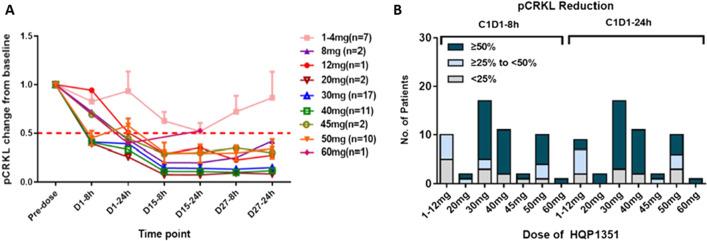
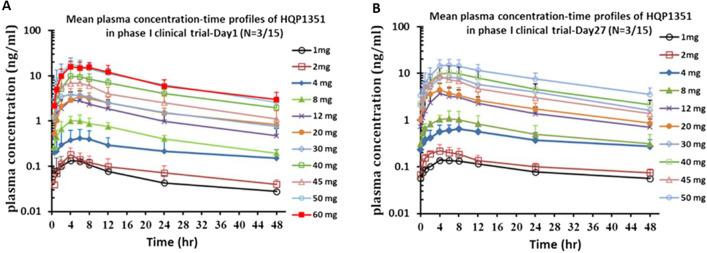
In the phase 1 study, olverembatinib was orally administered once every other day in 28-day cycles at 11 dose cohorts ranging from 1 to 60 mg, and we evaluated the maximum tolerated dose, recommended phase 2 dose (RP2D), safety, efficacy, and pharmacokinetics of olverembatinib. In the phase 2 studies, olverembatinib was administered at the RP2D of 40 mg orally on alternate days for 28-day cycles. The primary outcome measure is major cytogenetic response (MCyR) and major hematologic response by the end of Cycle 12 in CML-CP and CML-AP, respectively. Fine and Gray's hazard models were used to identify covariates associated with responses.
RESULTS
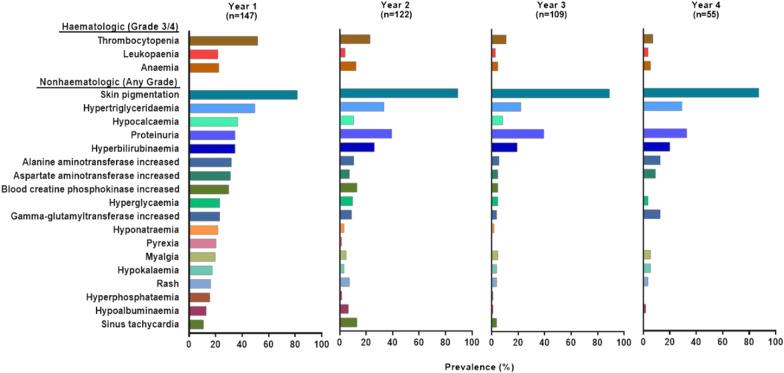
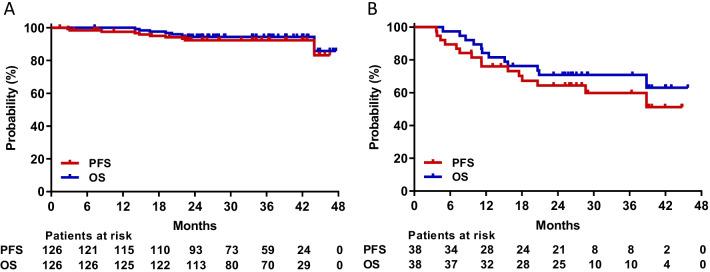
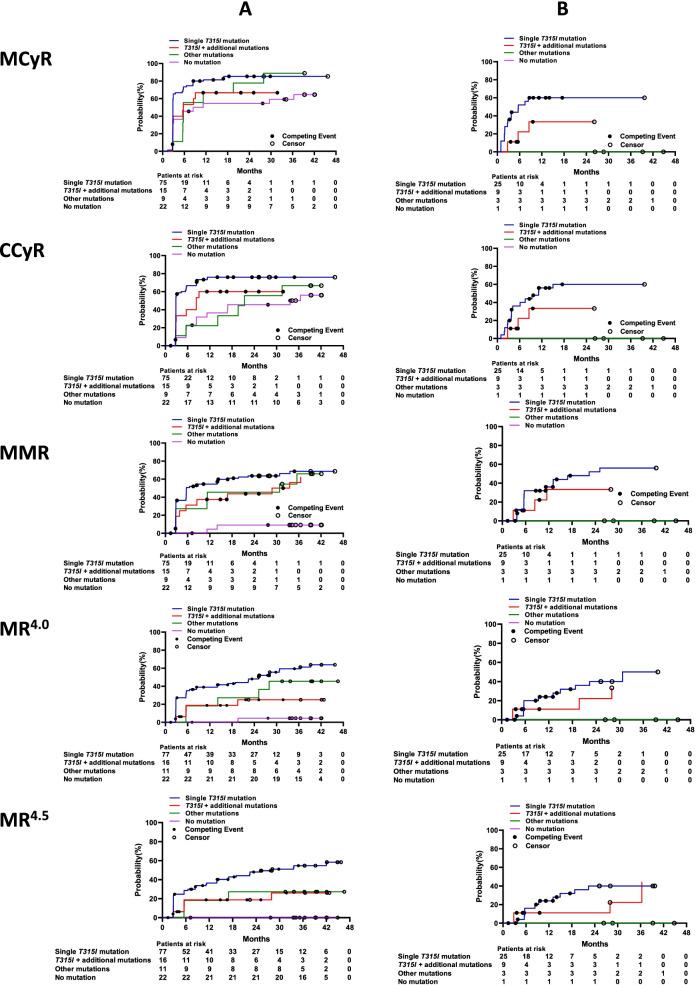
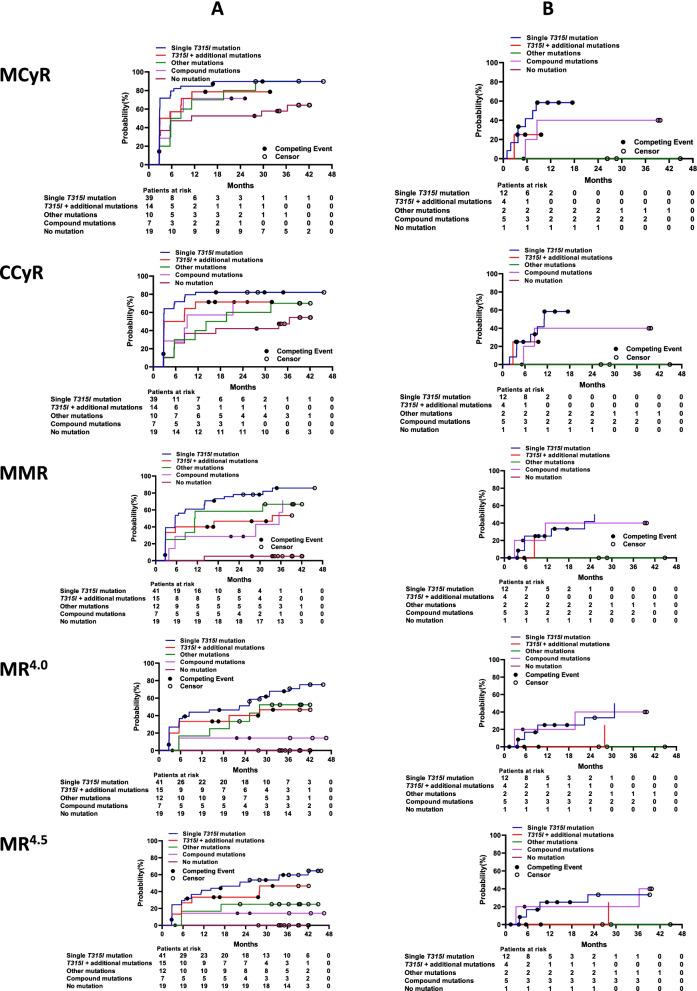
A total of 165 patients (> 80.0% of whom had received ≥ 2 TKIs) were enrolled in this study. Among 127 patients with CML-CP, the 3-year cumulative incidences of achieving MCyR, complete cytogenetic response (CCyR), major molecular response (MMR), MR, and MR were 79.0, 69.0, 56.0, 44.0 and 39.0%, respectively. The highest response rates were observed in patients with a single T315I mutation. Among 38 patients with CML-AP, the 3-year cumulative incidences of achieving MCyR, CCyR, MMR, MR, and MR were 47.4%, 47.4%, 44.7%, 39.3%, and 32.1%, respectively. In multivariate analyses, baseline BCR-ABL1 mutation status was significantly associated with cytogenetic and molecular responses. Common treatment-related adverse events included skin hyperpigmentation, hypertriglyceridemia, proteinuria, and severe thrombocytopenia.
CONCLUSIONS
Olverembatinib was well tolerated, with significant antileukemic activity in adults with TKI-resistant CML-CP and CML-AP, especially those with the T315I mutation.
TRIAL REGISTRATION
The phase 1 trial is registered at CTR20220566, and the two single-arm, open-label phase 2 studies are registered at ClinicalTrials.gov: NCT03883087 (CML-CP) and NCT03883100 (CML-AP).
背景
BCR-ABL1 突变使慢性髓性白血病(CML)患者对酪氨酸激酶抑制剂(TKI)产生耐药性。奥瑞巴替尼是一种新的强效 BCR-ABL1 TKI,具有针对 T315I 突变的 CML 的临床前活性。在 1/2 期研究中,我们研究了奥瑞巴替尼在中国 TKI 耐药的慢性期(CML-CP)和加速期(CML-AP)CML 成年患者中的安全性和疗效。
方法
在 1 期研究中,奥瑞巴替尼以 11 个剂量组(1-60mg)每 28 天口服一次,评估最大耐受剂量、推荐的 2 期剂量(RP2D)、安全性、疗效和奥瑞巴替尼的药代动力学。在 2 期研究中,奥瑞巴替尼以 40mg 口服,每 28 天一次,RP2D 用于治疗。CML-CP 和 CML-AP 分别在第 12 周期末评估主要细胞遗传学反应(MCyR)和主要血液学反应的主要终点。Fine 和 Gray 的风险模型用于识别与反应相关的协变量。
结果
共有 165 名患者(>80.0%的患者接受了≥2 种 TKI)入组本研究。在 127 名 CML-CP 患者中,3 年 MCyR、完全细胞遗传学缓解(CCyR)、主要分子缓解(MMR)、MR 和 MR 的累积发生率分别为 79.0、69.0、56.0、44.0 和 39.0%。在单一 T315I 突变的患者中观察到最高的缓解率。在 38 名 CML-AP 患者中,3 年 MCyR、CCyR、MMR、MR 和 MR 的累积发生率分别为 47.4%、47.4%、44.7%、39.3%和 32.1%。多变量分析显示,基线 BCR-ABL1 突变状态与细胞遗传学和分子反应显著相关。常见的治疗相关不良事件包括皮肤色素沉着过度、高甘油三酯血症、蛋白尿和严重血小板减少症。
结论
奥瑞巴替尼在 TKI 耐药的 CML-CP 和 CML-AP 成年患者中具有良好的耐受性和显著的抗白血病活性,尤其是那些具有 T315I 突变的患者。
试验注册
1 期试验在 CTR20220566 注册,两项单臂、开放标签 2 期研究在 ClinicalTrials.gov 注册:NCT03883087(CML-CP)和 NCT03883100(CML-AP)。

 Zotero 插件