
一种用于预测重度抑郁症患者的机器学习模型:基于转录组数据的研究。
A machine learning model for predicting patients with major depressive disorder: A study based on transcriptomic data.
作者信息
Liu Sitong, Lu Tong, Zhao Qian, Fu Bingbing, Wang Han, Li Ginhong, Yang Fan, Huang Juan, Lyu Nan
机构信息
The National Clinical Research Center for Mental Disorders & Beijing Key Laboratory of Mental Disorders, Beijing Anding Hospital, Capital Medical University, Beijing, China.
Advanced Innovation Center for Human Brain Protection, Capital Medical University, Beijing, China.
出版信息
Front Neurosci. 2022 Aug 8;16:949609. doi: 10.3389/fnins.2022.949609. eCollection 2022.
BACKGROUND
Identifying new biomarkers of major depressive disorder (MDD) would be of great significance for its early diagnosis and treatment. Herein, we constructed a diagnostic model of MDD using machine learning methods.
METHODS
The GSE98793 and GSE19738 datasets were obtained from the Gene Expression Omnibus database, and the limma R package was used to analyze differentially expressed genes (DEGs) in MDD patients. Gene ontology (GO) and Kyoto Encyclopedia of Genes and Genomes (KEGG) enrichment analyses were performed to identify potential molecular functions and pathways. A protein-protein interaction network (PPI) was constructed, and hub genes were predicted. Random forest (RF) and artificial neural network (ANN) machine-learning algorithms were used to select variables and construct a robust diagnostic model.
RESULTS
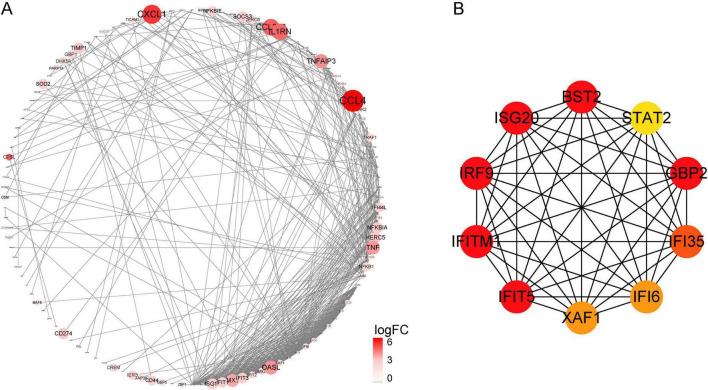
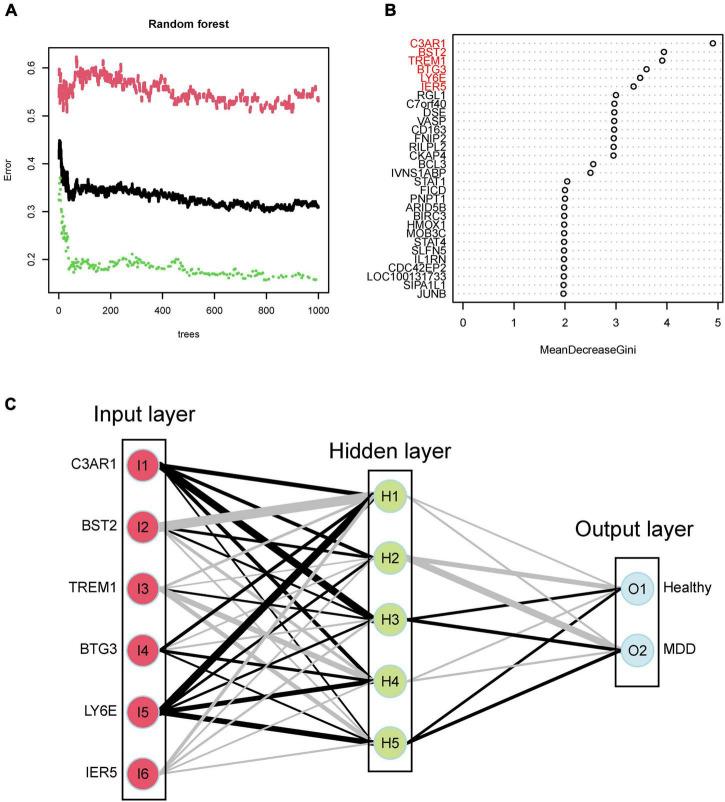
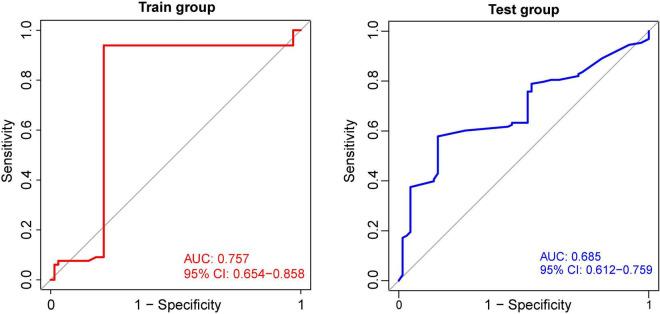
A total of 721 DEGs were identified in peripheral blood samples of patients with MDD. GO and KEGG analyses revealed that the DEGs were mainly enriched in cytokines, defense responses to viruses, responses to biotic stimuli, immune effector processes, responses to external biotic stimuli, and immune systems. A PPI network was constructed, and CytoHubba plugins were used to screen hub genes. Furthermore, a robust diagnostic model was established using a RF and ANN algorithm with an area under the curve of 0.757 for the training model and 0.685 for the test cohort.
CONCLUSION
We analyzed potential driver genes in patients with MDD and built a potential diagnostic model as an adjunct tool to assist psychiatrists in the clinical diagnosis and treatment of MDD.
背景
识别重度抑郁症(MDD)的新生物标志物对其早期诊断和治疗具有重要意义。在此,我们使用机器学习方法构建了一个MDD诊断模型。
方法
从基因表达综合数据库获取GSE98793和GSE19738数据集,并使用limma R包分析MDD患者中的差异表达基因(DEG)。进行基因本体(GO)和京都基因与基因组百科全书(KEGG)富集分析以识别潜在的分子功能和途径。构建蛋白质-蛋白质相互作用网络(PPI)并预测枢纽基因。使用随机森林(RF)和人工神经网络(ANN)机器学习算法选择变量并构建一个强大的诊断模型。
结果
在MDD患者的外周血样本中总共鉴定出721个DEG。GO和KEGG分析表明,这些DEG主要富集于细胞因子、对病毒的防御反应、对生物刺激的反应、免疫效应过程、对外部生物刺激的反应以及免疫系统。构建了一个PPI网络,并使用CytoHubba插件筛选枢纽基因。此外,使用RF和ANN算法建立了一个强大的诊断模型,训练模型的曲线下面积为0.757,测试队列的曲线下面积为0.685。
结论
我们分析了MDD患者中的潜在驱动基因,并建立了一个潜在的诊断模型作为辅助工具,以协助精神科医生对MDD进行临床诊断和治疗。


 Zotero 插件