
与神经认知症状、功能障碍和增加医疗保健利用相关的新冠后状况的慢性化。
The chronification of post-COVID condition associated with neurocognitive symptoms, functional impairment and increased healthcare utilization.
机构信息
Division of Primary Care Medicine, Geneva University Hospitals, Geneva, Switzerland.
Faculty of Medicine, University of Geneva, Geneva, Switzerland.
出版信息
Sci Rep. 2022 Aug 25;12(1):14505. doi: 10.1038/s41598-022-18673-z.
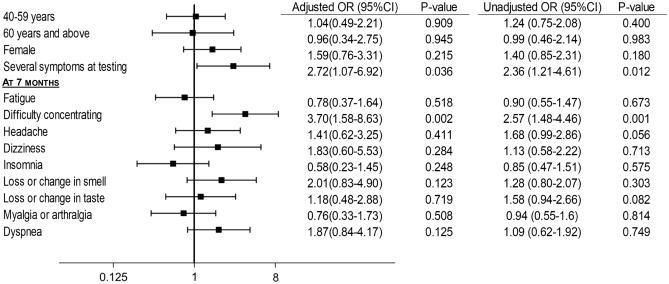
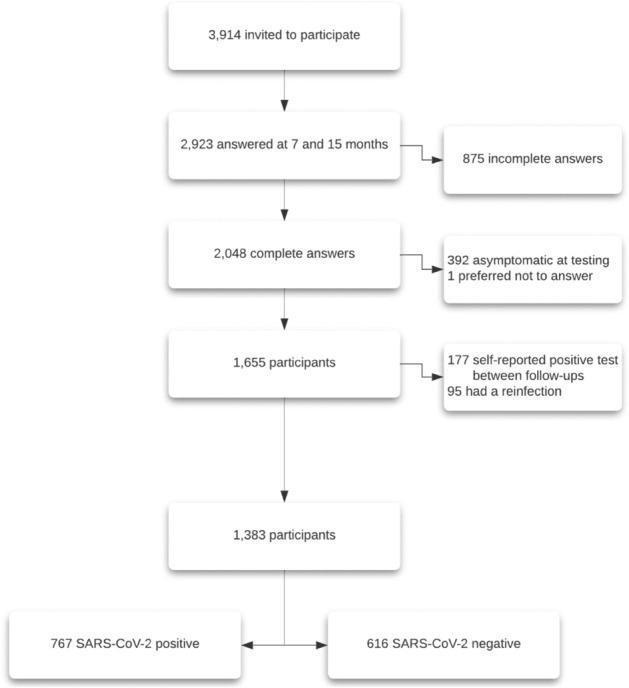
Post-COVID condition is prevalent in 10-35% of cases in outpatient settings, however a stratification of the duration and severity of symptoms is still lacking, adding to the complexity and heterogeneity of the definition of post-COVID condition and its oucomes. In addition, the potential impacts of a longer duration of disease are not yet clear, along with which risk factors are associated with a chronification of symptoms beyond the initial 12 weeks. In this study, follow-up was conducted at 7 and 15 months after testing at the outpatient SARS-CoV-2 testing center of the Geneva University Hospitals. The chronification of symptoms was defined as the continuous presence of symptoms at each evaluation timepoint (7 and 15 months). Adjusted estimates of healthcare utilization, treatment, functional impairment and quality of life were calculated. Logistic regression models were used to evaluate the associations between the chronification of symptoms and predictors. Overall 1383 participants were included, with a mean age of 44.3 years, standard deviation (SD) 13.4 years, 61.4% were women and 54.5% did not have any comorbidities. Out of SARS-CoV-2 positive participants (n = 767), 37.0% still had symptoms 7 months after their test of which 47.9% had a resolution of symptoms at the second follow-up (15 months after the infection), and 52.1% had persistent symptoms and were considered to have a chronification of their post-COVID condition. Individuals with a chronification of symptoms had an increased utilization of healthcare resources, more recourse to treatment, more functional impairment, and a poorer quality of life. Having several symptoms at testing and difficulty concentrating at 7 months were associated with a chronification of symptoms. COVID-19 patients develop post-COVID condition to varying degrees and duration. Individuals with a chronification of symptoms experience a long-term impact on their health status, functional capacity and quality of life, requiring a special attention, more involved care and early on identification considering the associated predictors.
新冠后遗症在门诊环境中的发病率为 10-35%,然而,症状的持续时间和严重程度仍缺乏分层,这增加了新冠后遗症及其结局定义的复杂性和异质性。此外,疾病持续时间较长的潜在影响尚不清楚,也不清楚哪些危险因素与症状在最初 12 周后持续存在有关。在这项研究中,在日内瓦大学医院的门诊 SARS-CoV-2 检测中心进行检测后 7 个月和 15 个月进行了随访。症状的慢性化定义为每个评估时间点(7 个月和 15 个月)持续存在症状。计算了医疗保健利用、治疗、功能障碍和生活质量的调整估计值。使用逻辑回归模型评估症状慢性化与预测因素之间的关联。共有 1383 名参与者入组,平均年龄为 44.3 岁,标准差(SD)为 13.4 岁,61.4%为女性,54.5%无合并症。在 SARS-CoV-2 阳性参与者(n=767)中,37.0%在检测后 7 个月仍有症状,其中 47.9%在第二次随访(感染后 15 个月)时症状缓解,52.1%仍有持续症状,被认为新冠后遗症慢性化。有症状慢性化的个体医疗资源利用率增加,更多地寻求治疗,更多的功能障碍,生活质量更差。在检测时出现多种症状和 7 个月时注意力难以集中与症状慢性化有关。COVID-19 患者的新冠后遗症程度和持续时间不同。有症状慢性化的个体其健康状况、功能能力和生活质量会受到长期影响,需要特别关注、更全面的护理和早期识别,同时考虑到相关的预测因素。

 Zotero 插件