
皮质单细胞转录组与血清蛋白质组的综合分析揭示阿尔茨海默病新生物标志物
Integrated Analysis of Cortex Single-Cell Transcriptome and Serum Proteome Reveals the Novel Biomarkers in Alzheimer's Disease.
作者信息
Yu Qing-Shan, Feng Wan-Qing, Shi Lan-Lan, Niu Rui-Ze, Liu Jia
机构信息
Laboratory Zoology Department, Kunming Medical University, Kunming 650500, China.
出版信息
Brain Sci. 2022 Aug 1;12(8):1022. doi: 10.3390/brainsci12081022.
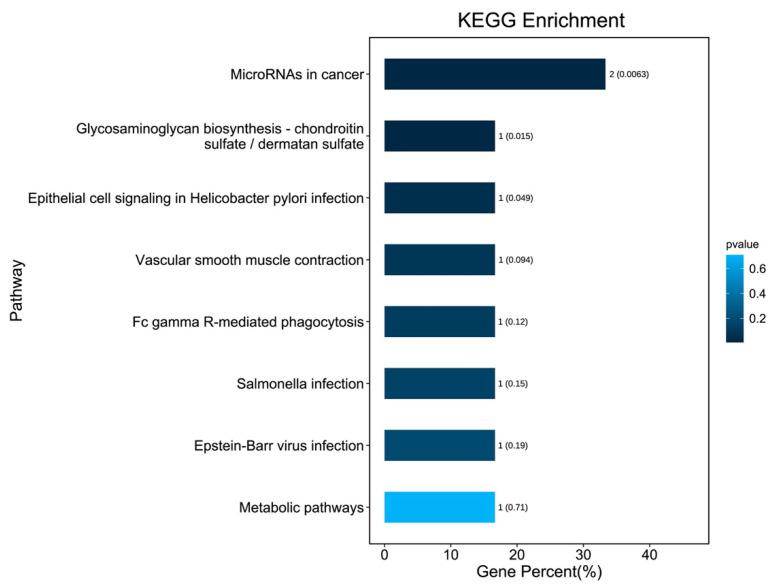
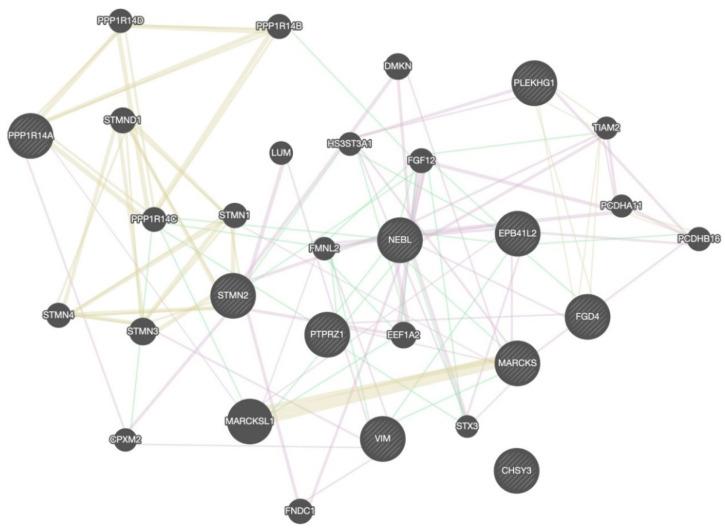
Blood-based proteomic analysis is a routine practice for detecting the biomarkers of human disease. The results obtained from blood alone cannot fully reflect the alterations of nerve cells, including neurons and glia cells, in Alzheimer's disease (AD) brains. Therefore, the present study aimed to investigate novel potential AD biomarker candidates, through an integrated multi-omics approach in AD. We propose a comprehensive strategy to identify high-confidence candidate biomarkers by integrating multi-omics data from AD, including single-nuclei RNA sequencing (snRNA-seq) datasets of the prefrontal and entorhinal cortices, as wells as serum proteomic datasets. We first quantified a total of 124,658 nuclei, 8 cell types, and 3701 differentially expressed genes (DEGs) from snRNA-seq dataset of 30 human cortices, as well as 1291 differentially expressed proteins (DEPs) from serum proteomic dataset of 11 individuals. Then, ten DEGs/DEPs (NEBL, CHSY3, STMN2, MARCKS, VIM, FGD4, EPB41L2, PLEKHG1, PTPRZ1, and PPP1R14A) were identified by integration analysis of snRNA-seq and proteomics data. Finally, four novel candidate biomarkers (NEBL, EPB41L2, FGD4, and MARCKS) for AD further stood out, according to bioinformatics analysis, and they were verified by enzyme-linked immunosorbent assay (ELISA) verification. These candidate biomarkers are related to the regulation process of the actin cytoskeleton, which is involved in the regulation of synaptic loss in the AD brain tissue. Collectively, this study identified novel cell type-related biomarkers for AD by integrating multi-omics datasets from brains and serum. Our findings provided new targets for the clinical treatment and prognosis of AD.
基于血液的蛋白质组学分析是检测人类疾病生物标志物的常规方法。仅从血液中获得的结果不能完全反映阿尔茨海默病(AD)大脑中神经细胞(包括神经元和神经胶质细胞)的变化。因此,本研究旨在通过AD的综合多组学方法来研究新型潜在的AD生物标志物候选物。我们提出了一种综合策略,通过整合来自AD的多组学数据来识别高可信度的候选生物标志物,这些数据包括前额叶和内嗅皮质的单核RNA测序(snRNA-seq)数据集以及血清蛋白质组数据集。我们首先从30个人类皮质的snRNA-seq数据集中量化了总共124,658个细胞核、8种细胞类型和3701个差异表达基因(DEG),以及从11个人的血清蛋白质组数据集中量化了1291个差异表达蛋白质(DEP)。然后,通过snRNA-seq和蛋白质组学数据的整合分析鉴定出10个DEG/DEP(NEBL、CHSY3、STMN2、MARCKS、VIM、FGD4、EPB41L2、PLEKHG1、PTPRZ1和PPP1R14A)。最后,根据生物信息学分析,四种新型的AD候选生物标志物(NEBL、EPB41L2、FGD4和MARCKS)进一步脱颖而出,并通过酶联免疫吸附测定(ELISA)验证。这些候选生物标志物与肌动蛋白细胞骨架的调节过程有关,该过程参与AD脑组织中突触损失的调节。总体而言,本研究通过整合来自大脑和血清的多组学数据集,鉴定出了与AD新型细胞类型相关的生物标志物。我们的研究结果为AD的临床治疗和预后提供了新的靶点。


 Zotero 插件