
miRNA-26 在慢性牙周炎中的下调通过靶向磷脂酶 Cβ1 干扰固有免疫反应和细胞迁移。
Downregulation of miRNA-26 in chronic periodontitis interferes with innate immune responses and cell migration by targeting phospholipase C beta 1.
机构信息
Department of Periodontics, College of Dentistry and Dental Clinics, University of Iowa, Iowa City, Iowa, USA.
Department of Periodontics, College of Dentistry, University of Illinois Chicago, Chicago, Illinois, USA.
出版信息
J Clin Periodontol. 2023 Jan;50(1):102-113. doi: 10.1111/jcpe.13715. Epub 2022 Aug 25.
AIM
To evaluate the potential role of miR-26 family members in periodontal pathogenesis by assessing innate immune responses to periopathic bacteria and regulation of cytoskeletal organization.
MATERIALS AND METHODS
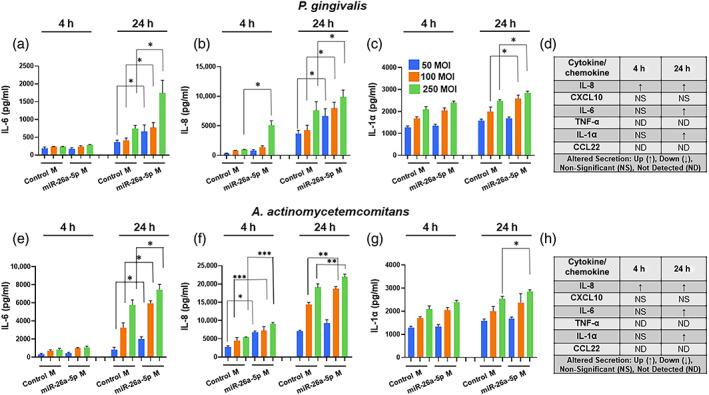
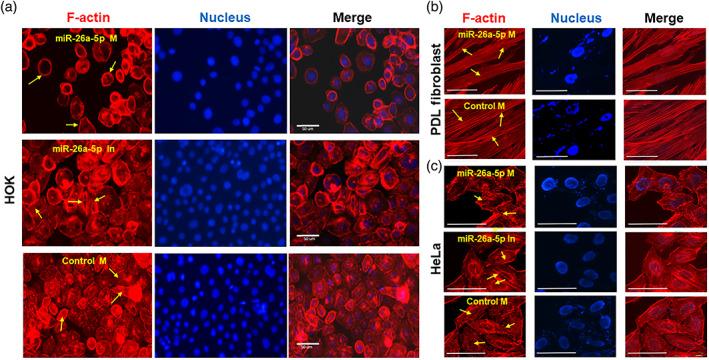
Expression of miR-26a-5p and miR-26b-5p was quantified in gingival biopsies derived from healthy and periodontally diseased subjects before and after non-surgical (scaling and root planing) therapy by RT-qPCR. Global pathway analysis and luciferase assays were performed for target identification and validation. Cytokine expression was assessed in miR-26a-5p transfected human oral keratinocytes upon stimulation with either live Porphyromonas gingivalis (Pg), Aggregatibacter actinomycetemcomitans or Pg lipopolysaccharide (LPS). Wound closure assays were performed in cells transfected with miR-26a-5p, while the impact on cytoskeletal organization was assessed by F-actin staining.
RESULTS
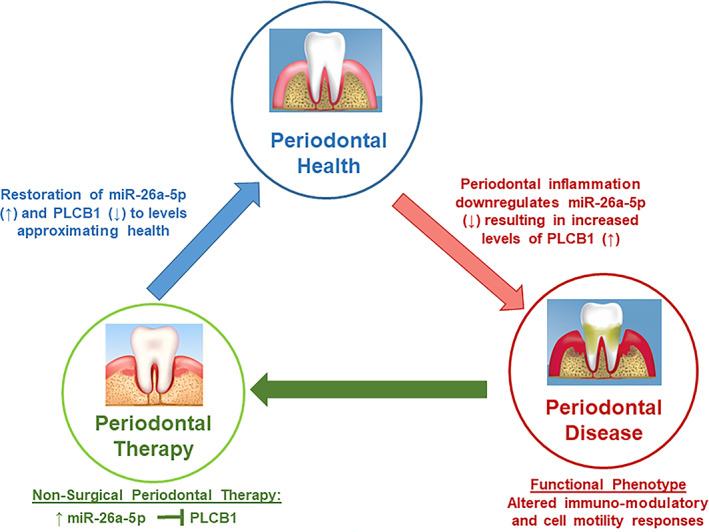
miR-26a-5p and miR-26b-5p were downregulated in diseased gingiva and restored 4-6 weeks post-therapy to levels comparable with healthy subjects. Target validation assays identified phospholipase C beta 1 as a bona fide novel target exhibiting antagonistic expression pattern in disease and post-therapy cohorts. miR-26a-5p transfected cells secreted higher levels of cytokine/chemokines upon stimulation with periopathogens and demonstrated impaired cell migration and cytoskeletal rearrangement.
CONCLUSIONS
Downregulated miR-26a-5p levels in periodontal inflammation may interfere with key cellular functions that may have significant implications for host defence and wound healing.
目的
通过评估固有免疫对牙周病细菌的反应和细胞骨架组织的调节,来评估 miR-26 家族成员在牙周病发病机制中的潜在作用。
材料和方法
通过 RT-qPCR 定量检测健康和牙周病患者牙龈组织在非手术(洁治和根面平整)治疗前后 miR-26a-5p 和 miR-26b-5p 的表达。进行了全局通路分析和荧光素酶测定,以鉴定和验证靶标。用活牙龈卟啉单胞菌(Pg)、伴放线放线杆菌或 Pg 脂多糖(LPS)刺激转染 miR-26a-5p 的人口腔角质形成细胞,评估细胞因子表达。在转染 miR-26a-5p 的细胞中进行伤口闭合测定,并用 F-肌动蛋白染色评估对细胞骨架组织的影响。
结果
miR-26a-5p 和 miR-26b-5p 在患病牙龈中下调,并在治疗后 4-6 周恢复到与健康受试者相当的水平。靶标验证试验表明,磷脂酶 Cβ1 是一种新的靶标,在疾病和治疗后队列中表现出拮抗表达模式。刺激牙周病原体后,转染 miR-26a-5p 的细胞分泌更高水平的细胞因子/趋化因子,并表现出细胞迁移和细胞骨架重排受损。
结论
牙周炎炎症中下调的 miR-26a-5p 水平可能干扰关键的细胞功能,这可能对宿主防御和伤口愈合具有重要意义。



 Zotero 插件