
阿片类药物泛滥:危机不成比例地影响美国黑人和城市社区。
The Opioid Epidemic: a Crisis Disproportionately Impacting Black Americans and Urban Communities.
机构信息
Developmental Neuropsychopharmacology Laboratory, Department of Anatomy, Howard University College of Medicine, Washington D.C., 20059, USA.
National Institute of Allergy and Infectious Diseases, National Institutes of Health, Bethesda, MD, 20814, USA.
出版信息
J Racial Ethn Health Disparities. 2023 Aug;10(4):2039-2053. doi: 10.1007/s40615-022-01384-6. Epub 2022 Sep 6.
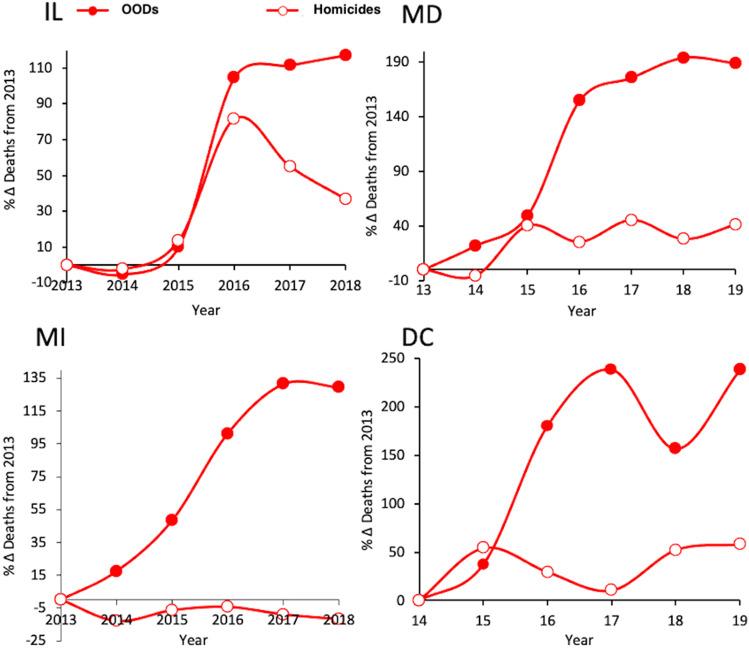
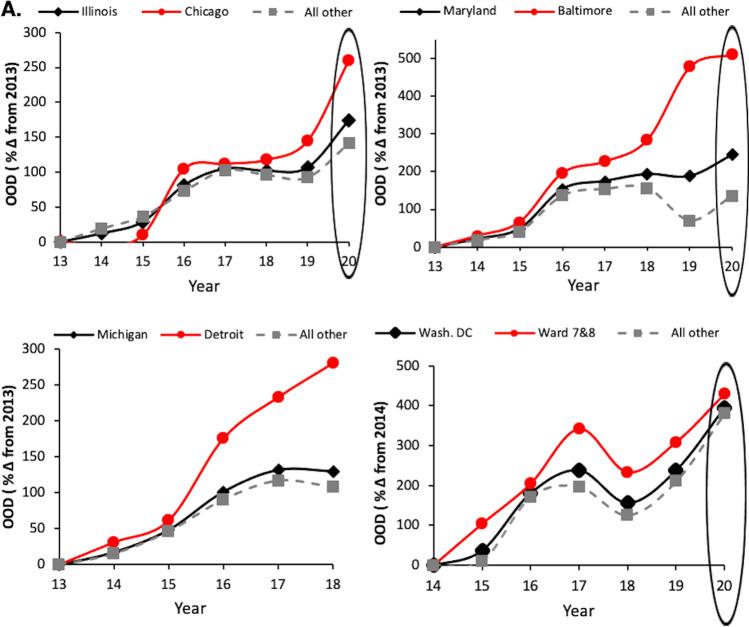
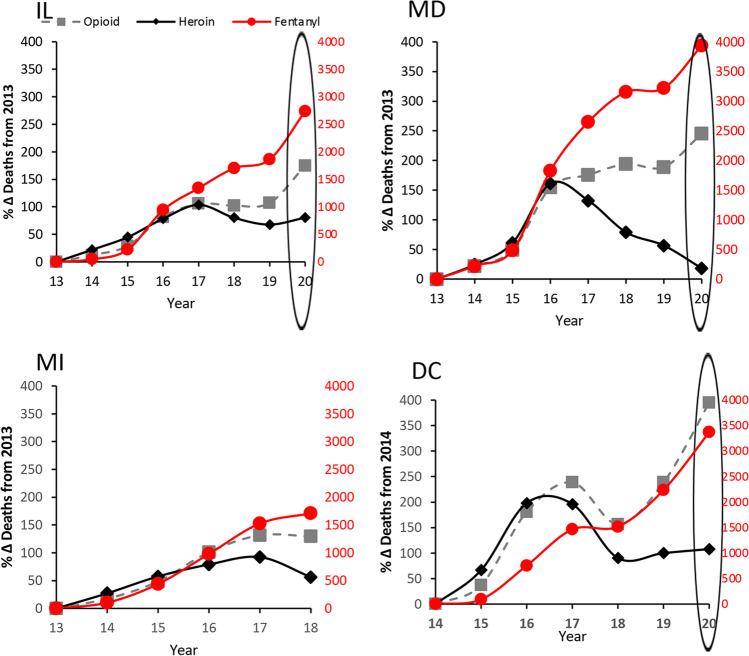
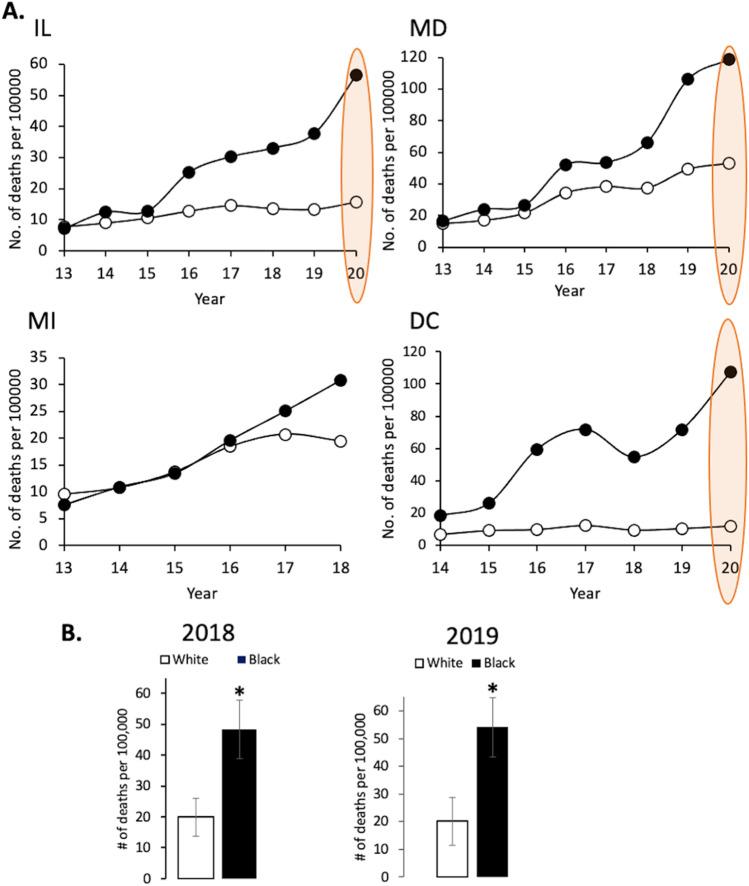
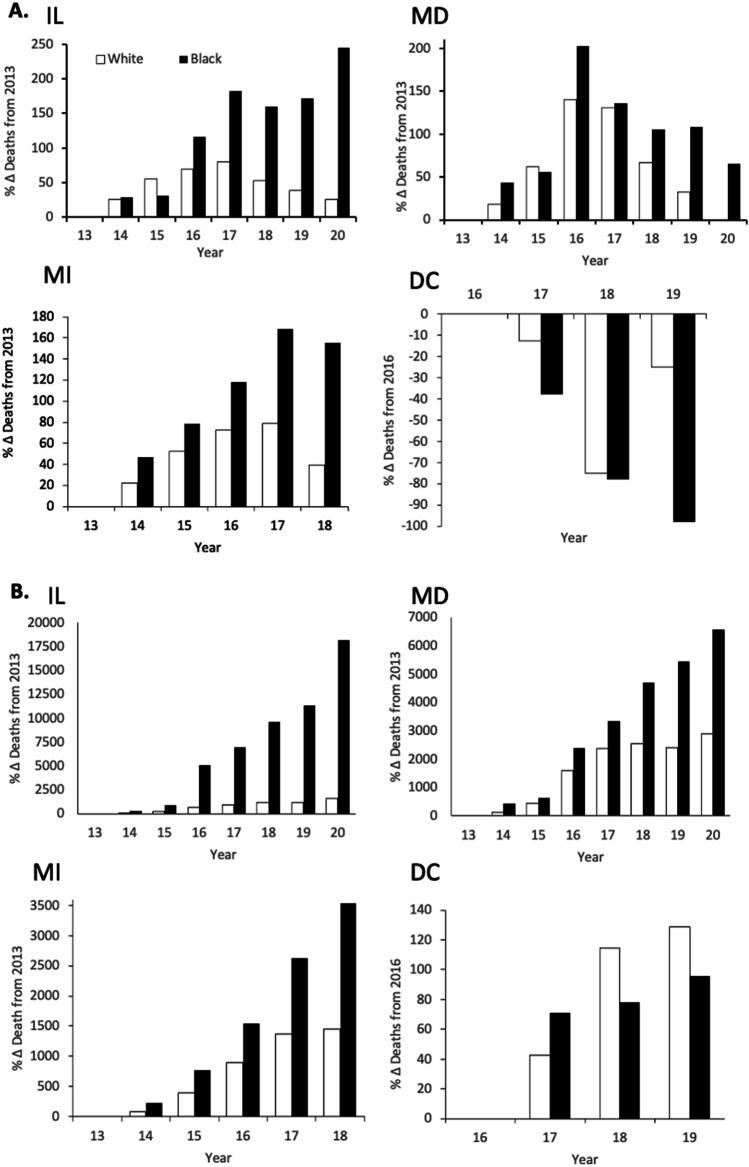
The heroin epidemic has existed for decades, but a sharp rise in opioid overdose deaths (OODs) jolted the nation in the mid-twenty-teens and continues as a major health crisis to this day. Although the new wave of OODs was initially approached as a rural problem impacting a White/Caucasian demographic, surveillance records suggest severe impacts on African Americans and urban-dwelling individuals, which have been largely underreported. The focus of this report is on specific trends in OOD rates in Black and White residents in states with a significant Black urban population and declared as hotspots for OOD: (Maryland (MD), Illinois (IL), Michigan (MI), and Pennsylvania (PA)), and Washington District of Columbia (DC). We compare OODs by type of opioid, across ethnicities, across city/rural demographics, and to homicide rates using 2013-2020 data acquired from official Chief Medical Examiners' or Departments of Health (DOH) reports. With 2013 or 2014 as baseline, the OOD rate in major cities (Baltimore, Chicago, Detroit, Philadelphia) were elevated two-fold over all other regions of their respective state. In DC, Wards 7 and 8 OODs were consistently greater than other jurisdictions, until 2020 when the rate of change of OODs increased for the entire city. Ethnicity-wise, Black OOD rates exceeded White rates by four- to six-fold, with fentanyl and heroin having a disproportionate impact on Black opioid deaths. This disparity was aggravated by its intersection with the COVID-19 pandemic in 2020. African Americans and America's urban dwellers are vulnerable populations in need of social and political resources to address the ongoing opioid epidemic in under-resourced communities.
海洛因泛滥问题已存在数十年,但阿片类药物过量死亡(OOD)人数的急剧上升在 21 世纪 10 年代中期震惊了全国,并一直持续到今天,成为一个主要的健康危机。尽管这波新的 OOD 最初被视为一个影响白人/高加索人口的农村问题,但监测记录表明,它对非裔美国人和居住在城市的人造成了严重影响,但这些影响在很大程度上被低估了。本报告的重点是在有大量黑人城市人口的州和宣布为 OOD 热点的州(马里兰州(MD)、伊利诺伊州(IL)、密歇根州(MI)和宾夕法尼亚州(PA)以及华盛顿哥伦比亚特区(DC))中,黑人和白人居民的 OOD 率的具体趋势。我们比较了不同种族、城市/农村人口统计学和凶杀率的 OOD 类型,使用的是从官方首席法医或卫生部门(DOH)报告中获得的 2013-2020 年数据。以 2013 年或 2014 年为基线,主要城市(巴尔的摩、芝加哥、底特律、费城)的 OOD 率是各自州其他地区的两倍。在哥伦比亚特区,第 7 和第 8 区的 OOD 一直高于其他司法管辖区,直到 2020 年,整个城市的 OOD 率变化率增加。从种族角度来看,黑人 OOD 率是白人的四到六倍,芬太尼和海洛因对黑人阿片类药物死亡的影响不成比例。这种差异在 2020 年与 COVID-19 大流行相交时加剧了。非裔美国人和美国城市居民是弱势群体,需要社会和政治资源来解决资源匮乏社区中持续的阿片类药物泛滥问题。



 Zotero 插件