
视网膜色素变性的当前及未来治疗方法
Current and Future Treatment of Retinitis Pigmentosa.
作者信息
Cross Nancy, van Steen Cécile, Zegaoui Yasmina, Satherley Andrew, Angelillo Luigi
机构信息
Market Access, Lightning Health, London, UK.
Market Access, Health Technology Assessment & Health Economics and Outcome Research, Europe, the Middle East and Africa, Santen GmbH, Munich, Bavaria, Germany.
出版信息
Clin Ophthalmol. 2022 Aug 31;16:2909-2921. doi: 10.2147/OPTH.S370032. eCollection 2022.
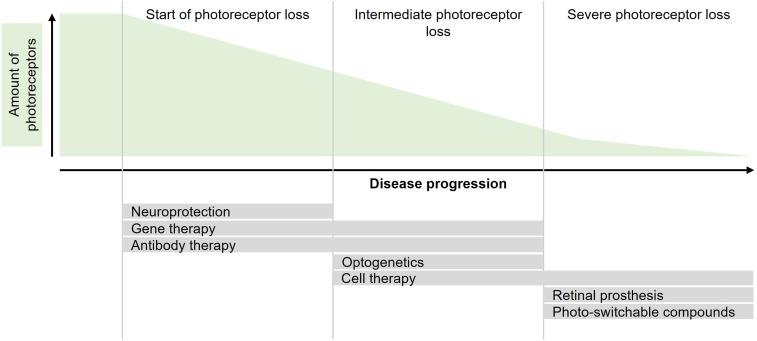
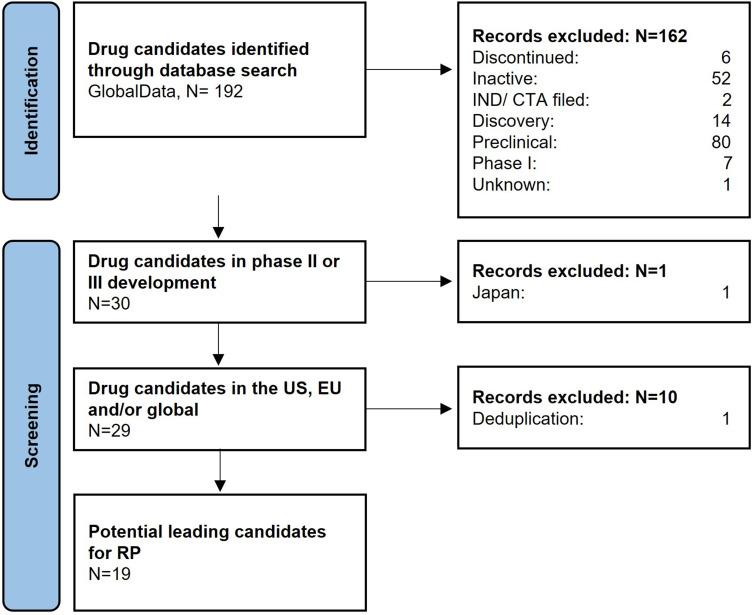
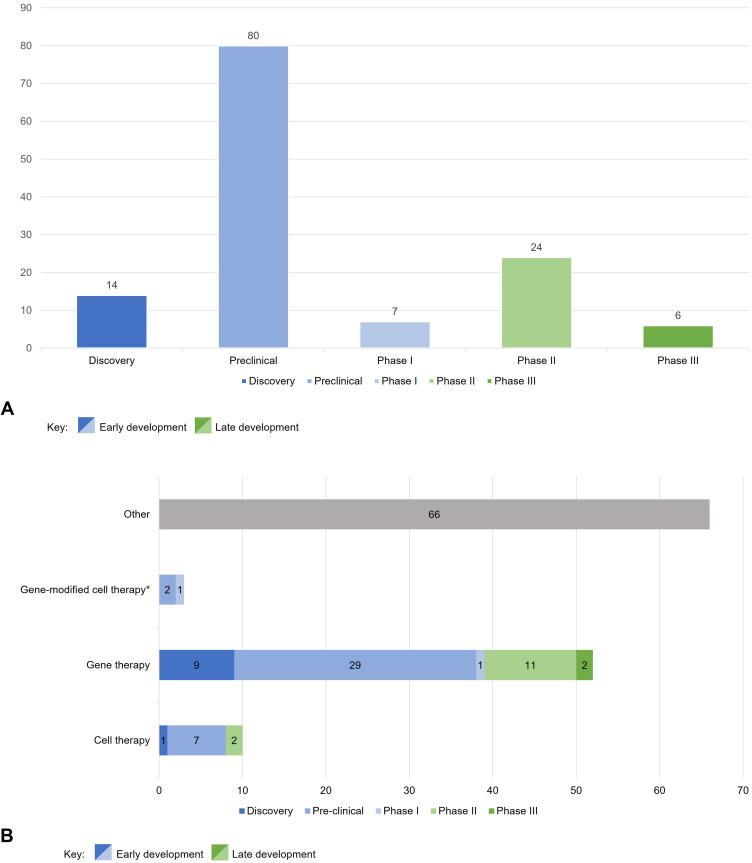
Retinitis Pigmentosa (RP) is a group of inherited retinal dystrophies (IRDs) characterised by progressive vision loss. Patients with RP experience a significant impact on daily activities, social interactions, and employment, reducing their quality of life. Frequent delays in referrals and no standard treatment for most patients also contribute to the high unmet need for RP. This paper aims to describe the evolving therapeutic landscape for RP including the rationale for advanced therapy medicinal products (ATMPs). A review of available data was conducted in three stages: (1) a search of publicly available literature; (2) qualitative research with physicians treating RP patients in France, Germany, Italy, Spain, and the UK; and (3) a review of leading candidates in the RP pipeline. Globally, there are currently over 100 drugs in development for RP; 50% of which are ATMPs. Amongst the 15 cell and gene therapies in late-stage development, 5 leading candidates have been selected to profile based on the development stage, drug target and geography: gene therapies AGN-151597, GS-030 and VMCO-1 and human stem cell therapies jCell and ReN-003. Hereditary retinal diseases are suitable for treatment with cell and gene therapies due to the accessibility of the retina and its immune privilege and compartmentalisation. Therapeutic approaches that aim to rescue photoreceptors (eg gene therapies) require that non-functional target cells are still present, whereas other therapies (eg cell therapies) are not reliant on the presence of viable photoreceptors. Gene therapies may be attractive as their fundamental goal is to restore vision; however, cell therapies will likely have a broader application and do not rely on genetic testing, which can delay treatment. Ensuring effective therapeutic options for RP patients across disease stages requires the continued diversification and advancement of the development pipeline, and sustained efforts to promote early patient identification and timely diagnosis.
视网膜色素变性(RP)是一组遗传性视网膜营养不良症(IRDs),其特征是视力逐渐丧失。RP患者在日常活动、社交互动和就业方面受到重大影响,生活质量下降。大多数患者转诊频繁延迟且缺乏标准治疗方法,这也导致了对RP的高未满足需求。本文旨在描述RP不断发展的治疗前景,包括先进治疗药品(ATMPs)的原理。对现有数据的审查分三个阶段进行:(1)搜索公开可用的文献;(2)对法国、德国、意大利、西班牙和英国治疗RP患者的医生进行定性研究;(3)审查RP研发管线中的领先候选药物。在全球范围内,目前有超过100种药物正在研发用于治疗RP;其中50%是ATMPs。在15种处于后期开发阶段的细胞和基因疗法中,根据开发阶段、药物靶点和地理位置选择了5种领先候选药物进行介绍:基因疗法AGN-151597、GS-030和VMCO-1以及人类干细胞疗法jCell和ReN-003。由于视网膜的可及性及其免疫豁免和分区特性,遗传性视网膜疾病适合用细胞和基因疗法进行治疗。旨在挽救光感受器的治疗方法(如基因疗法)要求仍存在无功能的靶细胞,而其他疗法(如细胞疗法)则不依赖于存活的光感受器的存在。基因疗法可能具有吸引力,因为其基本目标是恢复视力;然而,细胞疗法可能具有更广泛的应用,并且不依赖于基因检测,基因检测可能会延迟治疗。为RP患者在疾病各个阶段确保有效的治疗选择,需要研发管线持续多样化和推进,并持续努力促进早期患者识别和及时诊断。
 Zotero 插件