
淀粉酶基因拷贝数与唾液淀粉酶丰度可预测全谷物饮食对减脂的效果。
abundance and salivary amylase gene copy number predict fat loss in response to wholegrain diets.
作者信息
Christensen Lars, Hjorth Mads F, Krych Lukasz, Licht Tine Rask, Lauritzen Lotte, Magkos Faidon, Roager Henrik M
机构信息
Department of Nutrition, Exercise and Sports, University of Copenhagen, Copenhagen, Denmark.
Novo Nordisk Foundation, Copenhagen, Denmark.
出版信息
Front Nutr. 2022 Aug 22;9:947349. doi: 10.3389/fnut.2022.947349. eCollection 2022.
BACKGROUND
Salivary amylase (AMY1) gene copy number (CN) and abundance in the gut are involved in carbohydrate digestion in the upper and lower gastrointestinal tract, respectively; and have been suggested as prognostic biomarkers for weight loss among overweight individuals consuming diets rich in fiber and wholegrains.
OBJECTIVE
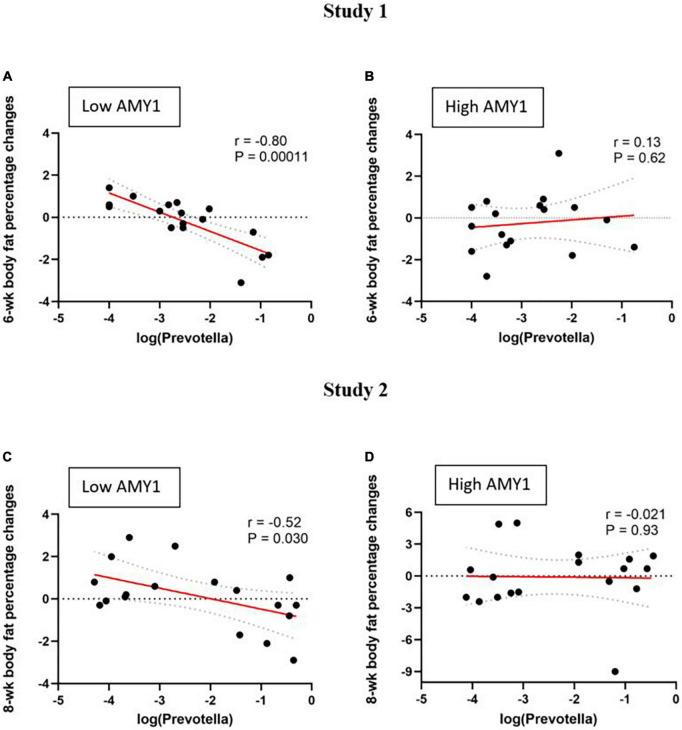
We hypothesized that abundance would be linked to greater loss of body fat after wholegrain consumption among individuals with low AMY1 CN, but not in those with high AMY1 CN.
METHODS
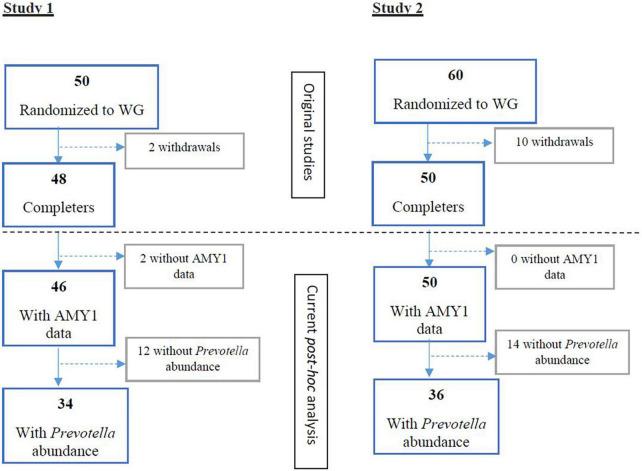
We reanalyzed data from two independent randomized wholegrain interventions (fiber intake ∼33 g/d for 6-8 weeks), to investigate the relationship between baseline abundance and body fat loss among healthy, overweight participants stratified into two groups by median AMY1 CN. Individuals with no detected spp. were excluded from the main analysis.
RESULTS
In both studies, individuals with low AMY1 CN exhibited a positive correlation between baseline abundance and fat loss after consuming the wholegrain diet ( > 0.5, < 0.05), but no correlation among participants with high AMY1 CN ( ≥ 0.6). Following consumption of the refined wheat control diets, there were no associations between baseline abundance and changes in body fat in any of the AMY1 groups.
CONCLUSION
These results suggest that abundance together with AMY1 CN can help predict fat loss in response to wholegrain diets, highlighting the potential of these biomarkers in personalized obesity management.
背景
唾液淀粉酶(AMY1)基因拷贝数(CN)以及其在肠道中的丰度分别参与上、下消化道的碳水化合物消化;并且已被认为是超重个体在食用富含纤维和全谷物的饮食时体重减轻的预后生物标志物。
目的
我们假设,对于AMY1 CN低的个体,食用全谷物后其丰度会与更多的体脂减少相关联,但对于AMY1 CN高的个体则不然。
方法
我们重新分析了两项独立的全谷物随机干预试验(纤维摄入量约为33克/天,持续6 - 8周)的数据,以调查在按AMY1 CN中位数分为两组的健康超重参与者中,基线丰度与体脂减少之间的关系。未检测到特定物种的个体被排除在主要分析之外。
结果
在两项研究中,AMY1 CN低的个体在食用全谷物饮食后,基线丰度与脂肪减少之间呈现正相关(> 0.5,< 0.05),但AMY1 CN高的参与者之间无相关性(≥ 0.6)。食用精制小麦对照饮食后,任何AMY1组的基线丰度与体脂变化之间均无关联。
结论
这些结果表明,丰度与AMY1 CN共同有助于预测对全谷物饮食的脂肪减少反应,突出了这些生物标志物在个性化肥胖管理中的潜力。
 Zotero 插件