
一种可预测胶质瘤预后和耐药性的新型缺氧驱动基因特征。
A novel hypoxia-driven gene signature that can predict the prognosis and drug resistance of gliomas.
作者信息
Ren Peng, Wang Jing-Ya, Zeng Zhi-Rui, Li Nan-Xi, Chen Hong-Lei, Peng Xin-Ge, Bhawal Ujjal K, Guo Wen-Zhi
机构信息
Department of Anesthesiology, The Seventh Medical Center of Chinese PLA General Hospital, Beijing, China.
Guizhou Provincial Key Laboratory of Pathogenesis and Drug Research on Common Chronic Diseases, Department of Physiology, School of Basic Medical Sciences, Guizhou Medical University, Guizhou, China.
出版信息
Front Genet. 2022 Sep 2;13:976356. doi: 10.3389/fgene.2022.976356. eCollection 2022.
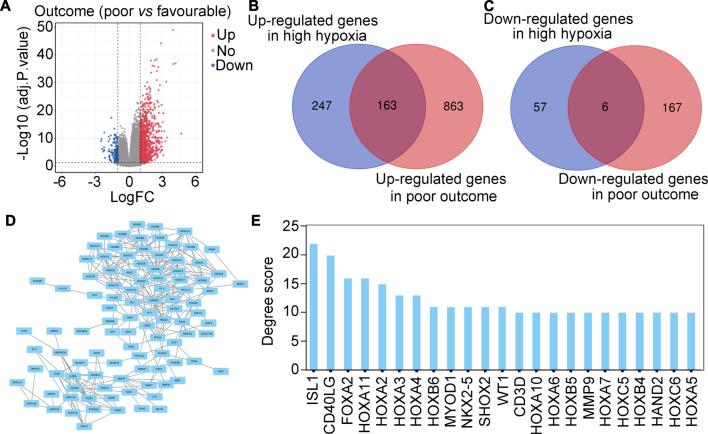
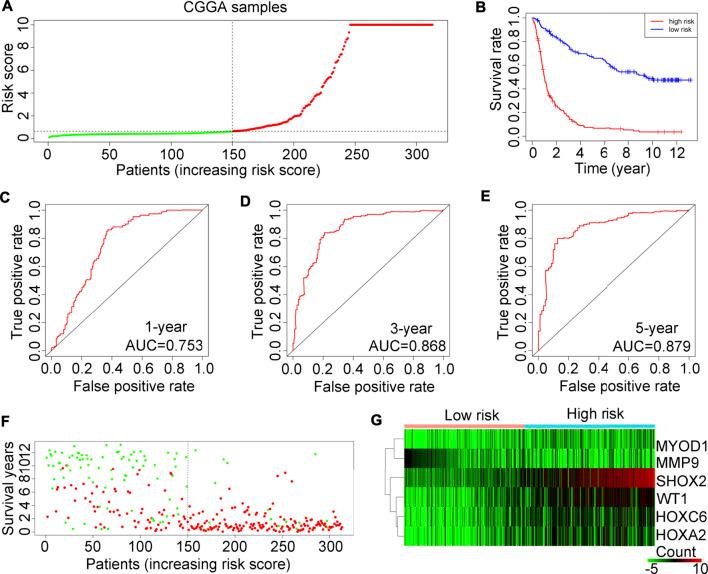
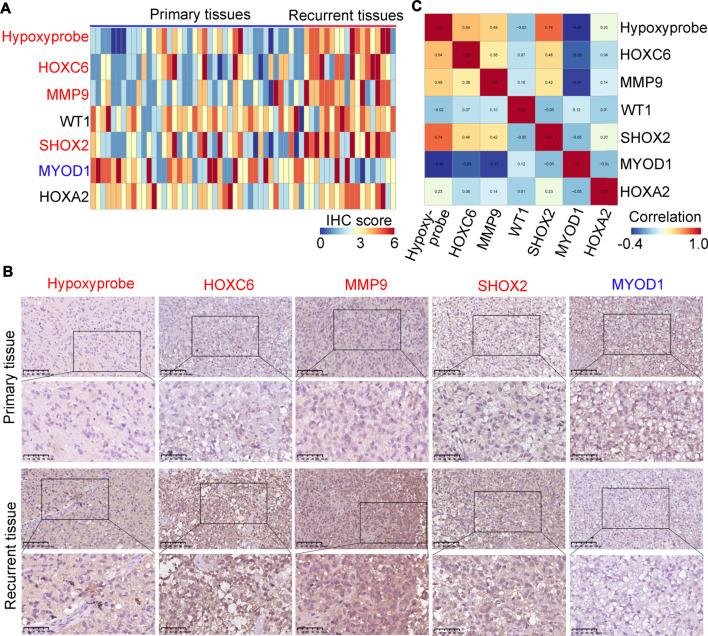
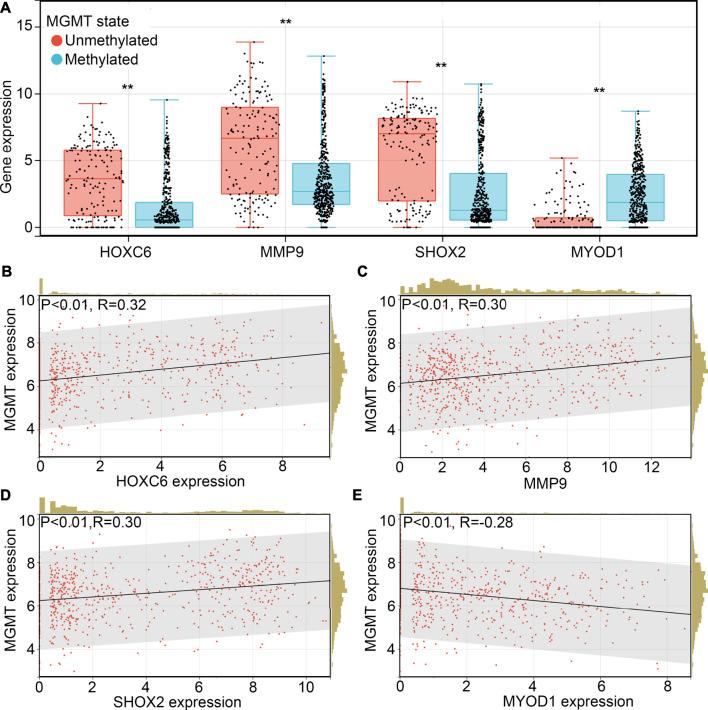
Hypoxia spontaneously forms in the interior of glioma tissues and regulates the expression of various genes. However, the status of hypoxia-driven genes in glioma tissues is not completely known. In the current study, RNA-seq data of 695 glioma tissues in The Cancer Genome Atlas (TCGA) were set as a discovery cohort and were used to identify hypoxia-driven genes and construct a novel gene signature. The prognostic values of that signature were verified in data from the TCGA and the Chinese Glioma Genome Atlas (CGGA). The expression and diagnostic values of hypoxia-driven genes were analyzed using immunohistochemistry and receiver operator characteristic curves. Finally, the effects of hypoxia-driven genes on temozolomide (TMZ) resistance were analyzed by western blot, CCK-8 and colony formation assay. A total of 169 hypoxia-driven genes were identified, which were associated with a poor outcome in glioma patients. Among them, 22 genes had a degree score ≥10 and 6 genes (WT1, HOXA2, HOXC6, MMP9, SHOX2 and MYOD1) were selected to construct a signature to classify glioma patients into low- or high-risk groups. That signature had a remarkable prognostic value for glioma patients in TCGA and CGGA. The expression of HOXC6, MMP9, SHOX2 and MYOD1 was associated with hypoxia degree in glioma tissues and in recurrent cases, had a remarkable diagnostic value and a significant relationship with disease free survival in glioma patients. Moreover, SHOX2 was highly expressed in glioma tissues with O-6-methylguanine-DNA methyltransferase (MGMT)-unmethylation and temozolomide (TMZ) resistant glioma cell lines, and associated with MGMT expression. Knockdown the expression of SHOX2 significantly reduced the TMZ-resistance induced by hypoxia in glioma cells. Ultimately, we identified six novel hypoxia-driven genes for reliable prognostic prediction in gliomas and found that SHOX2 might be a potential target to overcome the TMZ resistance induced by hypoxia.
低氧在胶质瘤组织内部自发形成,并调节多种基因的表达。然而,胶质瘤组织中低氧驱动基因的状态尚不完全清楚。在本研究中,将癌症基因组图谱(TCGA)中695例胶质瘤组织的RNA测序数据作为发现队列,用于鉴定低氧驱动基因并构建新的基因特征。该特征的预后价值在TCGA和中国胶质瘤基因组图谱(CGGA)的数据中得到验证。使用免疫组织化学和受试者工作特征曲线分析低氧驱动基因的表达和诊断价值。最后,通过蛋白质免疫印迹、CCK-8和集落形成试验分析低氧驱动基因对替莫唑胺(TMZ)耐药性的影响。共鉴定出169个低氧驱动基因,这些基因与胶质瘤患者的不良预后相关。其中,22个基因的度分值≥10,选择6个基因(WT1、HOXA2、HOXC6、MMP9、SHOX2和MYOD1)构建一个特征,将胶质瘤患者分为低风险或高风险组。该特征对TCGA和CGGA中的胶质瘤患者具有显著的预后价值。HOXC6、MMP9、SHOX2和MYOD1的表达与胶质瘤组织中的低氧程度相关,在复发病例中具有显著的诊断价值,且与胶质瘤患者的无病生存期显著相关。此外,SHOX2在O-6-甲基鸟嘌呤-DNA甲基转移酶(MGMT)未甲基化的胶质瘤组织和对替莫唑胺(TMZ)耐药的胶质瘤细胞系中高表达,并与MGMT表达相关。敲低SHOX2的表达显著降低了低氧诱导的胶质瘤细胞对TMZ的耐药性。最终,我们鉴定出六个新的低氧驱动基因用于胶质瘤的可靠预后预测,并发现SHOX2可能是克服低氧诱导的TMZ耐药性的潜在靶点。






 Zotero 插件