
新型口服蛋白酶体抑制剂 FHND6091 的临床前药代动力学、组织分布和体外代谢研究。
Preclinical Pharmacokinetics, Tissue Distribution and in vitro Metabolism of FHND6091, a Novel Oral Proteasome Inhibitor.
机构信息
College of Science, Nanjing Forestry University, Nanjing, People's Republic of China.
College of Life Science, Nanjing Normal University, Nanjing, People's Republic of China.
出版信息
Drug Des Devel Ther. 2022 Sep 13;16:3087-3107. doi: 10.2147/DDDT.S371020. eCollection 2022.
INTRODUCTION
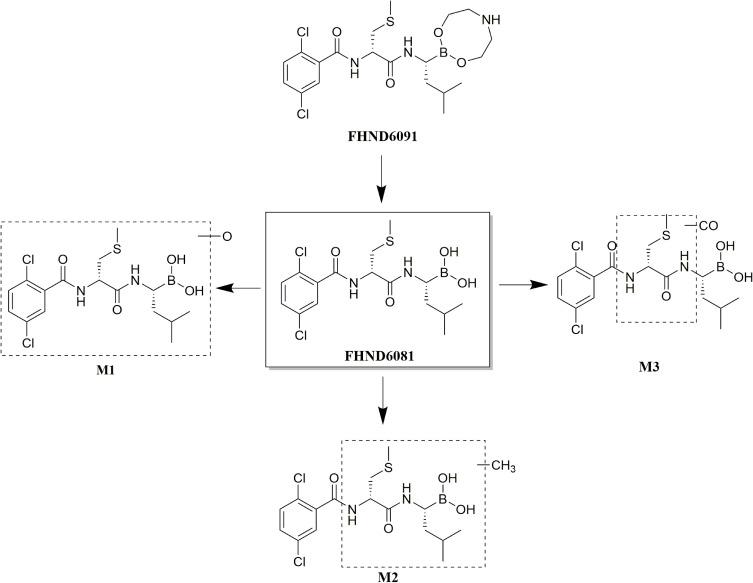
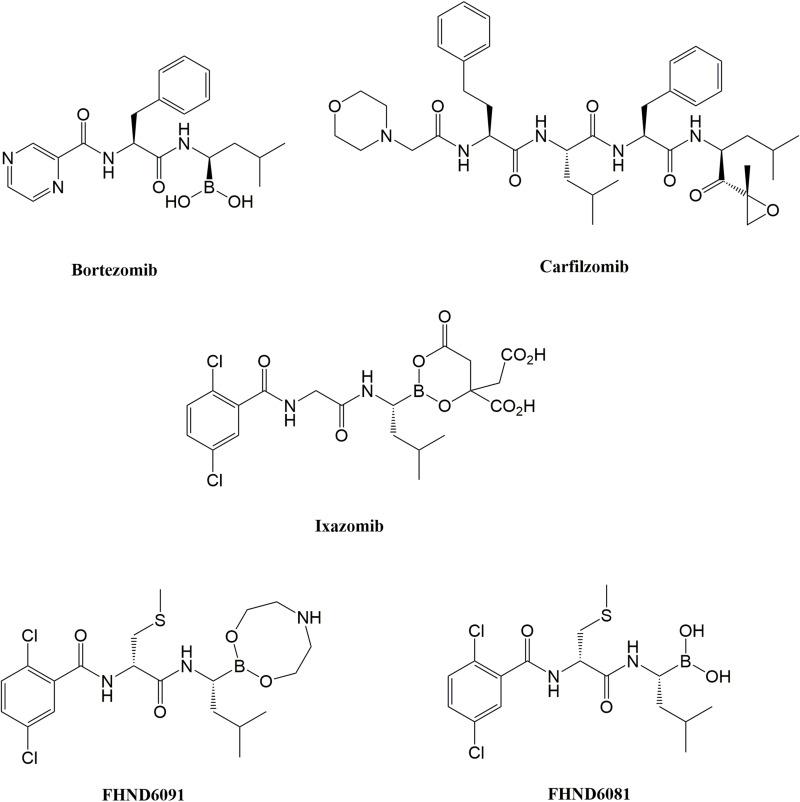
FHND6091, a novel N-capped dipeptidyl boronic acid proteasome inhibitor with promising pharmacological properties, entirely converted into active form FHND6081 under physiological conditions. The proteasome, a key component of the ubiquitin-proteasome pathway (UPP), has emerged as a validated target of multiple myeloma (MM) therapeutics. FHND6091 is a selective oral proteasome inhibitor that binds irreversibly to the β5 submit of the 20S proteasome and exerts anti-cancer roles.
METHODS
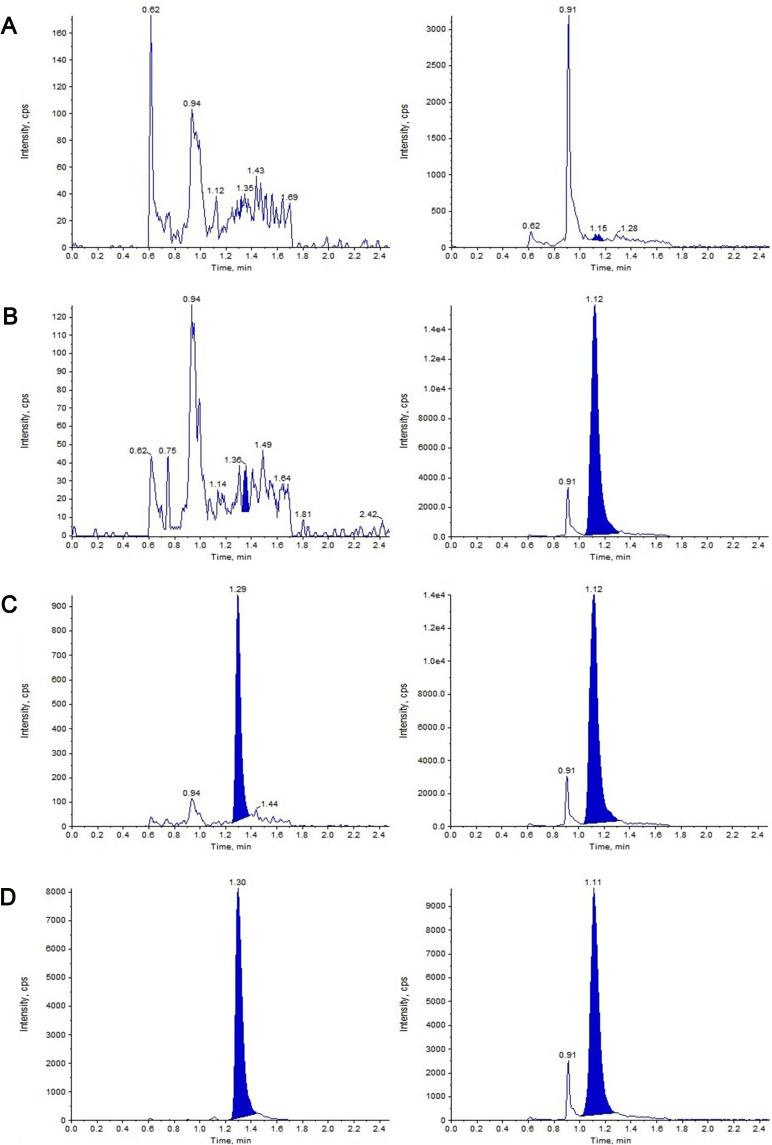
In this study, we investigated the metabolic stability, metabolite production, metabolic pathways and plasma protein binding (PPB) of FHND6081 along with its absorption, tissue distribution, excretion (ADME) and pharmacokinetics (PK) in animals.
RESULTS
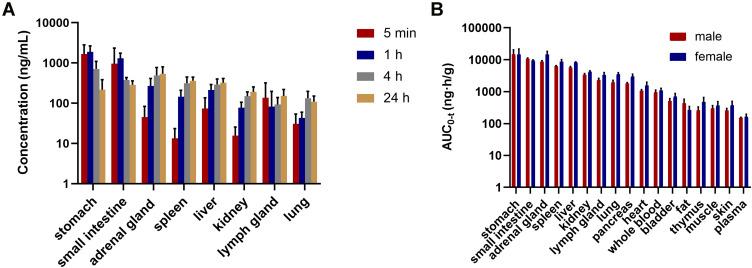
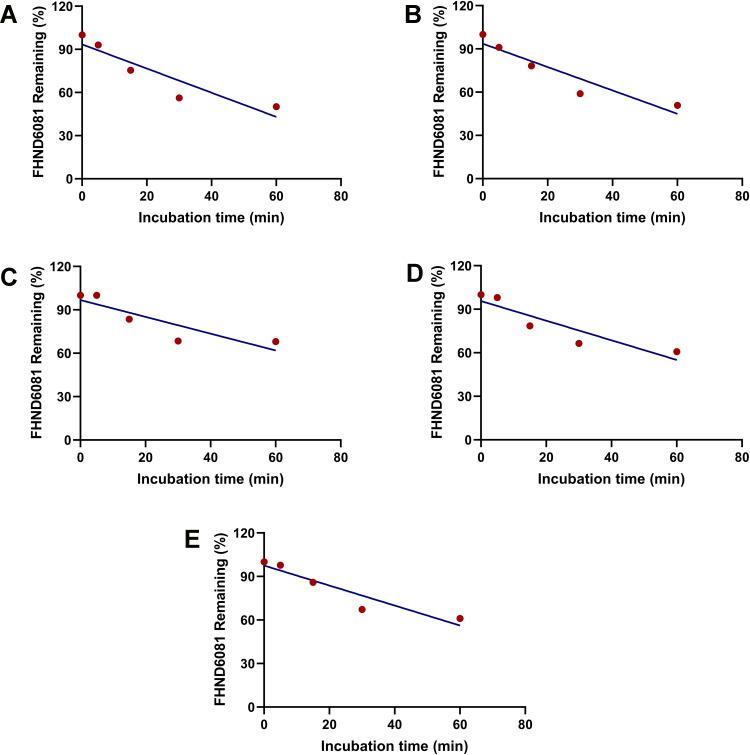
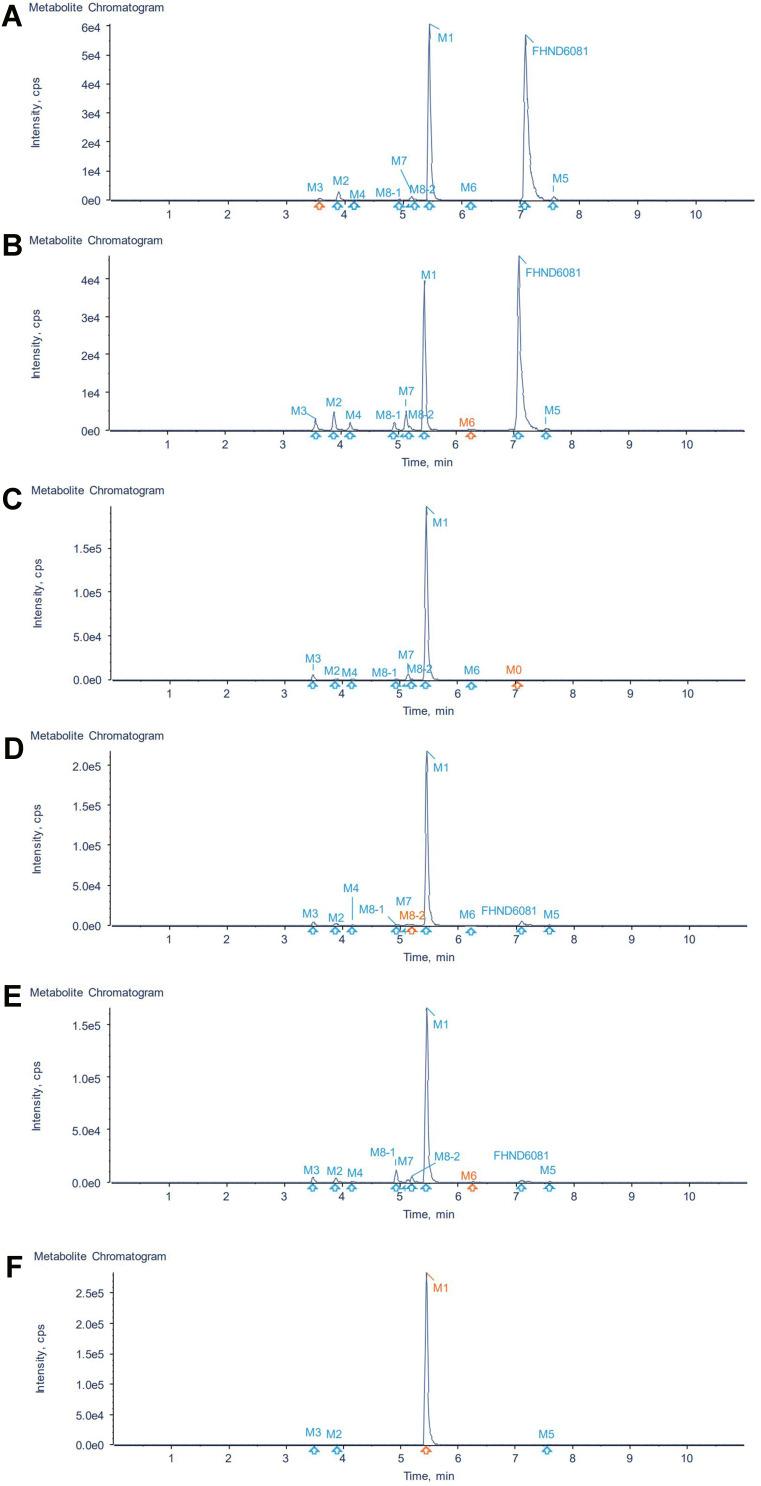
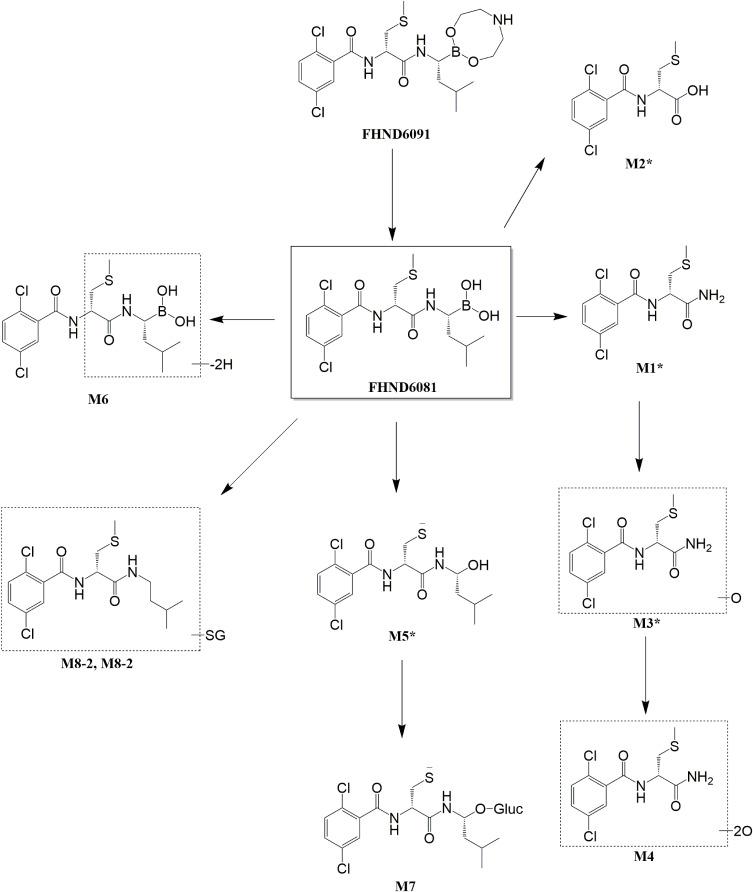
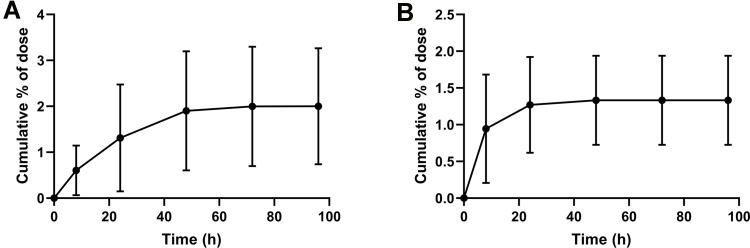
Ultra-high performance liquid chromatography-tandem quadrupole time-of-flight mass spectrometry (UPLC-Q-TOF/MS) identified a total of nine new metabolites after co-incubation with FHND6091 in hepatocytes from different species. A hypothetical CYP450-metabolic pathway including dehydrogenation, N-dealkylation plus mono-oxygenation and other was proposed. In addition, FHND6081 was highly bound to plasma proteins (>99%); nevertheless, it preferred to partition to red blood cells (B/P ratio: 4.91). The results of microsomal metabolic stability corroborated that FHND6081 was a moderate-clearance compound. In Caco-2 cell experiments, the compound displayed modest permeability suggesting that it may show limited bioavailability via oral routes. Furthermore, FHND6081 was extensively distributed in rats and the highest exposure was achieved in the stomach followed by the small intestine and adrenal gland. Pharmacokinetic studies were done by using Sprague-Dawley (SD) rats, oral absorption was fast and plasma exposure was dose-dependent and oral bioavailability were low. At the same dose, FHND6081 exposure was severalfold higher in whole blood than in plasma, which was consistent with blood cell partitioning. Moreover, only a small fraction of the parent compound was excreted via feces and urine and oxidative metabolites were detected in feces and plasma.
CONCLUSION
The overall preclinical pharmacokinetic profile supported the selection and development of FHND6091 as a clinical candidate.
简介
FHND6091 是一种新型的 N-封端二肽硼酸蛋白酶体抑制剂,具有有前景的药理学特性,在生理条件下完全转化为活性形式 FHND6081。蛋白酶体是泛素蛋白酶体途径 (UPP) 的关键组成部分,已成为多发性骨髓瘤 (MM) 治疗的有效靶点。FHND6091 是一种选择性口服蛋白酶体抑制剂,它不可逆地结合到 20S 蛋白酶体的β5 亚基上,发挥抗癌作用。
方法
在这项研究中,我们研究了 FHND6081 的代谢稳定性、代谢产物生成、代谢途径以及与吸收、组织分布、排泄(ADME)和药代动力学(PK)相关的血浆蛋白结合(PPB)在动物体内的情况。
结果
超高效液相色谱-串联四极杆飞行时间质谱 (UPLC-Q-TOF/MS) 鉴定了在不同物种的肝细胞中与 FHND6091 共孵育后共产生了 9 种新代谢物。提出了一种假设的 CYP450 代谢途径,包括脱氢、N-脱烷基化加单加氧作用等。此外,FHND6081 与血浆蛋白高度结合(>99%);然而,它更喜欢分配到红细胞中(B/P 比:4.91)。微粒体代谢稳定性的结果证实 FHND6081 是一种中等清除率的化合物。在 Caco-2 细胞实验中,该化合物显示出中等的通透性,表明其通过口服途径可能表现出有限的生物利用度。此外,FHND6081 在大鼠体内广泛分布,在胃中暴露量最高,其次是小肠和肾上腺。使用 Sprague-Dawley(SD)大鼠进行药代动力学研究,口服吸收迅速,血浆暴露呈剂量依赖性,口服生物利用度较低。在相同剂量下,全血中 FHND6081 的暴露量是血浆中的数倍,这与血细胞分配一致。此外,只有一小部分母体化合物通过粪便和尿液排泄,氧化代谢物在粪便和血浆中被检测到。
结论
总体的临床前药代动力学特征支持选择和开发 FHND6091 作为临床候选药物。



 Zotero 插件