
姜黄素修饰的金刚石纳米颗粒在细胞成像及Mg/Mn离子独特的比率检测中的应用。
Use of curcumin-modified diamond nanoparticles in cellular imaging and the distinct ratiometric detection of Mg/Mn ions.
作者信息
Du Bo-Wei, Tien Le Trong, Lin Ching-Chang, Ko Fu-Hsiang
机构信息
Department of Materials Science and Engineering, National Chiao Tung University Hsinchu 30010 Taiwan Republic of China
Research Center for Advanced Science and Technology (RCAST), The University of Tokyo Japan.
出版信息
Nanoscale Adv. 2021 Jun 23;3(15):4459-4470. doi: 10.1039/d1na00298h. eCollection 2021 Jul 27.
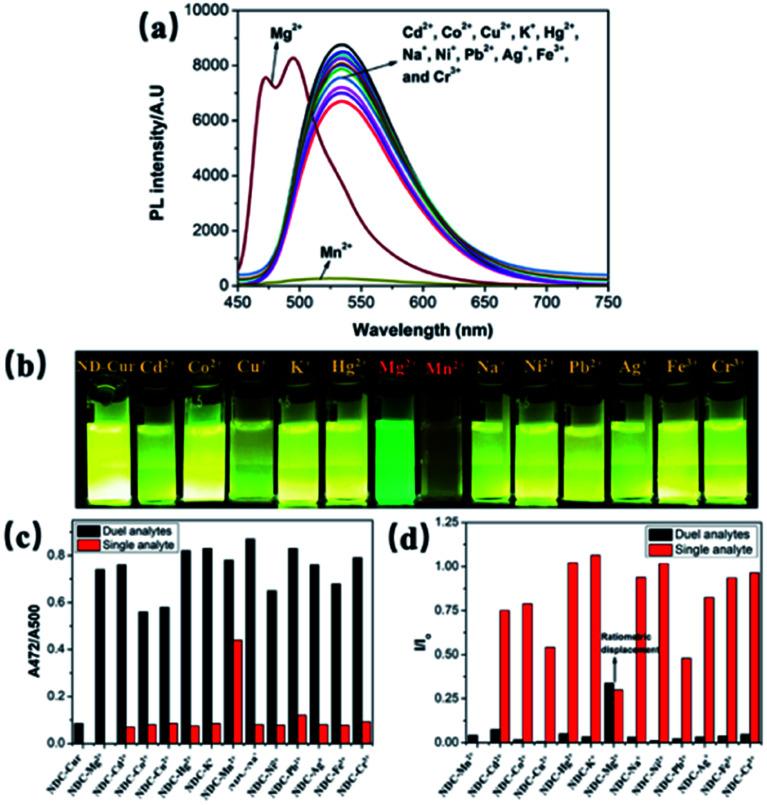
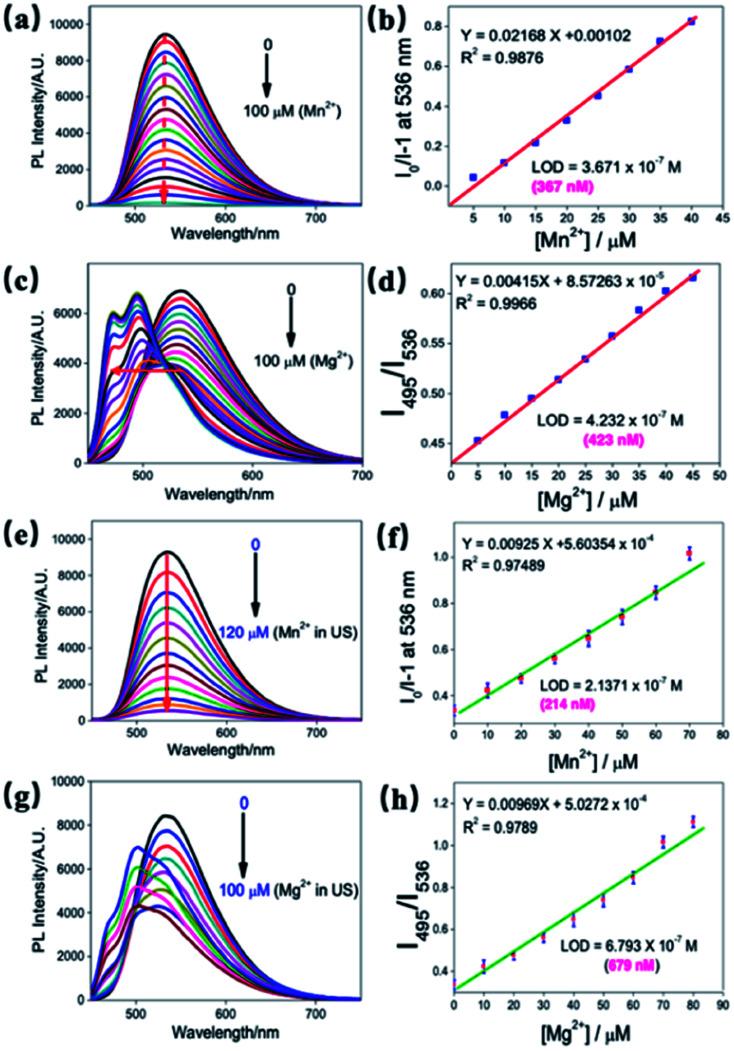
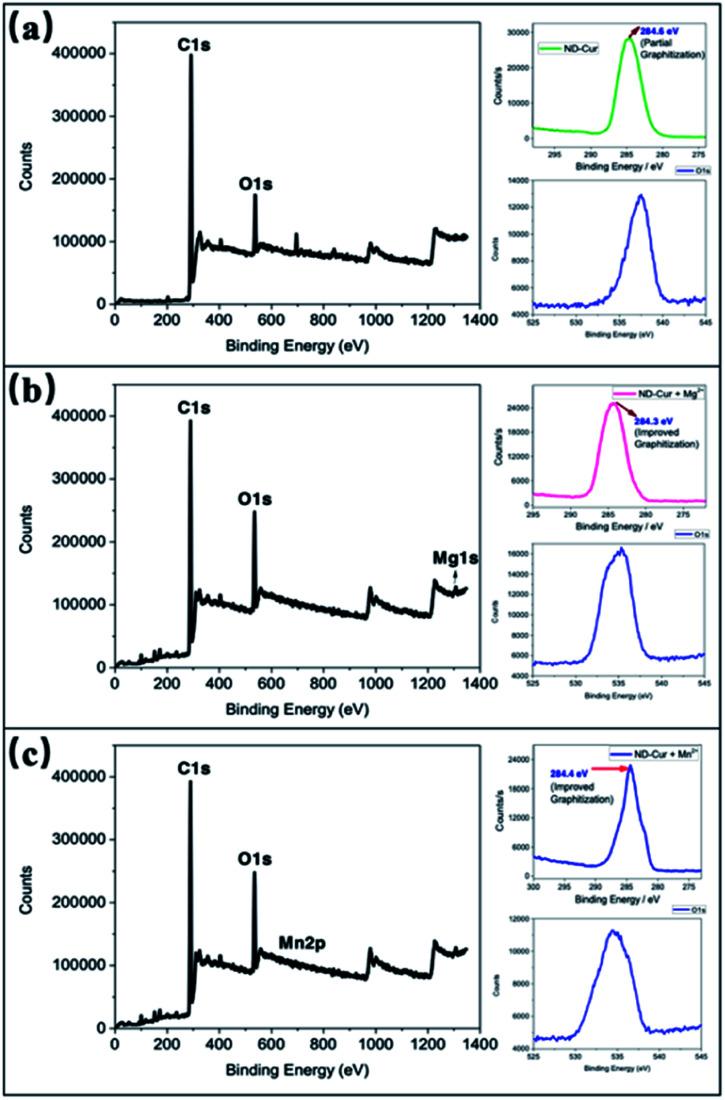
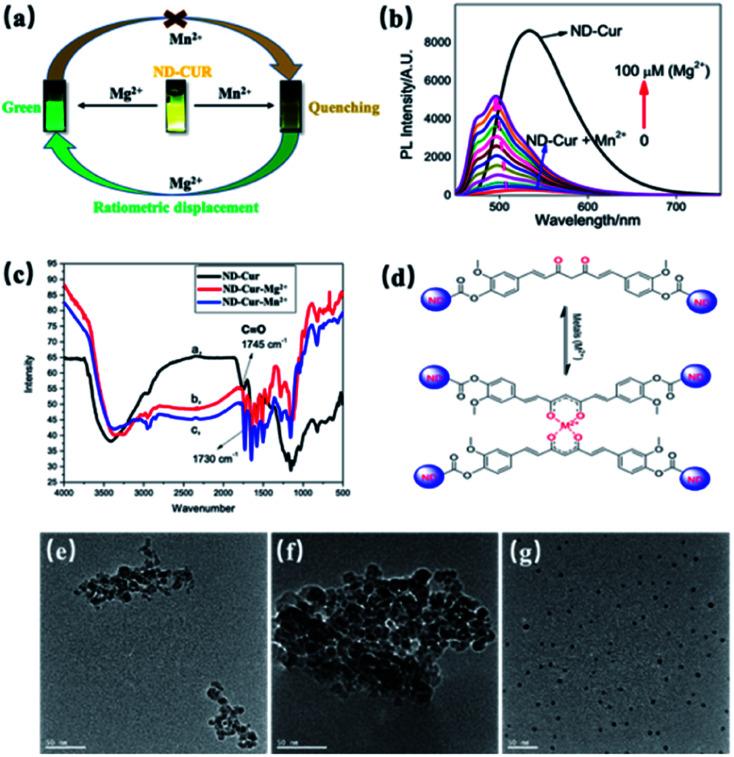
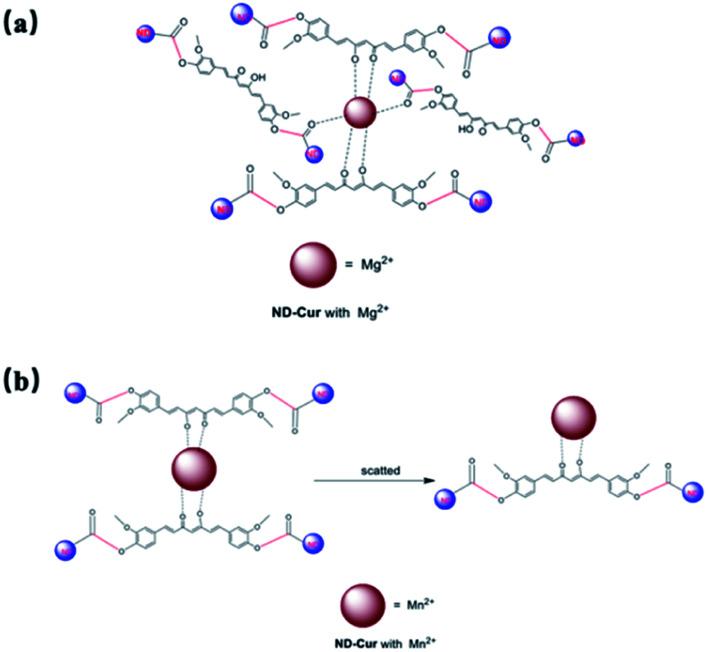
An intrinsically luminescent curcumin-modified nanodiamond derivative (ND-Cur) has been synthesized as an effective probe for cell imaging and sensory applications. DLS data allowed the particle size of ND-Cur to be estimated (170.6 ± 46.8 nm) and the zeta potential to be determined. The photoluminescence signal of ND-Cur was observed at 536 nm, with diverse intensities at excitation wavelengths of 350 to 450 nm, producing yellow emission with a quantum yield () of 0.06. Notably, the results of the MTT assay and cell imaging experiments showed the low toxicity and biocompatibility of ND-Cur. Subsequently, investigations of the selectivity towards Mg and Mn ions were performed by measuring intense fluorescence peak shifts and "Turn-off" responses, respectively. In the presence of Mg, the fluorescence peak (536 nm) was shifted and then displayed two diverse peaks at 498 and 476 nm. On the other hand, for Mn ions, ND-Cur revealed a fluorescence-quenching response at 536 nm. Fluorescence studies indicated that the nanomolar level detection limits (LODs) of Mg and Mn ions were approximately 423 and 367 nM, respectively. The sensing mechanism, ratiometric changes and binding site were established through PL, FTIR, Raman, SEM, TEM, DLS and zeta potential analyses. Furthermore, the effective determination of Mg and Mn ions by ND-Cur has been validated through cell imaging experiments.
一种具有本征发光特性的姜黄素修饰纳米金刚石衍生物(ND-Cur)已被合成出来,作为细胞成像和传感应用的有效探针。动态光散射(DLS)数据可用于估算ND-Cur的粒径(170.6±46.8nm)并确定其zeta电位。在536nm处观察到ND-Cur的光致发光信号,在350至450nm的激发波长下具有不同强度,产生量子产率()为0.06的黄色发射。值得注意的是,MTT法和细胞成像实验结果表明ND-Cur具有低毒性和生物相容性。随后,分别通过测量强烈的荧光峰位移和“关闭”响应来研究对镁离子和锰离子的选择性。在镁离子存在下,荧光峰(536nm)发生位移,然后在498和476nm处显示出两个不同的峰。另一方面,对于锰离子,ND-Cur在536nm处显示出荧光猝灭响应。荧光研究表明,镁离子和锰离子的纳摩尔级检测限(LOD)分别约为423和367 nM。通过光致发光(PL)、傅里叶变换红外光谱(FTIR)、拉曼光谱、扫描电子显微镜(SEM)、透射电子显微镜(TEM)、动态光散射(DLS)和zeta电位分析确定了传感机制、比率变化和结合位点。此外,通过细胞成像实验验证了ND-Cur对镁离子和锰离子的有效测定。




 Zotero 插件