
水稻叶片响应稻草还田的蛋白质组学与代谢组学整合分析
Integrated proteomics and metabolomics analysis of rice leaves in response to rice straw return.
作者信息
Yan Shuangshuang, Gong Shengdan, Sun Kexin, Li Jinwang, Zhang Hongming, Fan Jinsheng, Gong Zhenping, Zhang Zhongxue, Yan Chao
机构信息
College of Agriculture, Northeast Agricultural University, Harbin, China.
Institute of Forage and Grassland Sciences, Heilongjiang Academy of Agricultural Sciences, Harbin, China.
出版信息
Front Plant Sci. 2022 Sep 13;13:997557. doi: 10.3389/fpls.2022.997557. eCollection 2022.
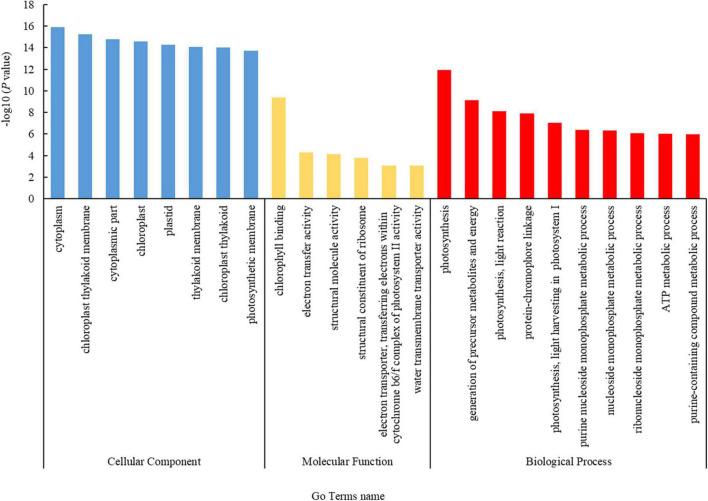
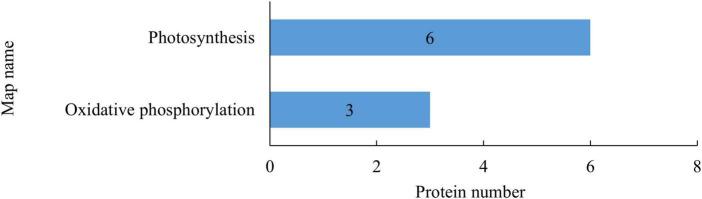
Straw return is crucial for the sustainable development of rice planting, but no consistent results were observed for the effect of straw return on rice growth. To investigate the response of rice leaves to rice straw return in Northeast China, two treatments were set, no straw return (S0) and rice straw return (SR). We analyzed the physiological index of rice leaves and measured differentially expressed proteins (DEPs) and differentially expressed metabolites (DEMs) levels in rice leaves by the use of proteomics and metabolomics approaches. The results showed that, compared with the S0 treatment, the SR treatment significantly decreased the dry weight of rice plants and non-structural carbohydrate contents and destroyed the chloroplast ultrastructure. In rice leaves of SR treatment, 329 DEPs were upregulated, 303 DEPs were downregulated, 44 DEMs were upregulated, and 71 DEMs were downregulated. These DEPs were mainly involved in photosynthesis and oxidative phosphorylation, and DEMs were mainly involved in alpha-linolenic acid metabolism, galactose metabolism, glycerophospholipid metabolism, pentose and gluconic acid metabolism, and other metabolic pathways. Rice straw return promoted the accumulation of scavenging substances of active oxygen and osmotic adjustment substances, such as glutathione, organic acids, amino acids, and other substances. The SR treatment reduced the photosynthetic capacity and energy production of carbon metabolism, inhibiting the growth of rice plants, while the increase of metabolites involved in defense against abiotic stress enhanced the adaptability of rice plants to straw return stress.
秸秆还田对水稻种植的可持续发展至关重要,但秸秆还田对水稻生长的影响尚未观察到一致的结果。为了研究中国东北地区水稻叶片对秸秆还田的响应,设置了两个处理,即不进行秸秆还田(S0)和水稻秸秆还田(SR)。我们采用蛋白质组学和代谢组学方法分析了水稻叶片的生理指标,并测定了水稻叶片中差异表达蛋白(DEPs)和差异表达代谢物(DEMs)的水平。结果表明,与S0处理相比,SR处理显著降低了水稻植株的干重和非结构性碳水化合物含量,并破坏了叶绿体超微结构。在SR处理的水稻叶片中,329个DEPs上调,303个DEPs下调,44个DEMs上调,71个DEMs下调。这些DEPs主要参与光合作用和氧化磷酸化,而DEMs主要参与α-亚麻酸代谢、半乳糖代谢、甘油磷脂代谢、戊糖和葡萄糖酸代谢等代谢途径。秸秆还田促进了活性氧清除物质和渗透调节物质如谷胱甘肽、有机酸、氨基酸等物质的积累。SR处理降低了碳代谢的光合能力和能量产生,抑制了水稻植株的生长,而参与抵御非生物胁迫的代谢物的增加增强了水稻植株对秸秆还田胁迫的适应性。




 Zotero 插件