
来自……的金属蝶呤依赖性麦角硫因合酶的发现与表征
Discovery and Characterization of the Metallopterin-Dependent Ergothioneine Synthase from .
作者信息
Beliaeva Mariia A, Seebeck Florian P
机构信息
Department of Chemistry, University of Basel, Mattenstrasse 24a, 4002 Basel, Switzerland.
Molecular Systems Engineering, National Competence Center in Research (NCCR), 4058 Basel, Switzerland.
出版信息
JACS Au. 2022 Aug 16;2(9):2098-2107. doi: 10.1021/jacsau.2c00365. eCollection 2022 Sep 26.
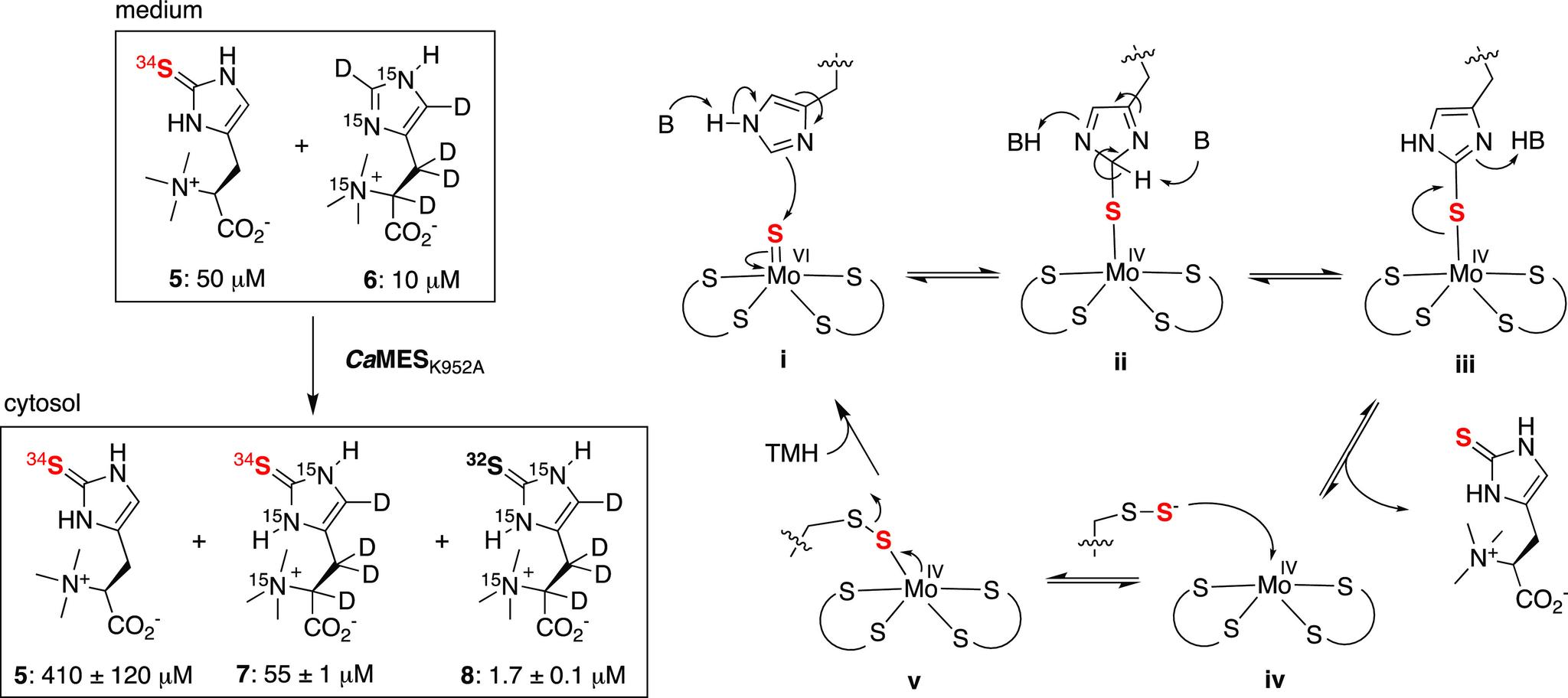
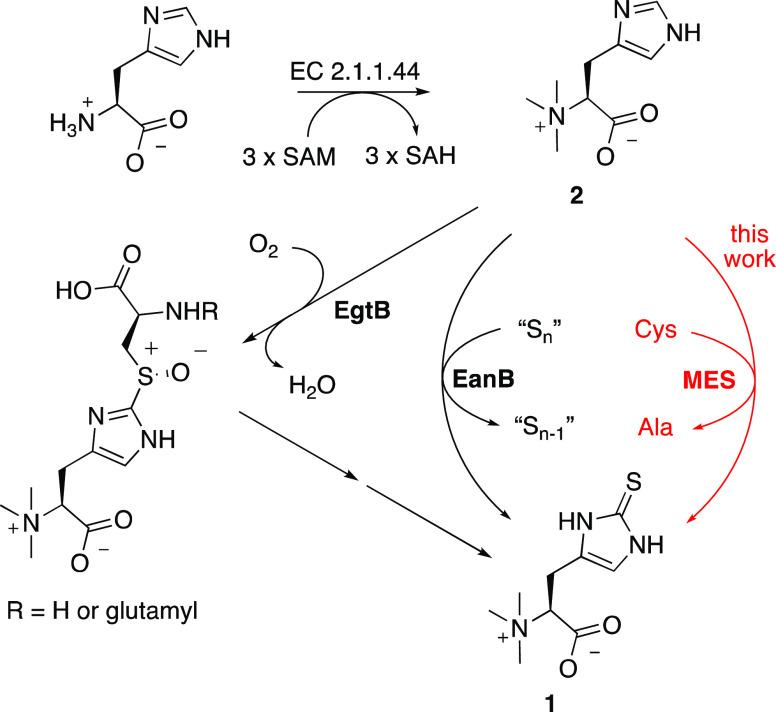
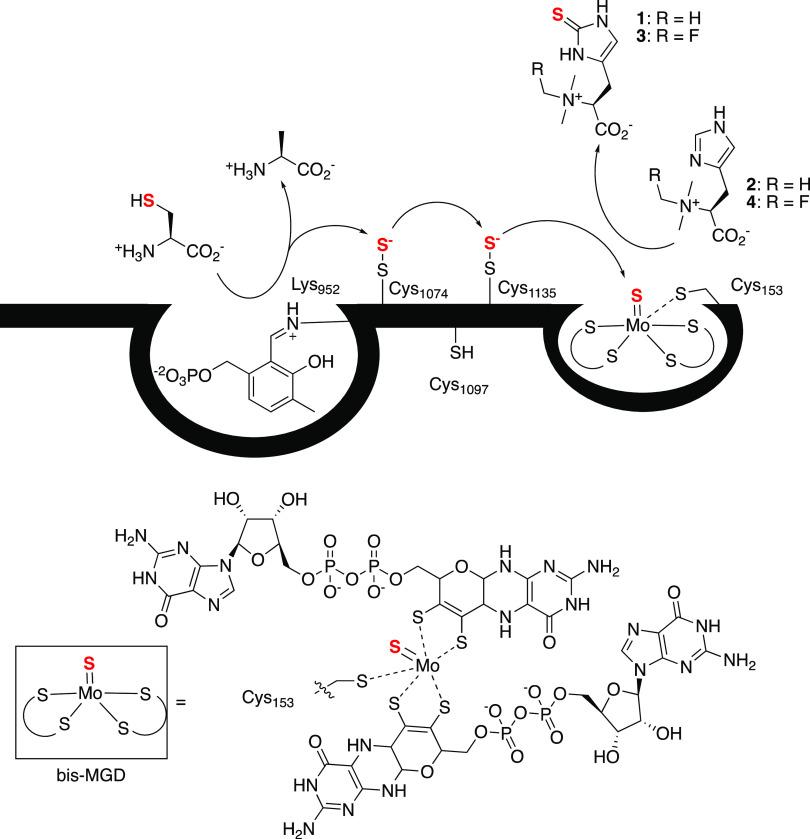
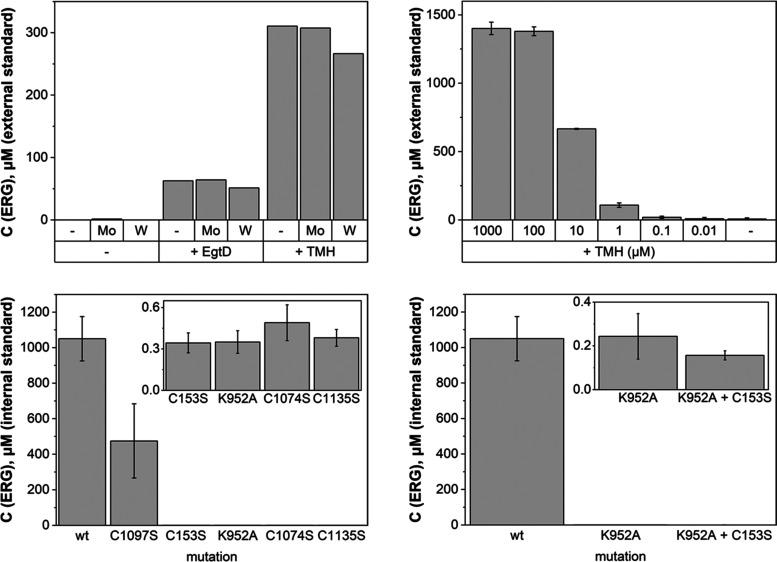
Ergothioneine is a histidine derivative with a 2-mercaptoimidazole side chain and a trimethylated α-amino group. Although the physiological function of this natural product is not yet understood, the facts that many bacteria, some archaea, and most fungi produce ergothioneine and that plants and animals have specific mechanisms to absorb and distribute ergothioneine in specific tissues suggest a fundamental role in cellular life. The observation that ergothioneine biosynthesis has emerged multiple times in molecular evolution points to the same conclusion. Aerobic bacteria and fungi attach sulfur to the imidazole ring of trimethylhistidine an O-dependent reaction that is catalyzed by a mononuclear non-heme iron enzyme. Green sulfur bacteria and archaea use a rhodanese-like sulfur transferase to attach sulfur oxidative polar substitution. In this report, we describe a third unrelated class of enzymes that catalyze sulfur transfer in ergothioneine production. The metallopterin-dependent ergothioneine synthase from contains an N-terminal module that is related to the tungsten-dependent acetylene hydratase and a C-terminal domain that is a functional cysteine desulfurase. The two modules cooperate to transfer sulfur from cysteine onto trimethylhistidine. Inactivation of the C-terminal desulfurase blocks ergothioneine production but maintains the ability of the metallopterin to exchange sulfur between ergothioneine and trimethylhistidine. Homologous bifunctional enzymes are encoded exclusively in anaerobic bacterial and archaeal species.
麦角硫因是一种组氨酸衍生物,带有2-巯基咪唑侧链和三甲基化的α-氨基。尽管这种天然产物的生理功能尚不清楚,但许多细菌、一些古细菌和大多数真菌都能产生麦角硫因,以及植物和动物具有在特定组织中吸收和分布麦角硫因的特定机制,这些事实表明其在细胞生命中具有重要作用。麦角硫因生物合成在分子进化中多次出现这一观察结果也指向了相同的结论。需氧细菌和真菌将硫附着到三甲基组氨酸的咪唑环上——这是一个由单核非血红素铁酶催化的需氧反应。绿硫细菌和古细菌使用一种类似硫代硫酸硫转移酶的酶来附着硫——氧化极性取代反应。在本报告中,我们描述了第三类与其他酶无关的、在麦角硫因产生过程中催化硫转移的酶。来自[具体来源未给出]的依赖金属蝶呤的麦角硫因合酶包含一个与依赖钨的乙炔水合酶相关的N端模块和一个功能性半胱氨酸脱硫酶的C端结构域。这两个模块协同作用,将硫从半胱氨酸转移到三甲基组氨酸上。C端脱硫酶的失活会阻止麦角硫因的产生,但保留了金属蝶呤在麦角硫因和三甲基组氨酸之间交换硫的能力。同源双功能酶仅在厌氧细菌和古细菌物种中编码。

 Zotero 插件