
液质流式分析鉴定卡介苗治疗膀胱癌患者尿液中的异常免疫细胞。
CyTOF analysis identifies unusual immune cells in urine of BCG-treated bladder cancer patients.
机构信息
Department of Immunology and Oncology, National Centre for Biotechnology (CNB) Spanish National Research Council (CSIC), Madrid, Spain.
Department of Medicine, Stanford University School of Medicine, Stanford, CA, United States.
出版信息
Front Immunol. 2022 Sep 15;13:970931. doi: 10.3389/fimmu.2022.970931. eCollection 2022.
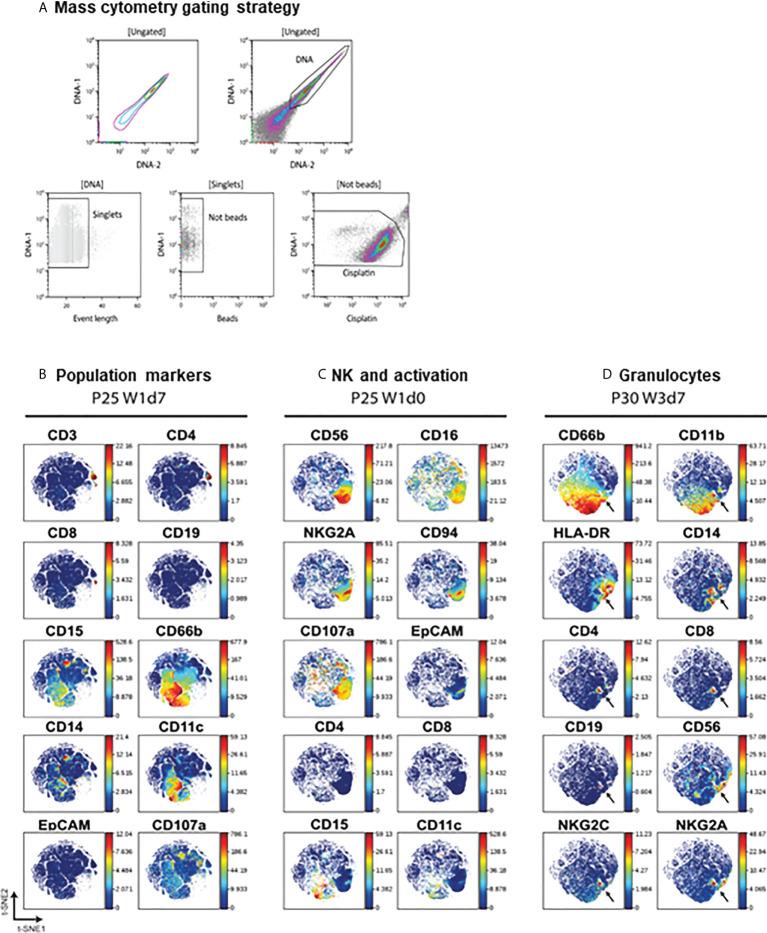
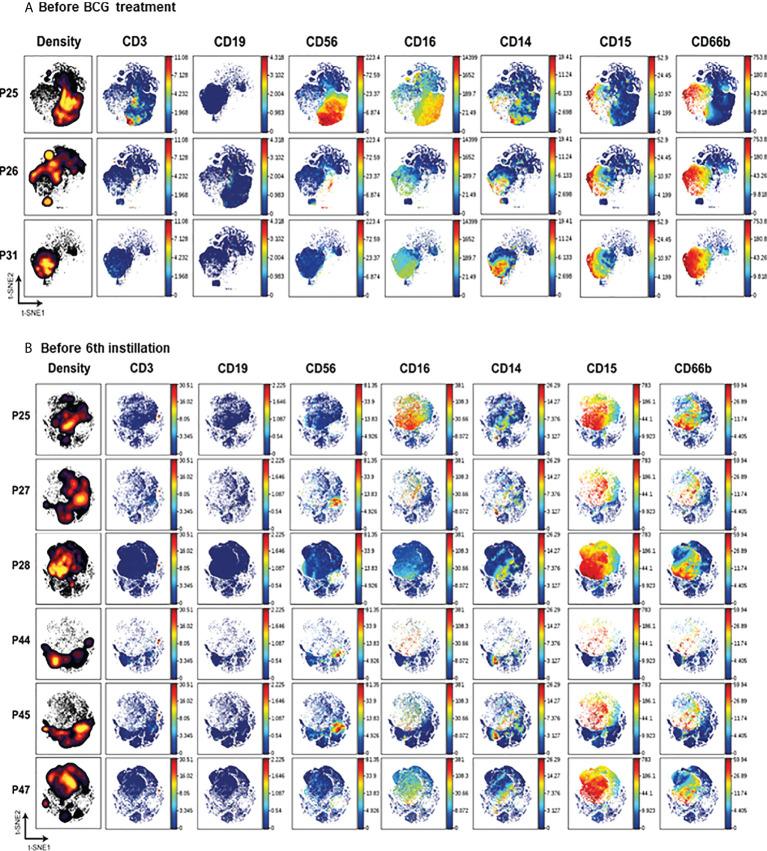
High grade non-muscle-invasive bladder tumours are treated with transurethral resection followed by recurrent intravesical instillations of Bacillus Calmette Guérin (BCG). Although most bladder cancer patients respond well to BCG, there is no clinical parameter predictive of treatment response, and when treatment fails, the prognosis is very poor. Further, a high percentage of NMIBC patients treated with BCG suffer unwanted effects that force them to stop treatment. Thus, early identification of patients in which BCG treatment will fail is really important. Here, to identify early stage non-invasive biomarkers of non-responder patients and patients at risk of abandoning the treatment, we longitudinally analysed the phenotype of cells released into the urine of bladder cancer patients 3-7 days after BCG instillations. Mass cytometry (CyTOF) analyses revealed a large proportion of granulocytes and monocytes, mostly expressing activation markers. A novel population of CD15CD66bCD14CD16 cells was highly abundant in several samples; expression of these markers was confirmed using flow cytometry and qPCR. A stronger inflammatory response was associated with increased cell numbers in the urine; this was not due to hematuria because the cell proportions were distinct from those in the blood. This pilot study represents the first CyTOF analysis of cells recruited to urine during BCG treatment, allowing identification of informative markers associated with treatment response for sub-selection of markers to confirm using conventional techniques. Further studies should jointly evaluate cells and soluble factors in urine in larger cohorts of patients to characterise the arms of the immune response activated in responders and to identify patients at risk of complications from BCG treatment.
高级别非肌肉浸润性膀胱癌采用经尿道膀胱肿瘤切除术联合卡介苗(BCG)膀胱内灌注治疗。虽然大多数膀胱癌患者对 BCG 反应良好,但目前没有预测治疗反应的临床参数,当治疗失败时,预后非常差。此外,相当大比例的接受 BCG 治疗的 NMIBC 患者会出现不良反应,迫使他们停止治疗。因此,早期识别 BCG 治疗无效的患者非常重要。在这里,为了确定非应答患者和有停止治疗风险的患者的早期非侵入性生物标志物,我们对膀胱癌患者在 BCG 灌注后 3-7 天释放到尿液中的细胞进行了纵向分析。质谱流式细胞术(CyTOF)分析显示,大量粒细胞和单核细胞,主要表达激活标志物。在几个样本中,发现了一种新型的 CD15CD66bCD14CD16 细胞群体,其表达水平可以通过流式细胞术和 qPCR 得到确认。更强的炎症反应与尿液中细胞数量的增加有关;这不是由于血尿引起的,因为细胞比例与血液中的不同。这项初步研究代表了第一次在 BCG 治疗期间对招募到尿液中的细胞进行 CyTOF 分析,从而确定与治疗反应相关的信息性标志物,用于选择标记物进行传统技术验证。进一步的研究应该联合评估尿液中的细胞和可溶性因子在更大的患者队列中,以描述应答者中激活的免疫反应的分支,并确定有 BCG 治疗并发症风险的患者。




 Zotero 插件