
用于蛋白质氧化体外和细胞检测的双功能亚磺酸探针BCN-E-BCN的合成与应用
Synthesis and Use of the Bifunctional Sulfenic Acid Probe BCN-E-BCN for In Vitro and Cell-Based Assays of Protein Oxidation.
作者信息
Micovic Katarina, Satkunarajah Thershan, Carnet Alexandre, Hurst Mackenzie, Viirre Russell, Olson Michael F
机构信息
Department of Chemistry and Biology, Toronto Metropolitan University, Toronto, Ontario, Canada.
出版信息
Curr Protoc. 2022 Oct;2(10):e559. doi: 10.1002/cpz1.559.
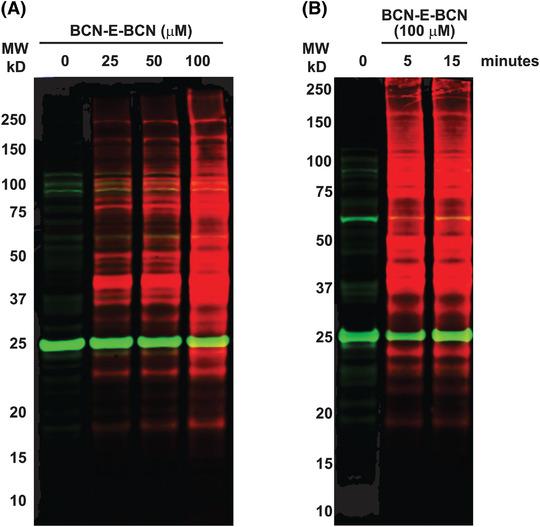
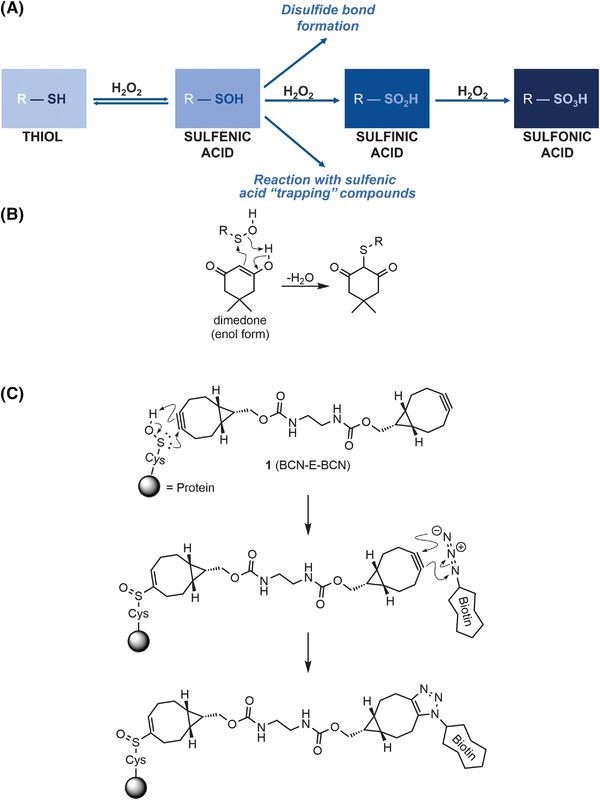
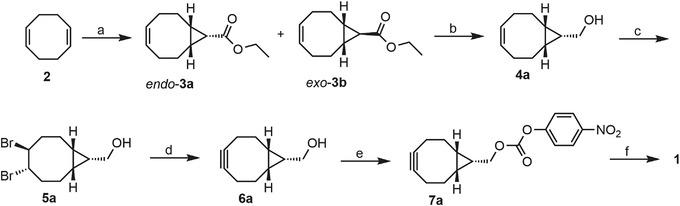
The reversible oxidation of cysteine thiol groups to sulfenic acid by reactive oxygen species (ROS) such as hydrogen peroxide can impact protein function, activity, and localization. As a consequence, ROS have profound effects on cell functions including proliferation, differentiation, and survival. Furthermore, there are clear associations between the effects of ROS on cells and the etiology of several diseases including cancer and neurodegeneration. In spite of the importance of cysteine sulfenylation as a validated post-translational modification, its labile nature impedes efficient and reproducible detection of proteins with cysteine sulfenic acid residues. To overcome this challenge, we developed a novel cell-permeable bifunctional reagent, consisting of two linked bicyclo[6.1.0]nonyne (BCN) moieties coupled with a short ethylenediamine-derived linker (BCN-E-BCN) that enables the detection of sulfenylated proteins in vitro and in intact cells. The two symmetrical BCN groups allow protein sulfenic acids to be selectively tagged with a BCN at one end while allowing for copper-free click chemistry with azide-tagged reagents of the opposite BCN. In this protocol, the synthesis of BCN-E-BCN and its use to detect cysteine sulfenic acids will be detailed. © 2022 The Authors. Current Protocols published by Wiley Periodicals LLC. Basic Protocol 1: Copper-mediated cyclopropanation of 1,5-cyclooctadiene Basic Protocol 2: Synthesis of endo- and exo-bicyclononyne Basic Protocol 3: Synthesis of endo-BCN-E-BCN Basic Protocol 4: BCN-E-BCN treatment of wild-type and cysteine-deficient mutant recombinant cofilin protein Basic Protocol 5: BCN-E-BCN labeling in live cells Basic Protocol 6: Western blotting and visualization of BCN-E-BCN-labeled samples.
活性氧(ROS)如过氧化氢可将半胱氨酸硫醇基团可逆氧化为亚磺酸,这会影响蛋白质的功能、活性和定位。因此,ROS对细胞功能有深远影响,包括增殖、分化和存活。此外,ROS对细胞的影响与包括癌症和神经退行性疾病在内的几种疾病的病因之间存在明确关联。尽管半胱氨酸亚磺酰化作为一种经过验证的翻译后修饰很重要,但其不稳定的性质阻碍了对含有半胱氨酸亚磺酸残基的蛋白质进行高效且可重复的检测。为了克服这一挑战,我们开发了一种新型的细胞可渗透双功能试剂,它由两个相连的双环[6.1.0]壬炔(BCN)部分与一个短的乙二胺衍生连接子(BCN-E-BCN)偶联而成,能够在体外和完整细胞中检测亚磺酰化蛋白质。两个对称的BCN基团允许蛋白质亚磺酸在一端被BCN选择性标记,同时允许与相反BCN的叠氮化物标记试剂进行无铜点击化学反应。在本方案中,将详细介绍BCN-E-BCN的合成及其用于检测半胱氨酸亚磺酸的方法。© 2022作者。由Wiley Periodicals LLC出版的《当前方案》。基本方案1:1,5 - 环辛二烯的铜介导环丙烷化反应 基本方案2:内型和外型双环壬炔的合成 基本方案3:内型BCN-E-BCN的合成 基本方案4:用BCN-E-BCN处理野生型和半胱氨酸缺陷型突变体重组丝切蛋白 基本方案5:在活细胞中进行BCN-E-BCN标记 基本方案6:对BCN-E-BCN标记样品进行蛋白质印迹和可视化分析。

 Zotero 插件