
新型机器人辅助冷冻活检技术用于外周肺部病变。
Novel Robotic-Assisted Cryobiopsy for Peripheral Pulmonary Lesions.
机构信息
Section of Interventional Pulmonology, David Geffen School of Medicine at UCLA, Los Angeles, CA, 90095, USA.
Department of Medicine, Division of Pulmonary and Critical Care Medicine, David Geffen School of Medicine at UCLA, 10833 Le Conte Avenue, Los Angeles, CA, 90095, USA.
出版信息
Lung. 2022 Dec;200(6):737-745. doi: 10.1007/s00408-022-00578-3. Epub 2022 Oct 10.
PURPOSE
Tissue acquisition in lung cancer is vital for multiple reasons. Primary reasons reported for molecular testing failure in lung cancer biopsy specimens include insufficient amount of tumor cells provided and inadequate tissue quality. Robotic bronchoscopy is a new tool enabling peripheral pulmonary lesion sampling; however, diagnostic yield remains imperfect possibly due to the location of nodules adjacent to or outside of the airway. The 1.1-mm cryoprobe is a novel diagnostic tool and accesses tissue in a 360-degree manner, thus potentially sampling eccentric/adjacent lesions. This study examines the diagnostic yield of the cryoprobe compared to standard needle aspiration and forceps biopsy. It additionally evaluates yield for molecular markers in cases of lung cancer.
METHODS
This is a retrospective analysis of 112 patients with 120 peripheral pulmonary lesions biopsied via robotic bronchoscopy using needle aspirate, forceps, and cryobiopsy.
RESULTS
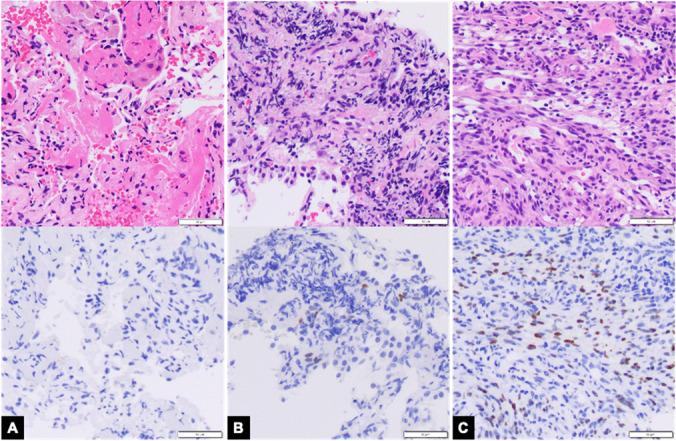
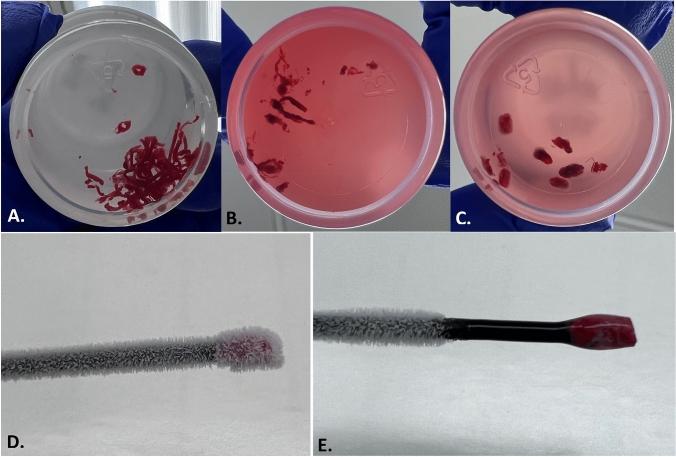
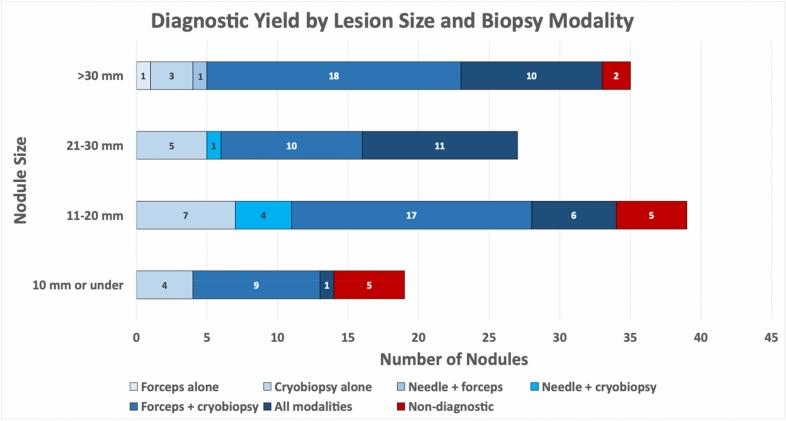
The overall diagnostic yield was 90%. Nearly 18% of diagnoses were made exclusively from the cryobiopsy sample. Molecular analysis was adequate on all cryobiopsy samples sent. Digital imaging software confirmed an increase in quantity and quality of samples taken via cryobiopsy compared to needle aspirate and traditional forceps biopsy.
CONCLUSION
Using the 1.1-mm cryoprobe to biopsy PPN combined with the Ion robotic bronchoscopy system is safe, feasible, and provides more diagnostic tissue than needle aspirates or traditional forceps biopsies. The combination of cryobiopsy with robotic-assisted bronchoscopy increased diagnostic yield, likely due to its 360-degree tissue acquisition which is beneficial when targeting extraluminal lesions adjacent to the airway.
目的
肺癌组织获取至关重要,原因有多种。肺癌活检标本中分子检测失败的主要原因包括提供的肿瘤细胞数量不足和组织质量不佳。机器人支气管镜是一种新的工具,可用于外周肺病变的取样;然而,诊断率仍然不理想,可能是由于结节位于气道旁或气道外。1.1mm 冷冻探针是一种新型诊断工具,可 360 度获取组织,因此有可能取样偏心/相邻病变。本研究比较了冷冻探针与标准针吸和活检钳在诊断肺癌中的应用。它还评估了肺癌病例中分子标志物的检测率。
方法
这是对 112 例 120 个外周性肺病变患者进行机器人支气管镜检查的回顾性分析,采用针吸、活检钳和冷冻活检。
结果
总的诊断率为 90%。近 18%的诊断仅来自冷冻活检样本。所有送检的冷冻活检样本均进行了充分的分子分析。数字成像软件证实,与针吸和传统活检钳相比,冷冻活检采集的样本数量和质量均有所增加。
结论
使用 1.1mm 冷冻探针联合 Ion 机器人支气管镜系统对 PPN 进行活检是安全可行的,比针吸或传统活检钳提供更多的诊断组织。冷冻活检与机器人辅助支气管镜联合使用提高了诊断率,这可能是由于其 360 度的组织获取,在靶向气道旁的腔外病变时具有优势。
 Zotero 插件