
诊断技术对肺部病变的诊断效果和安全性:系统评价、荟萃分析和网络荟萃分析。
Diagnostic yield and safety of diagnostic techniques for pulmonary lesions: systematic review, meta-analysis and network meta-analysis.
机构信息
Department of Pulmonary and Critical Care Medicine, Mayo Clinic, Jacksonville, FL, USA.
Division of Pulmonary, Allergy, and Sleep Medicine, Mayo Clinic, Jacksonville, FL, USA.
出版信息
Eur Respir Rev. 2024 Sep 18;33(173). doi: 10.1183/16000617.0046-2024. Print 2024 Jul.
BACKGROUND
With recent advancements in bronchoscopic procedures, data on the best modality to sample peripheral pulmonary lesions (PPLs) is lacking, especially comparing bronchoscopy with computed tomography-guided transthoracic biopsy or needle aspiration (CT-TBNA).
METHODS
We performed a meta-analysis, pairwise meta-analysis and network meta-analysis on studies reporting diagnostic yield and complications with the use of CT-TBNA, radial endobronchial ultrasound (rEBUS), virtual bronchoscopy (VB), electromagnetic navigation (EMN) or robot-assisted bronchoscopy (RAB) to sample PPLs. The primary outcome was diagnostic yield and the secondary outcome was complications. We estimated the relative risk ratios using a random-effects model and used the frequentist approach for the network meta-analysis. We performed extensive analysis to assess the heterogeneity including reporting bias, publication bias, subgroup and meta-regressional analysis. We assessed the quality of the studies using Quality Assessment of Diagnostic Accuracy Studies-2 (QUADAS-2) and QUADAS-Comparative (QUADAS-C).
RESULTS
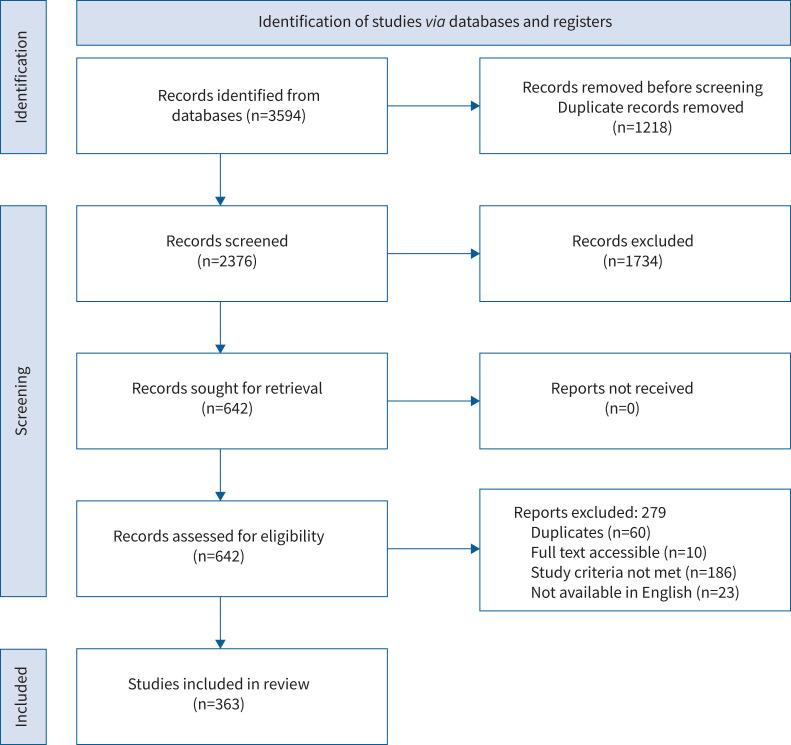
We included 363 studies. The overall pooled diagnostic yield was 78.1%, the highest with CT-TBNA (88.9%), followed by RAB (84.8%) and the least with rEBUS (72%). In the pairwise meta-analysis, only rEBUS showed inferiority to CT-TBNA. The network meta-analysis ranked CT-TBNA as likely the most effective approach followed by VB, EMN and RAB, while rEBUS was the least effective, with a low-GRADE certainty. CT-TBNA had the highest rate of complications.
CONCLUSION
Although CT-TBNA is the most effective approach to sample PPLs, RAB has a comparable diagnostic yield with a lesser complication rate. Further prospective studies are needed comparing CT-TBNA and RAB.
背景
随着支气管镜检查技术的不断进步,对于外周肺部病变(PPL)最佳采样方式的数据仍然缺乏,尤其是支气管镜检查与计算机断层扫描引导下经胸壁穿刺活检或针吸(CT-TBNA)相比。
方法
我们对报告了使用 CT-TBNA、径向支气管内超声(rEBUS)、虚拟支气管镜(VB)、电磁导航(EMN)或机器人辅助支气管镜(RAB)采样 PPL 的诊断率和并发症的数据进行了荟萃分析、成对荟萃分析和网络荟萃分析。主要结局是诊断率,次要结局是并发症。我们使用随机效应模型估计相对风险比,并使用频率方法进行网络荟萃分析。我们进行了广泛的分析,以评估异质性,包括报告偏倚、发表偏倚、亚组和荟萃回归分析。我们使用诊断准确性研究质量评估 2 (QUADAS-2)和比较诊断准确性研究质量评估 2(QUADAS-C)评估研究质量。
结果
我们纳入了 363 项研究。总体汇总诊断率为 78.1%,其中 CT-TBNA 最高(88.9%),其次是 RAB(84.8%),rEBUS 最低(72%)。在成对荟萃分析中,只有 rEBUS 显示不如 CT-TBNA。网络荟萃分析将 CT-TBNA 列为最有效的方法,其次是 VB、EMN 和 RAB,而 rEBUS 效果最差,证据质量为低级别。CT-TBNA 的并发症发生率最高。
结论
尽管 CT-TBNA 是采样 PPL 最有效的方法,但 RAB 具有相似的诊断率,且并发症发生率较低。需要进一步进行比较 CT-TBNA 和 RAB 的前瞻性研究。


 Zotero 插件