
载脂蛋白 E4 携带者和阿尔茨海默病患者死后脑组织中类二十烷酸脂质组的激活。
Eicosanoid lipidome activation in post-mortem brain tissues of individuals with APOE4 and Alzheimer's dementia.
机构信息
School of Pharmacy, University of Southern California, Los Angeles, USA.
Keck School of Medicine, University of Southern California, Los Angeles, USA.
出版信息
Alzheimers Res Ther. 2022 Oct 11;14(1):152. doi: 10.1186/s13195-022-01084-7.
BACKGROUND
Chronic neuroinflammation is one of the hallmarks of late-onset Alzheimer's disease (AD) dementia pathogenesis. Carrying the apolipoprotein ε4 (APOE4) allele has been associated with an accentuated response to brain inflammation and increases the risk of AD dementia progression. Among inflammation signaling pathways, aberrant eicosanoid activation plays a prominent role in neurodegeneration.
METHODS
Using brains from the Religious Order Study (ROS), this study compared measures of brain eicosanoid lipidome in older persons with AD dementia to age-matched controls with no cognitive impairment (NCI), stratified by APOE genotype.
RESULTS
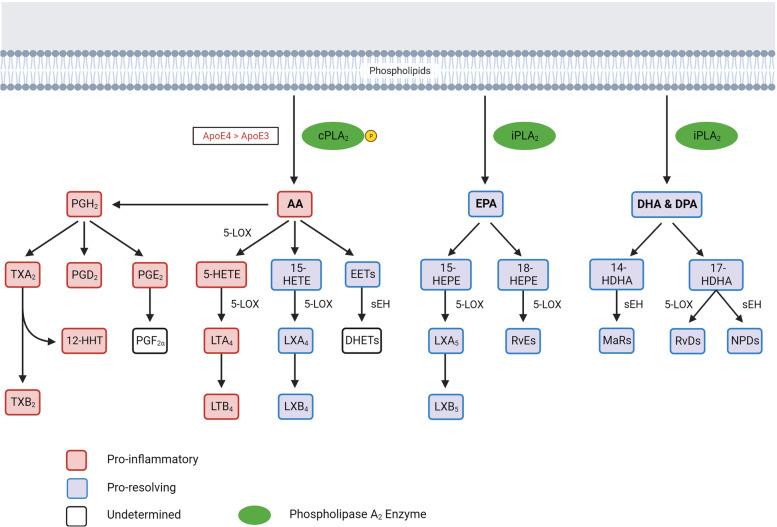
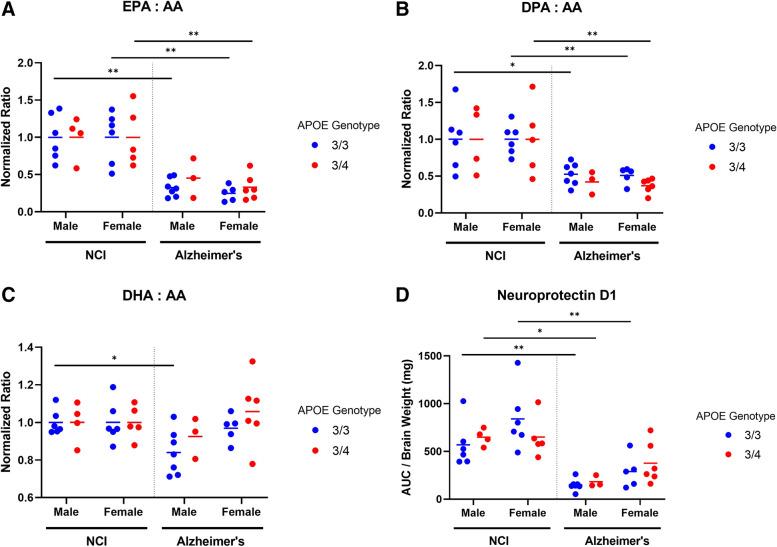
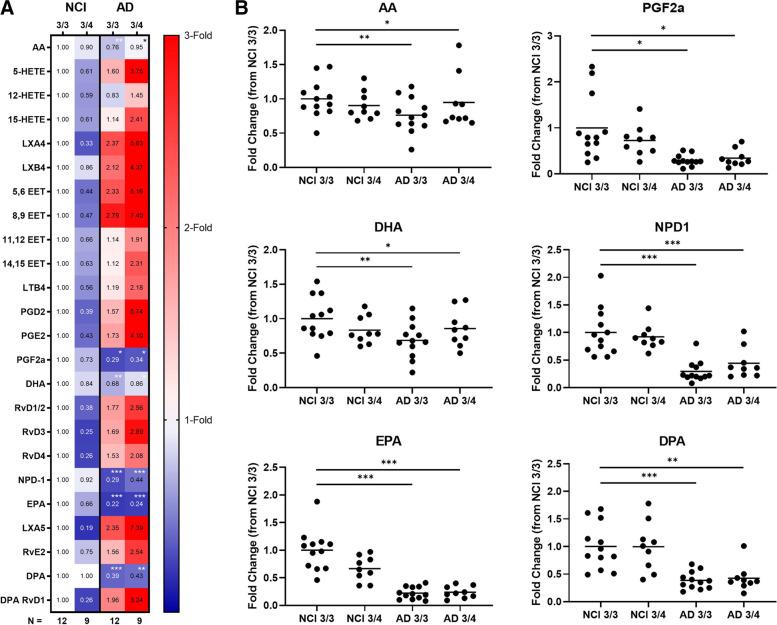
Lipidomic analysis of the dorsolateral prefrontal cortex demonstrated lower levels of omega-3 fatty acids eicosapentaenoic acid (EPA), docosapentaenoic acid (DPA), and DHA-derived neuroprotectin D1 (NPD-1) in persons with AD dementia, all of which associated with lower measures of cognitive function. A significant interaction was observed between carrying the APOE4 allele and higher levels of both pro-inflammatory lipids and pro-resolving eicosanoid lipids on measures of cognitive performance and on neuritic plaque burden. Furthermore, analysis of lipid metabolism pathways implicated activation of calcium-dependent phospholipase A2 (cPLA2), 5-lipoxygenase (5-LOX), and soluble epoxide hydrolase (sEH) enzymes.
CONCLUSION
These findings implicate activation of the eicosanoid lipidome in the chronic unresolved state of inflammation in AD dementia, which is increased in carriers of the APOE4 allele, and identify potential therapeutic targets for resolving this chronic inflammatory state.
背景
慢性神经炎症是晚发性阿尔茨海默病(AD)痴呆发病机制的特征之一。携带载脂蛋白 E4(APOE4)等位基因与大脑炎症反应增强有关,并增加 AD 痴呆进展的风险。在炎症信号通路中,异常的类二十烷酸激活在神经退行性变中起着突出的作用。
方法
本研究利用宗教秩序研究(ROS)中的大脑,比较了 AD 痴呆患者和年龄匹配的无认知障碍(NCI)对照者的大脑类二十烷酸脂质组学,这些对照者根据 APOE 基因型进行分层。
结果
对大脑外侧前额叶皮层的脂质组学分析表明,AD 痴呆患者的 ω-3 脂肪酸二十碳五烯酸(EPA)、二十二碳五烯酸(DPA)和 DHA 衍生的神经保护素 D1(NPD-1)水平较低,所有这些都与认知功能的测量值较低有关。在认知表现和神经原纤维缠结负担的测量值上,携带 APOE4 等位基因与较高水平的促炎脂质和促解决类二十烷酸脂质之间存在显著的相互作用。此外,脂质代谢途径的分析表明,钙依赖性磷脂酶 A2(cPLA2)、5-脂氧合酶(5-LOX)和可溶性环氧化物水解酶(sEH)酶的激活。
结论
这些发现表明,APOE4 等位基因携带者的 AD 痴呆中,类二十烷酸脂质组的激活与慢性未解决的炎症状态有关,并确定了潜在的治疗靶点,以解决这种慢性炎症状态。


 Zotero 插件