
慢性和侵袭性牙周炎患者唾液微生物组和代谢组的综合分析:一项初步研究。
Integrated analysis of the salivary microbiome and metabolome in chronic and aggressive periodontitis: A pilot study.
作者信息
Wei Yiping, Shi Meng, Nie Yong, Wang Cui, Sun Fei, Jiang Wenting, Hu Wenjie, Wu Xiaolei
机构信息
Department of Periodontology, National Engineering Laboratory for Digital and Material Technology of Stomatology, NHC Research Center of Engineering and Technology for Computerized Dentistry, National Clinical Research Center for Oral Diseases, Peking University School and Hospital of Stomatology, Beijing, China.
Beijing Tiantan Hospital, Capital Medical University, Beijing, China.
出版信息
Front Microbiol. 2022 Sep 26;13:959416. doi: 10.3389/fmicb.2022.959416. eCollection 2022.
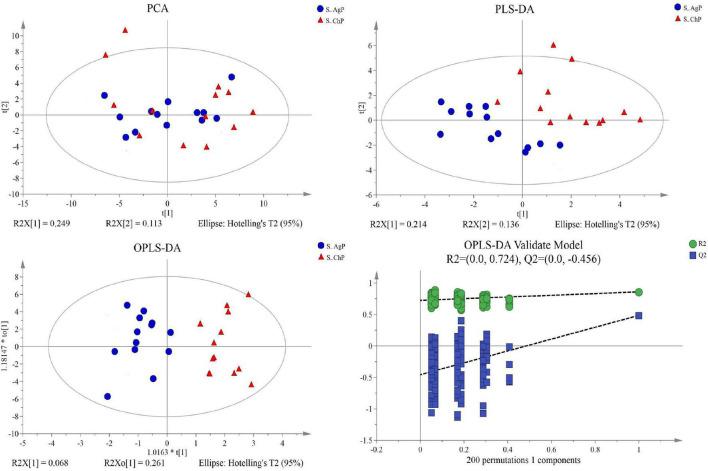
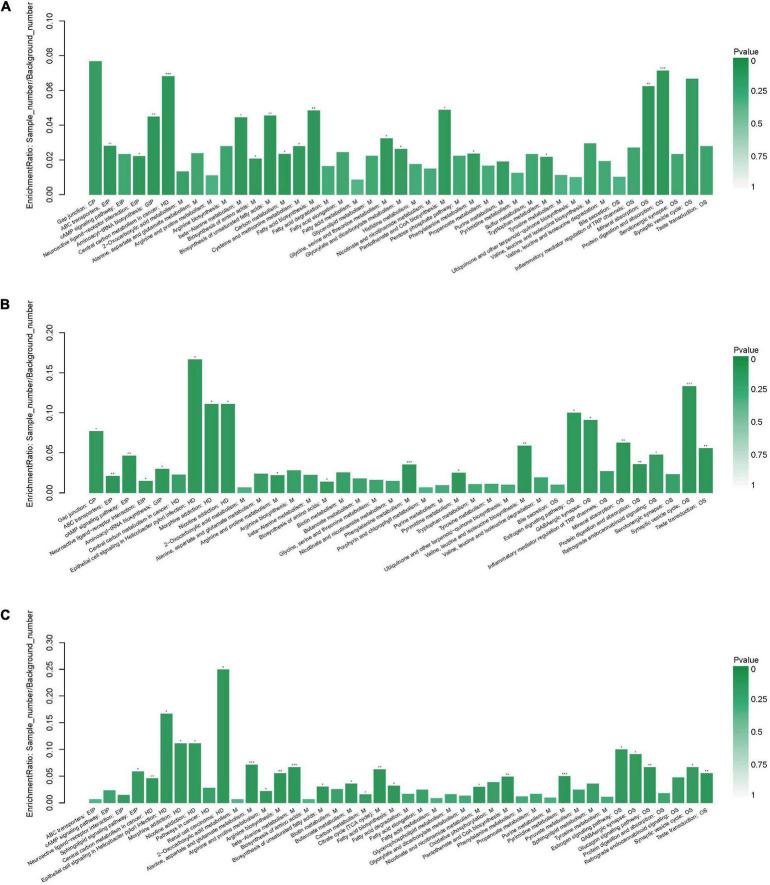
This pilot study was designed to identify the salivary microbial community and metabolic characteristics in patients with generalized periodontitis. A total of 36 saliva samples were collected from 13 patients with aggressive periodontitis (AgP), 13 patients with chronic periodontitis (ChP), and 10 subjects with periodontal health (PH). The microbiome was evaluated using 16S rRNA gene high-throughput sequencing, and the metabolome was accessed using gas chromatography-mass spectrometry. The correlation between microbiomes and metabolomics was analyzed by Spearman's correlation method. Our results revealed that the salivary microbial community and metabolite composition differed significantly between patients with periodontitis and healthy controls. Striking differences were found in the composition of salivary metabolites between AgP and ChP. The genera , , , , (, , , and ), , , , , , and were present in higher levels in patients with periodontitis than in the healthy participants. The biochemical pathways that were significantly different between ChP and AgP included pyrimidine metabolism; alanine, aspartate, and glutamate metabolism; beta-alanine metabolism; citrate cycle; and arginine and proline metabolism. The differential metabolites between ChP and AgP groups, such as urea, beta-alanine, 3-aminoisobutyric acid, and thymine, showed the most significant correlations with the genera. These differential microorganisms and metabolites may be used as potential biomarkers to monitor the occurrence and development of periodontitis through the utilization of non-invasive and convenient saliva samples. This study reveals the integration of salivary microbial data and metabolomic data, which provides a foundation to further explore the potential mechanism of periodontitis.
本前瞻性研究旨在识别广泛性牙周炎患者的唾液微生物群落及代谢特征。共收集了36份唾液样本,其中13份来自侵袭性牙周炎(AgP)患者,13份来自慢性牙周炎(ChP)患者,10份来自牙周健康(PH)受试者。使用16S rRNA基因高通量测序评估微生物组,并使用气相色谱-质谱联用仪分析代谢组。采用Spearman相关性方法分析微生物组与代谢组学之间的相关性。我们的结果显示,牙周炎患者与健康对照者的唾液微生物群落及代谢物组成存在显著差异。AgP和ChP患者的唾液代谢物组成存在显著差异。牙周炎患者中, 、 、 、 、 ( 、 、 、 )、 、 、 、 、 属的含量高于健康参与者。ChP和AgP之间显著不同的生化途径包括嘧啶代谢;丙氨酸、天冬氨酸和谷氨酸代谢;β-丙氨酸代谢;柠檬酸循环;以及精氨酸和脯氨酸代谢。ChP和AgP组之间的差异代谢物,如尿素、β-丙氨酸、3-氨基异丁酸和胸腺嘧啶,与这些属的相关性最为显著。这些差异微生物和代谢物可作为潜在的生物标志物,通过使用非侵入性且便捷的唾液样本监测牙周炎的发生和发展。本研究揭示了唾液微生物数据和代谢组学数据的整合,为进一步探索牙周炎的潜在机制奠定了基础。








 Zotero 插件