
靶向JWA用于癌症治疗:功能、机制与药物研发
Targeting JWA for Cancer Therapy: Functions, Mechanisms and Drug Discovery.
作者信息
Ding Kun, Liu Xia, Wang Luman, Zou Lu, Jiang Xuqian, Li Aiping, Zhou Jianwei
机构信息
Department of Molecular Cell Biology & Toxicology, Center for Global Health, School of Public Health, Nanjing Medical University, Nanjing 211166, China.
Key Laboratory of Modern Toxicology of Ministry of Education, School of Public Health, Nanjing Medical University, Nanjing 211166, China.
出版信息
Cancers (Basel). 2022 Sep 24;14(19):4655. doi: 10.3390/cancers14194655.
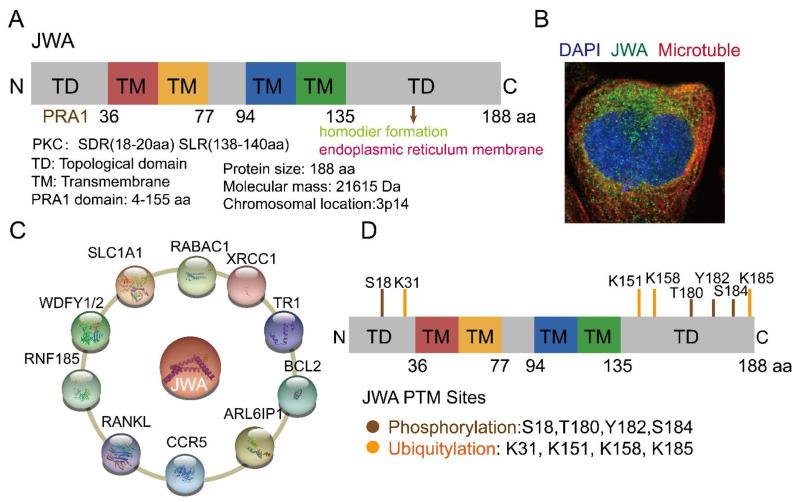
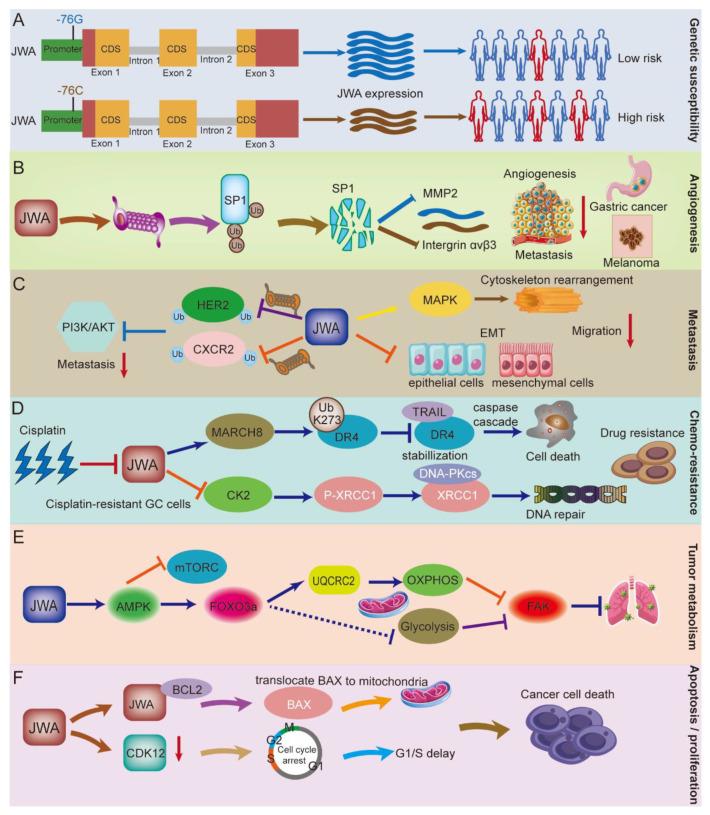
Tumor heterogeneity limits the precision treatment of targeted drugs. It is important to find new tumor targets. JWA, also known as ADP ribosylation factor-like GTPase 6 interacting protein 5 (ARL6IP5, GenBank: AF070523, 1998), is a microtubule-associated protein and an environmental response gene. Substantial evidence shows that JWA is low expressed in a variety of malignancies and is correlated with overall survival. As a tumor suppressor, JWA inhibits tumor progression by suppressing multiple oncogenes or activating tumor suppressor genes. Low levels of JWA expression in tumors have been reported to be associated with multiple aspects of cancer progression, including angiogenesis, proliferation, apoptosis, metastasis, and chemotherapy resistance. In this review, we will discuss the structure and biological functions of JWA in tumors, examine the potential therapeutic strategies for targeting JWA and explore the directions for future investigation.
肿瘤异质性限制了靶向药物的精准治疗。寻找新的肿瘤靶点很重要。JWA,也称为ADP核糖基化因子样GTP酶6相互作用蛋白5(ARL6IP5,基因库:AF070523,1998),是一种微管相关蛋白和环境反应基因。大量证据表明,JWA在多种恶性肿瘤中低表达,且与总生存期相关。作为一种肿瘤抑制因子,JWA通过抑制多个癌基因或激活肿瘤抑制基因来抑制肿瘤进展。据报道,肿瘤中JWA表达水平低与癌症进展的多个方面相关,包括血管生成、增殖、凋亡、转移和化疗耐药性。在本综述中,我们将讨论JWA在肿瘤中的结构和生物学功能,研究靶向JWA的潜在治疗策略,并探索未来的研究方向。


 Zotero 插件