
硫代卡巴腙金属配合物作为抗肺癌药物的研究进展。
Advances in thiosemicarbazone metal complexes as anti-lung cancer agents.
作者信息
Bai Xian-Guang, Zheng Yunyun, Qi Jinxu
机构信息
School of Medicine, Pingdingshan University, Pingdingshan, China.
出版信息
Front Pharmacol. 2022 Sep 27;13:1018951. doi: 10.3389/fphar.2022.1018951. eCollection 2022.
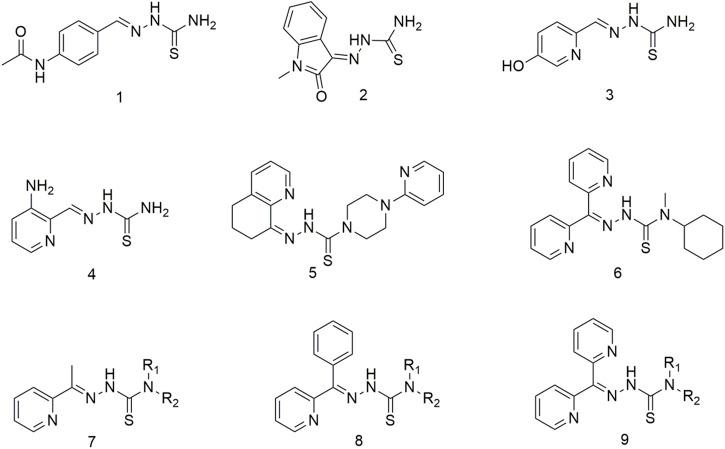
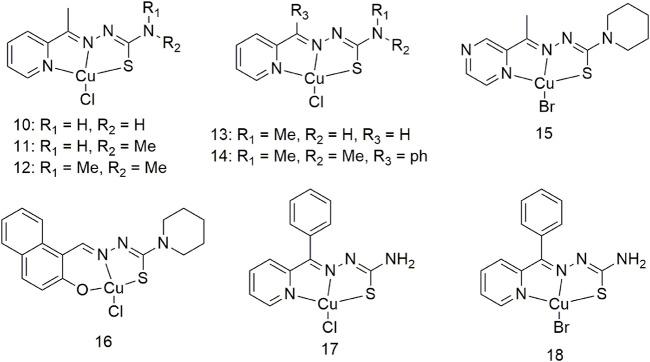
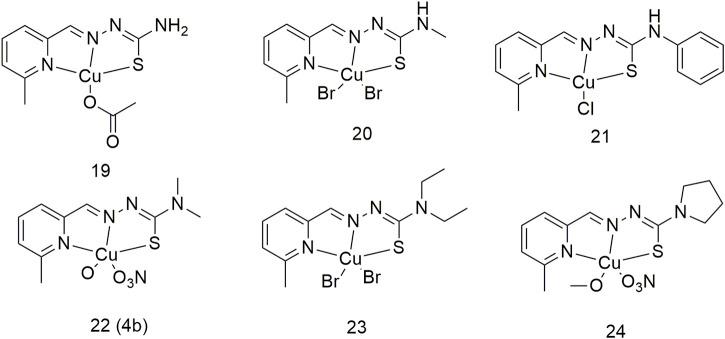
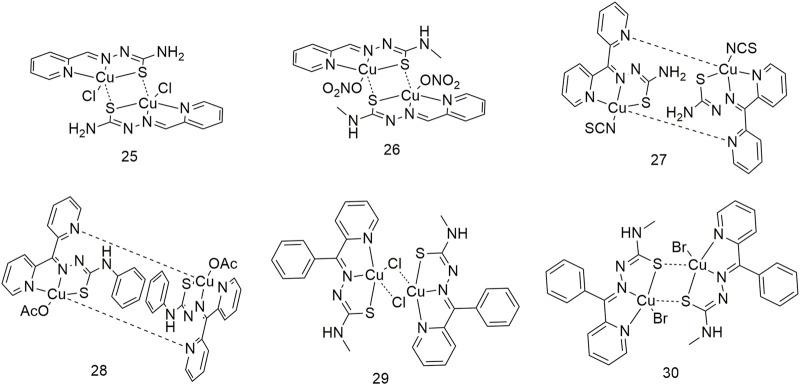
The great success of cisplatin as a chemotherapeutic agent considerably increased research efforts in inorganic biochemistry to identify more metallic drugs having the potential of treating lung cancer. Metal coordination centres, which exhibit a wide range of coordination numbers and geometries, various oxidised and reduced states and the inherent ligand properties offer pharmaceutical chemists a plethora of drug structures. Owing to the presence of C=N and C=S bonds in a thiosemicarbazone Schiff base, N and S atoms in its hybrid orbital has lone pair of electrons, which can generate metal complexes with different stabilities with most metal elements under certain conditions. Such ligands and complexes play key roles in the treatment of anti-lung cancer. Research regarding metallic anti-lung cancer has advanced considerably, but there remain several challenges. In this review, we discuss the potential of thiosemicarbazone Schiff base complexes as anti-lung cancer drugs, their anti-cancer activities and the most likely action mechanisms involving the recent families of copper, nickel, platinum, ruthenium and other complexes.
顺铂作为一种化疗药物的巨大成功极大地增加了无机生物化学领域的研究力度,以识别更多具有治疗肺癌潜力的金属药物。金属配位中心具有广泛的配位数和几何构型、各种氧化态和还原态以及固有的配体性质,为药物化学家提供了大量的药物结构。由于硫代半卡巴腙席夫碱中存在C=N和C=S键,其杂化轨道中的N和S原子具有孤对电子,在一定条件下,这些孤对电子能与大多数金属元素生成具有不同稳定性的金属配合物。这类配体和配合物在抗肺癌治疗中发挥着关键作用。关于金属抗肺癌的研究已经取得了很大进展,但仍存在一些挑战。在本综述中,我们讨论了硫代半卡巴腙席夫碱配合物作为抗肺癌药物的潜力、它们的抗癌活性以及涉及最近的铜、镍、铂、钌等配合物家族的最可能作用机制。


 Zotero 插件