
环状PTN通过海绵化miR-432-5p上调E2F2促进非小细胞肺癌进展。
circPTN Promotes the Progression of Non-Small Cell Lung Cancer through Upregulation of E2F2 by Sponging miR-432-5p.
作者信息
Su Jiayuan, Zhou Jinrong, Feng Yachan, Zhang Haojie, Zhang Xinyu, Zhao Xiaorong, Li Yong, Guo Xueling
机构信息
Department of Cardiothoracic Surgery, Xichang People's Hospital, No. 169 Shunhe Road, Xichang, 615000 Liangshan Yi Autonomous Prefecture, Sichuan Province, China.
Department of respiratory and critical care medicine, People's Hospital of Dongxihu District, Wuhan, Hubei 430040, No. 48, No. 1, Jin Bei Road, Dongxihu District, Wuhan, Hubei, China.
出版信息
Int J Genomics. 2022 Sep 20;2022:6303996. doi: 10.1155/2022/6303996. eCollection 2022.
BACKGROUND
Non-small cell lung cancer (NSCLC) is one of the most prevalent cancers, accounting for around 80% of total lung cancer cases worldwide. Exploring the function and mechanism of circRNAs could provide insights into the diagnosis and treatment for NSCLC.
METHODS
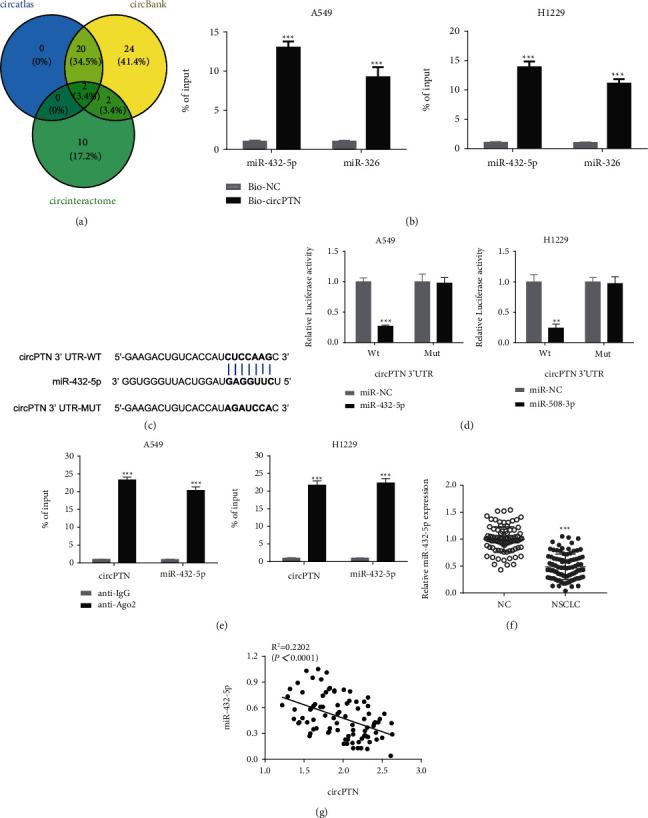
In this study, we collected tumor tissues and adjacent normal tissues from NSCLC patients to detect the expression level of circPTN and analyzed the association of its expression level with the clinicopathological parameter of NSCLC patients. Moreover, the functional engagement of circPTN in NSCLC cells was examined by cell counting kit-8 (CCK-8) cell proliferation assay, transwell migration and invasion assays, and tube formation assay. Quantitative real-time polymerase chain reaction (qRT-PCR) and Western blotting (WB) analysis were used to detect gene and protein expression, respectively. The molecular targets of cicrPTN were predicted using starBase online resources, which was validated by RNA immunoprecipitation (RIP) and dual-luciferase reporter assay.
RESULTS
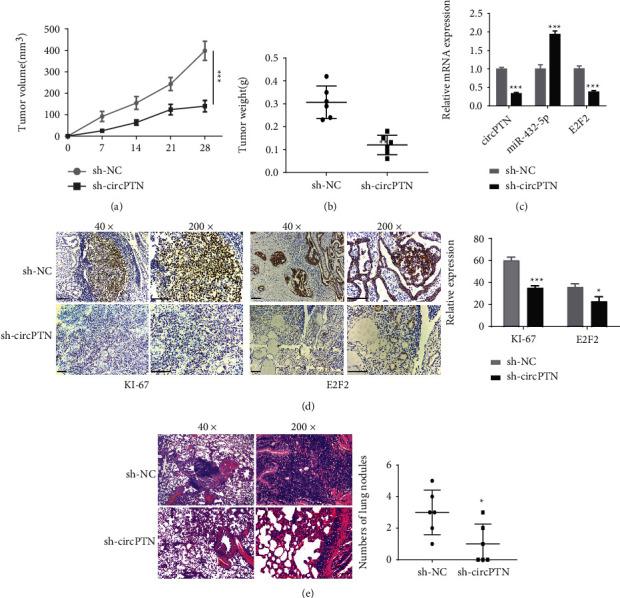
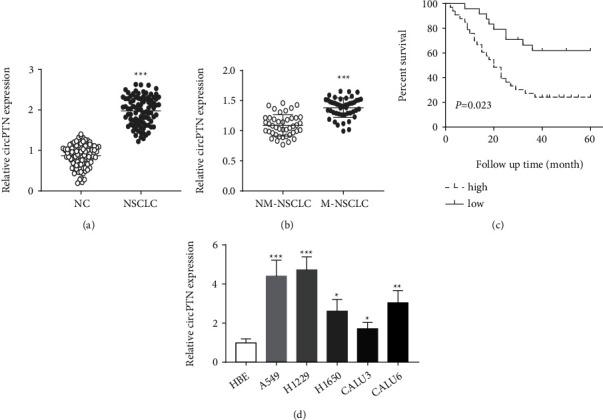
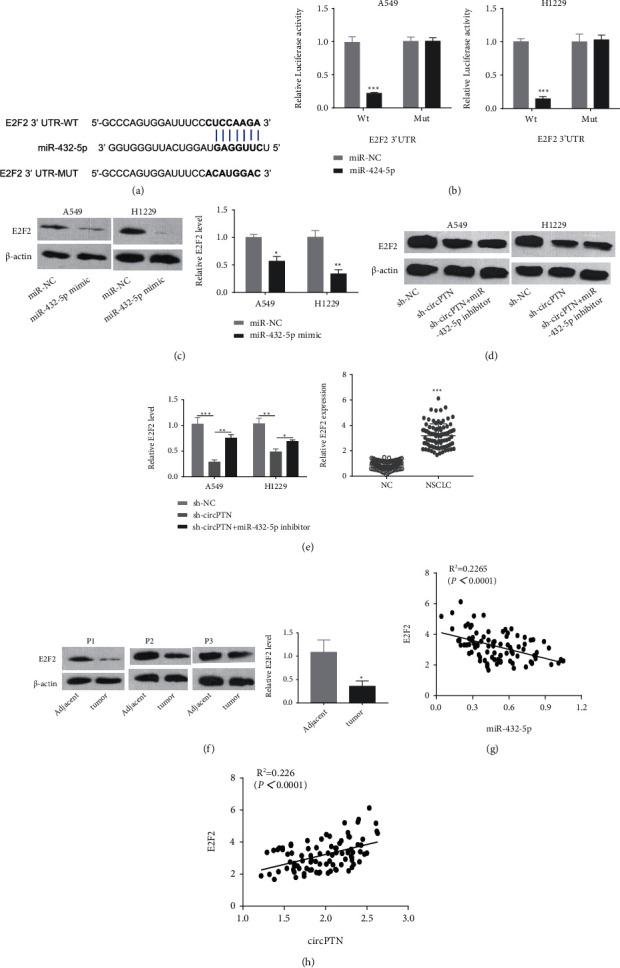
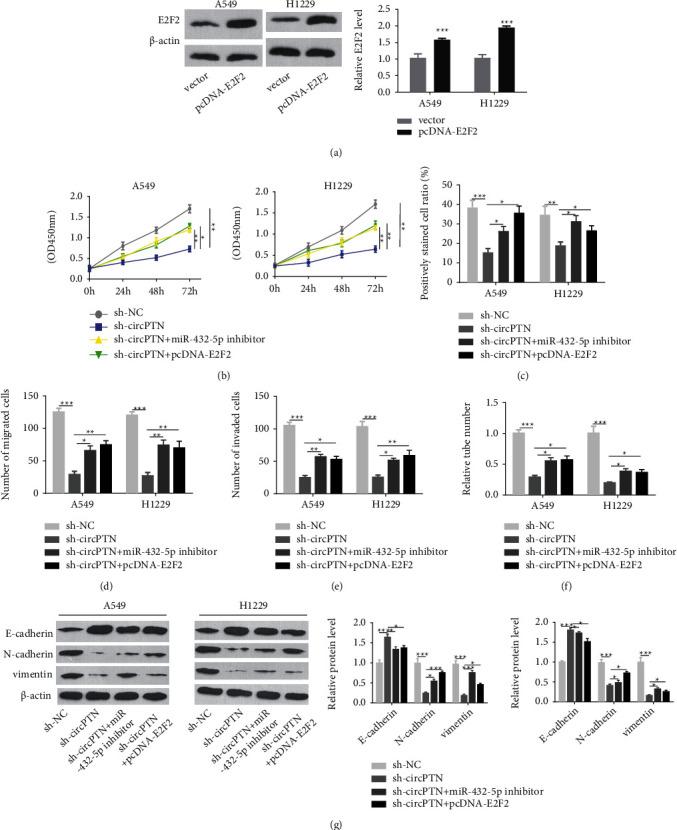
Compared with adjacent normal tissues, there was a remarkable increase of the circPTN levels in NSCLC tissues. A high level of circPTN expression was associated with more lymph node metastasis (LNM) and advanced TNM stages. Functionally, circPTN knockdown inhibited the proliferation, migration, and invasion and tube formation ability of NSCLC cells. We further demonstrated that circPTN regulated the malignant phenotype of NSCLC cells through targeting the miR-432-5p/E2F2 axis.
CONCLUSION
Together, our results suggest that circPTN, which is upregulated in NSCLC tissues, could serve as a prognostic marker for NSCLC patients. circPTN regulates the malignant progression of NSCLC cells through targeting the miR-432-5p/E2F2 axis, which may be employed as a potential strategy for the management of NSCLC.
背景
非小细胞肺癌(NSCLC)是最常见的癌症之一,约占全球肺癌病例总数的80%。探索环状RNA(circRNAs)的功能和机制可为NSCLC的诊断和治疗提供思路。
方法
在本研究中,我们收集了NSCLC患者的肿瘤组织和癌旁正常组织,以检测circPTN的表达水平,并分析其表达水平与NSCLC患者临床病理参数的相关性。此外,通过细胞计数试剂盒-8(CCK-8)细胞增殖试验、Transwell迁移和侵袭试验以及管形成试验检测circPTN在NSCLC细胞中的功能作用。分别使用定量实时聚合酶链反应(qRT-PCR)和蛋白质免疫印迹(WB)分析来检测基因和蛋白质表达。利用starBase在线资源预测circPTN的分子靶点,并通过RNA免疫沉淀(RIP)和双荧光素酶报告基因试验进行验证。
结果
与癌旁正常组织相比,NSCLC组织中circPTN水平显著升高。circPTN高表达与更多的淋巴结转移(LNM)和更高的TNM分期相关。在功能上,circPTN敲低抑制了NSCLC细胞的增殖、迁移、侵袭和管形成能力。我们进一步证明,circPTN通过靶向miR-432-5p/E2F2轴调节NSCLC细胞的恶性表型。
结论
总之,我们的结果表明,在NSCLC组织中上调的circPTN可作为NSCLC患者的预后标志物。circPTN通过靶向miR-432-5p/E2F2轴调节NSCLC细胞的恶性进展,这可能是NSCLC治疗的一种潜在策略。

 Zotero 插件