
奖励动机记忆影响整个发展过程中的新学习。
Reward-motivated memories influence new learning across development.
机构信息
Department of Psychology, New York University, New York, New York 10003, USA.
Center for Neural Science, New York University, New York, New York 10003, USA.
出版信息
Learn Mem. 2022 Oct 17;29(11):421-429. doi: 10.1101/lm.053595.122. Print 2022 Nov.
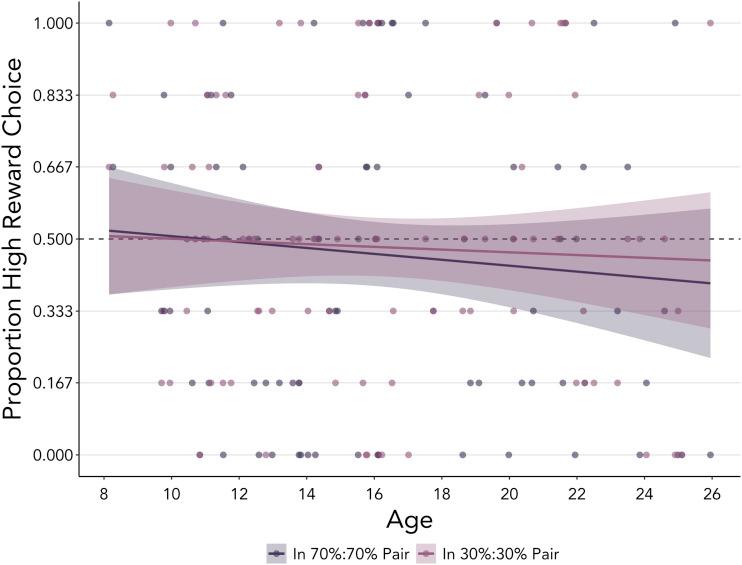
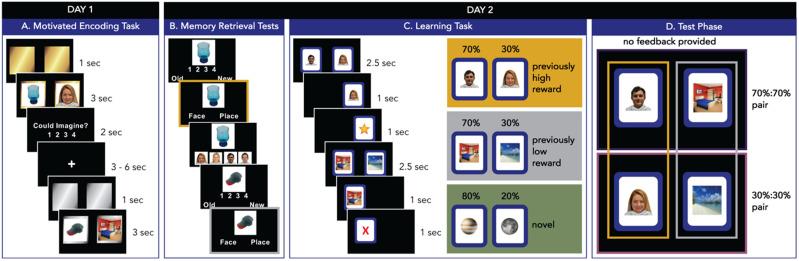
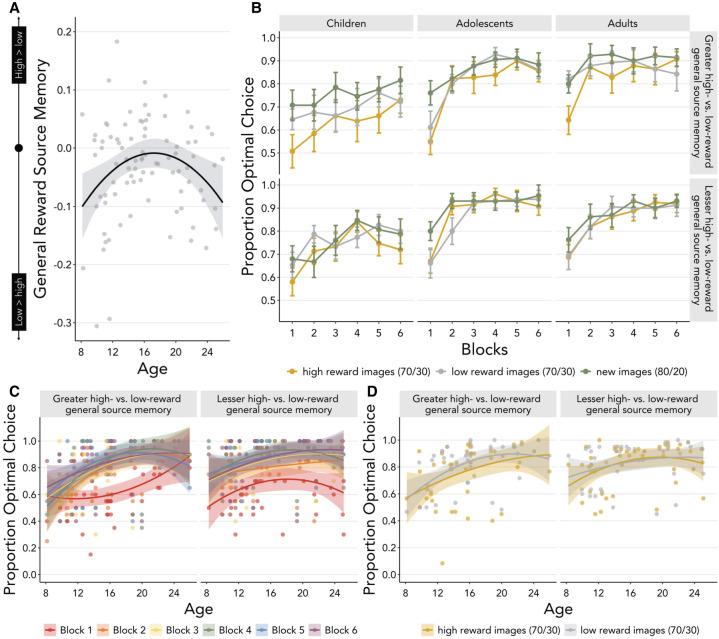
Previously rewarding experiences can influence choices in new situations. Past work has demonstrated that existing reward associations can either help or hinder future behaviors and that there is substantial individual variability in the transfer of value across contexts. Developmental changes in reward sensitivity may also modulate the impact of prior reward associations on later goal-directed behavior. The current study aimed to characterize how reward associations formed in the past affected learning in the present from childhood to adulthood. Participants completed a reinforcement learning paradigm using high- and low-reward stimuli from a task completed 24 h earlier, as well as novel stimuli, as choice options. We found that prior high-reward associations impeded learning across all ages. We then assessed how individual differences in the prioritization of high- versus low-reward associations in memory impacted new learning. Greater high-reward memory prioritization was associated with worse learning performance for previously high-reward relative to low-reward stimuli across age. Adolescents also showed impeded early learning regardless of individual differences in high-reward memory prioritization. Detrimental effects of previous reward on choice behavior did not persist beyond learning. These findings indicate that prior reward associations proactively interfere with future learning from childhood to adulthood and that individual differences in reward-related memory prioritization influence new learning across age.
先前的奖励经验会影响新情境下的选择。过去的研究表明,现有的奖励关联既可以帮助也可以阻碍未来的行为,而且在不同情境下价值的转移存在很大的个体差异。奖励敏感性的发展变化也可能调节先前奖励关联对后期目标导向行为的影响。本研究旨在描述过去形成的奖励关联如何从儿童期到成年期影响当前的学习。参与者使用 24 小时前完成的任务中的高低奖励刺激以及新的刺激作为选择选项,完成了强化学习范式。我们发现,先前的高奖励关联会阻碍所有年龄段的学习。然后,我们评估了记忆中对高奖励与低奖励关联的优先排序的个体差异如何影响新的学习。与低奖励刺激相比,对高奖励记忆的更高优先级与先前高奖励刺激的学习表现更差相关,这在所有年龄段都是如此。青少年也表现出无论高奖励记忆的优先级存在个体差异,都会出现早期学习障碍。先前奖励对选择行为的不利影响不会在学习后持续存在。这些发现表明,先前的奖励关联会主动干扰从儿童期到成年期的未来学习,而奖励相关记忆优先级的个体差异会影响整个年龄阶段的新学习。

 Zotero 插件