
非靶向代谢组学分析显示结核分枝杆菌 H37Rv 株特异性诱导人巨噬细胞色氨酸代谢。
Untargeted metabolomics analysis reveals Mycobacterium tuberculosis strain H37Rv specifically induces tryptophan metabolism in human macrophages.
机构信息
National Clinical Research Center for Infectious Diseases, Guangdong Provincial Clinical Research Center for Tuberculosis, Shenzhen Third People's Hospital, Southern University of Science and Technology, Shenzhen, 518112, China.
School of Basic Medical Sciences, Guangdong Medical University, Dongguan, China.
出版信息
BMC Microbiol. 2022 Oct 17;22(1):249. doi: 10.1186/s12866-022-02659-y.
BACKGROUND
Tuberculosis (TB) caused by Mycobacterium tuberculosis (M. tb) remains a global health issue. The characterized virulent M. tb H37Rv, avirulent M. tb H37Ra and BCG strains are widely used as reference strains to investigate the mechanism of TB pathogenicity. Here, we attempted to determine metabolomic signatures associated with the Mycobacterial virulence in human macrophages through comparison of metabolite profile in THP-1-derived macrophages following exposure to the M. tb H37Rv, M. tb H37Ra and BCG strains.
RESULTS
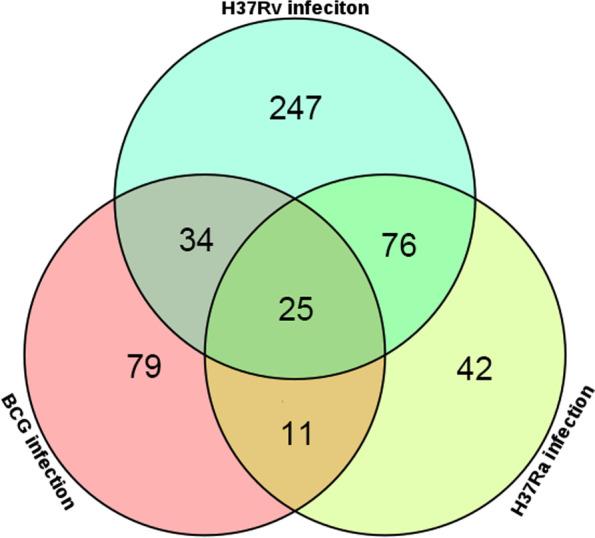
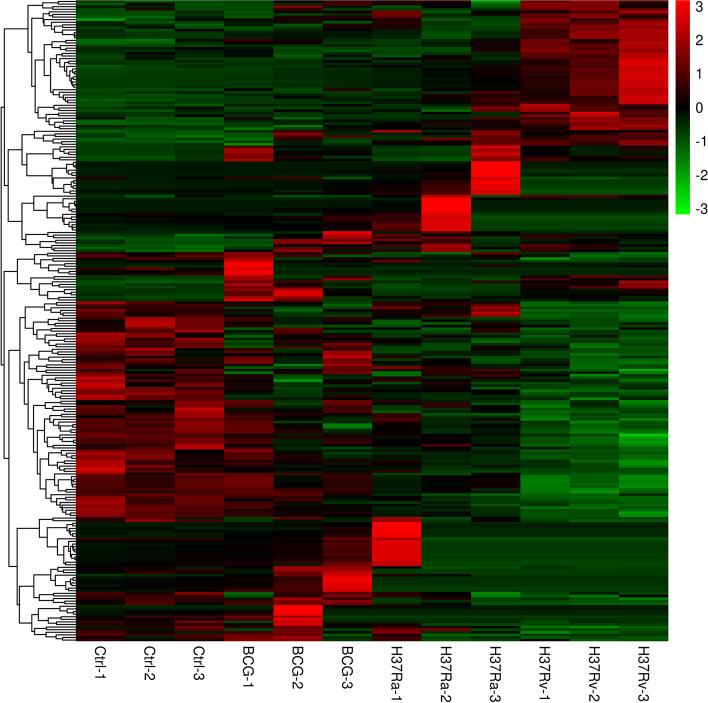
Our findings revealed remarkably changed metabolites in infected macrophages compared to uninfected macrophages. H37Rv infection specifically induced 247 differentially changed metabolites compared to H37Ra or BCG infection. Kyoto Encyclopedia of Genes and Genomes (KEGG) pathway analysis revealed H37Rv specifically induces tryptophan metabolism. Moreover, quantitative PCR (qPCR) results showed that indoleamine 2,3-dioxygenase 1 (IDO1) and tryptophan 2,3-dioxygenase 2 (TDO2) which converts the tryptophan to a series of biologically second metabolites were up-regulated in H37Rv-infected macrophages compared to H37Ra- or BCG-infected macrophages, confirming the result of enhanced tryptophan metabolism induced by H37Rv infection. These findings indicated that targeting tryptophan (Trp) metabolism may be a potential therapeutic strategy for pulmonary TB.
CONCLUSIONS
We identified a number of differentially changed metabolites that specifically induced in H37Rv infected macrophages. These signatures may be associated with the Mycobacterial virulence in human macrophages. The present findings provide a better understanding of the host response associated with the virulence of the Mtb strain.
背景
结核分枝杆菌(Mtb)引起的肺结核仍然是一个全球性的健康问题。特征性毒力株 Mtb H37Rv、非毒力株 Mtb H37Ra 和卡介苗(BCG)菌株被广泛用作研究结核致病性机制的参考株。在这里,我们试图通过比较 THP-1 衍生的巨噬细胞暴露于 Mtb H37Rv、Mtb H37Ra 和 BCG 菌株后代谢物谱,确定与分枝杆菌毒力相关的代谢组学特征。
结果
与未感染的巨噬细胞相比,我们发现感染的巨噬细胞中有明显改变的代谢物。与 H37Ra 或 BCG 感染相比,H37Rv 感染特异性诱导了 247 个差异变化的代谢物。京都基因与基因组百科全书(KEGG)通路分析显示,H37Rv 特异性诱导色氨酸代谢。此外,实时定量 PCR(qPCR)结果显示,吲哚胺 2,3-双加氧酶 1(IDO1)和色氨酸 2,3-双加氧酶 2(TDO2)在 H37Rv 感染的巨噬细胞中上调,而在 H37Ra 或 BCG 感染的巨噬细胞中下调,证实了 H37Rv 感染诱导色氨酸代谢增强的结果。这些发现表明,靶向色氨酸(Trp)代谢可能是治疗肺结核的一种潜在治疗策略。
结论
我们鉴定了一些在 H37Rv 感染的巨噬细胞中特异性诱导的差异变化的代谢物。这些特征可能与人类巨噬细胞中分枝杆菌的毒力有关。本研究结果为深入了解与 Mtb 菌株毒力相关的宿主反应提供了依据。



 Zotero 插件