
药物敏感和耐多药临床分离株的代谢谱:一项基于代谢组学的研究。
Metabolic Profiles of Clinical Isolates of Drug-Susceptible and Multidrug-Resistant : A Metabolomics-Based Study.
作者信息
Wang Li, Ying Ruoyan, Liu Yidian, Sun Qin, Sha Wei
机构信息
Clinic and Research Center of Tuberculosis, Shanghai Pulmonary Hospital, School of Medicine, Tongji University, Shanghai, People's Republic of China.
Department of Tuberculosis, Shanghai Pulmonary Hospital, School of Medicine, Tongji University, Shanghai, People's Republic of China.
出版信息
Infect Drug Resist. 2023 May 3;16:2667-2680. doi: 10.2147/IDR.S405987. eCollection 2023.
BACKGROUND
(MTB) is a global and highly deleterious pathogen that creates an enormous pressure on global public health. Although several effective drugs have been used to treat tuberculosis, the emergence of multidrug-resistant (MDR-MTB) has further increased the public health burden. The aim of this study was to describe in depth the metabolic changes in clinical isolates of drug-susceptible (DS-MTB) and MDR-MTB and to provide clues to the mechanisms of drug resistance based on metabolic pathways.
METHODS
Based on the minimum inhibition concentration (MIC) of multiple anti-tuberculosis drugs, two clinical isolates were selected, one DS-MTB isolate (isoniazid MIC=0.06 mg/L, rifampin MIC=0.25 mg/L) and one MDR-MTB isolate (isoniazid MIC=4 mg/L, rifampin MIC=8 mg/L). Through high-throughput metabolomics, the metabolic profiles of the DS-MTB isolate and the MDR-MTB isolate and their cultured supernatants were revealed.
RESULTS
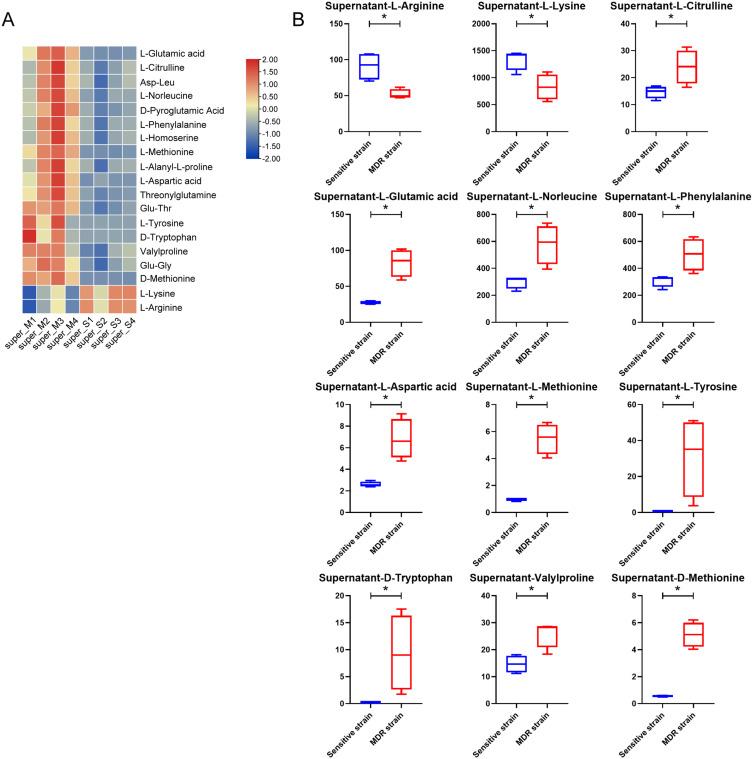
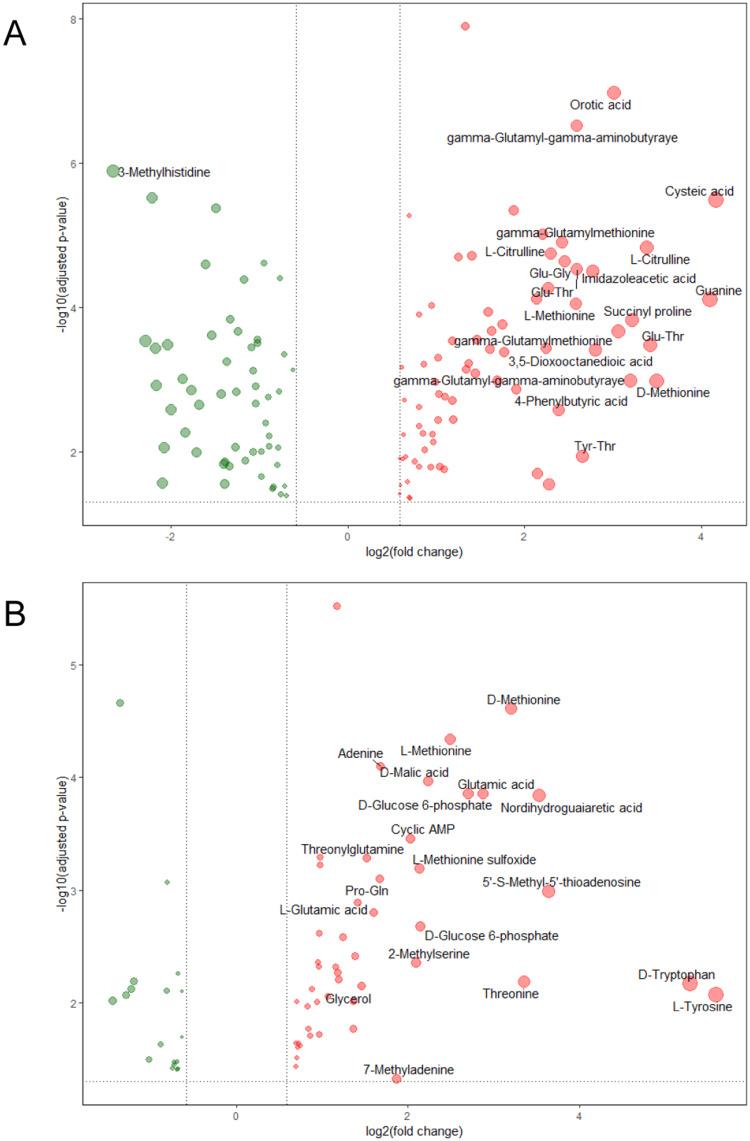
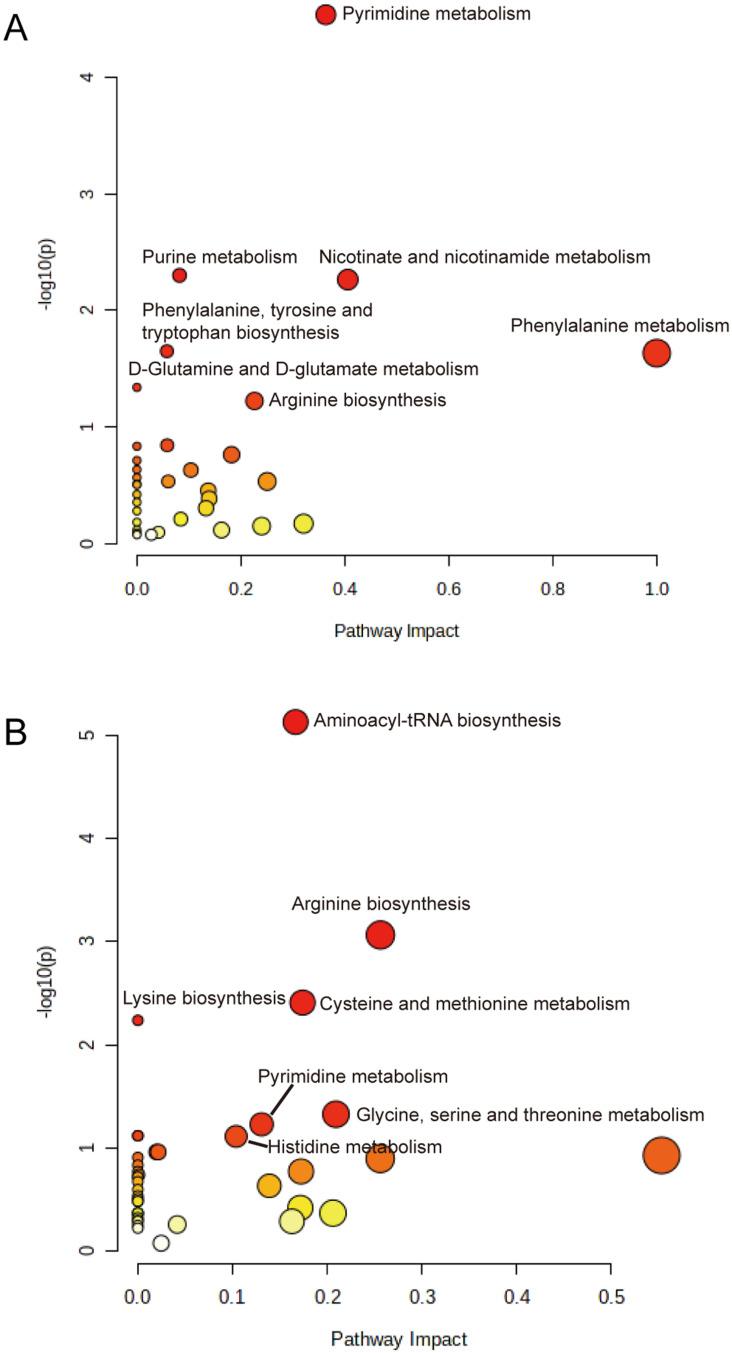
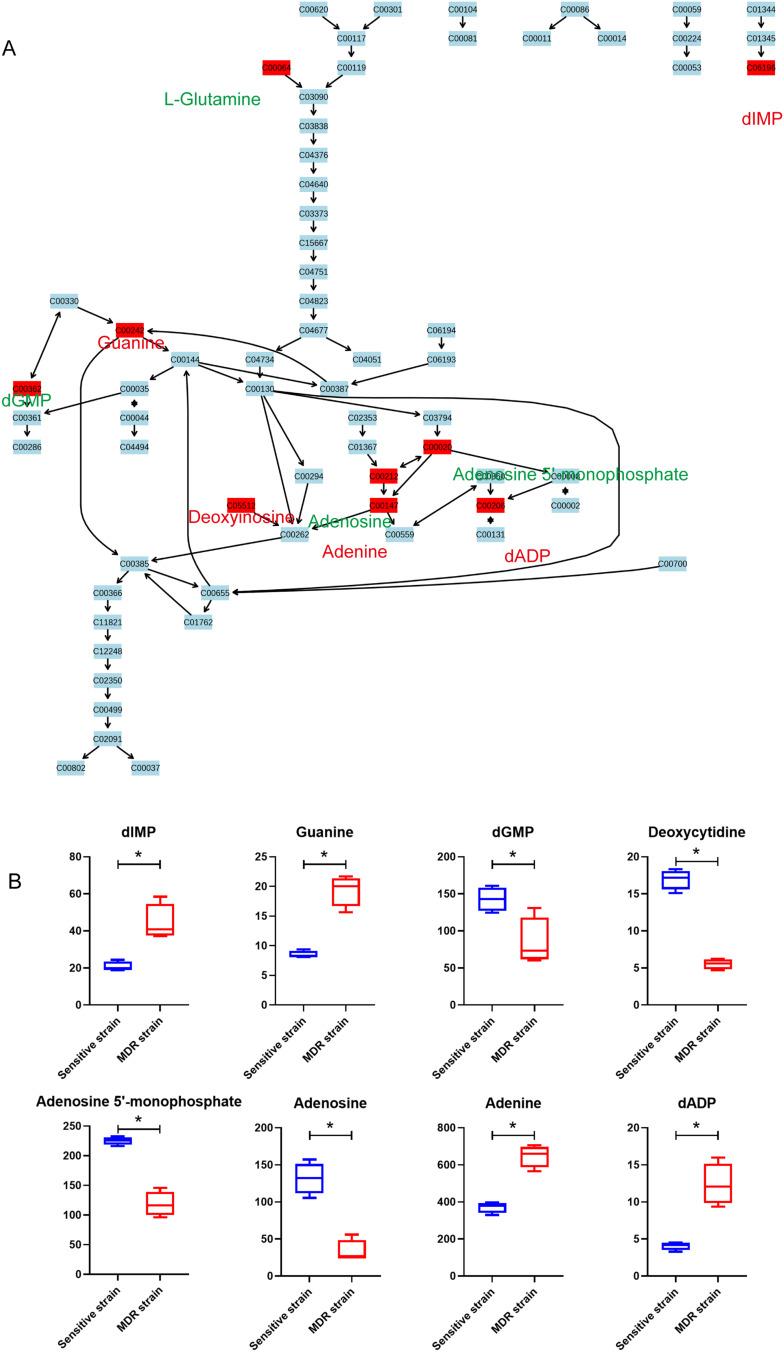
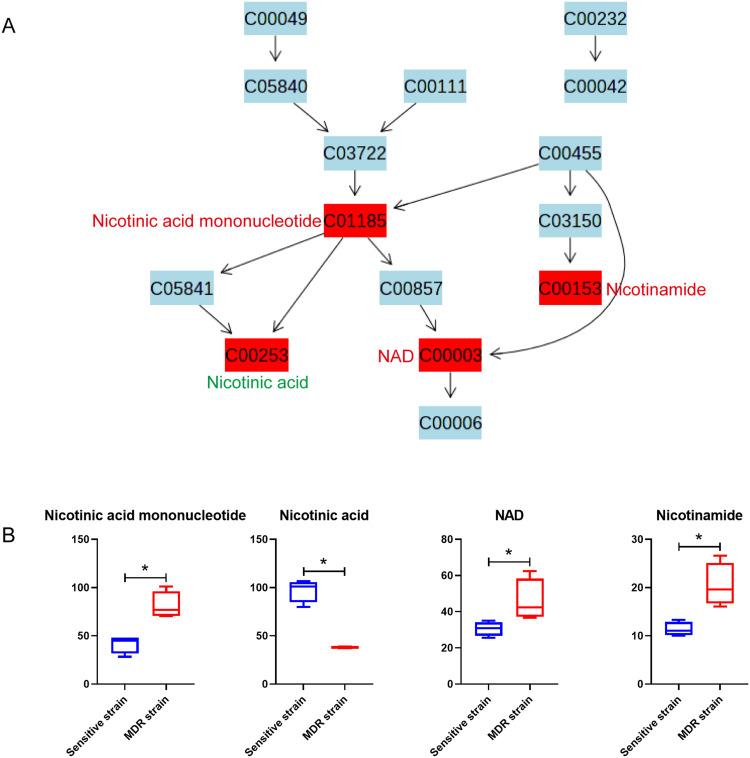
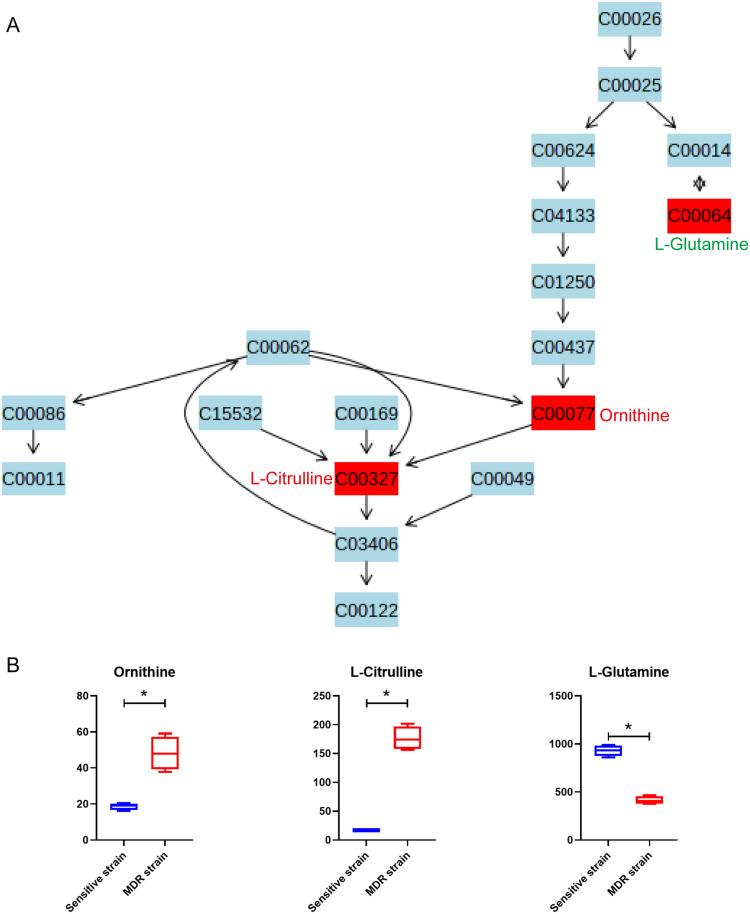
Compared with the DS-MTB isolate, 128 metabolites were significantly altered in the MDR-MTB isolate and 66 metabolites were significantly altered in the cultured supernatant. The differential metabolites were significantly enriched in pyrimidine metabolism, purine metabolism, nicotinate and nicotinamide metabolism, arginine acid metabolism, and phenylalanine metabolism. Furthermore, metabolomics analysis of the bacterial cultured supernatants showed a significant increase in 10 amino acids (L-citrulline, L-glutamic acid, L-aspartic acid, L-norleucine, L-phenylalanine, L-methionine, L-tyrosine, D-tryptophan, valylproline, and D-methionine) and a significant decrease in 2 amino acids (L-lysine and L-arginine) in MDR-MTB isolate.
CONCLUSION
The present study provided a metabolite alteration profile as well as a cultured supernatant metabolite alteration profile of MDR-MTB clinical isolate, providing clues to the potential metabolic pathways and mechanisms of multidrug resistance.
背景
结核分枝杆菌(MTB)是一种全球性的高致病性病原体,给全球公共卫生带来了巨大压力。尽管已经使用了几种有效药物来治疗结核病,但耐多药结核分枝杆菌(MDR-MTB)的出现进一步增加了公共卫生负担。本研究的目的是深入描述药物敏感结核分枝杆菌(DS-MTB)和MDR-MTB临床分离株的代谢变化,并基于代谢途径为耐药机制提供线索。
方法
根据多种抗结核药物的最低抑菌浓度(MIC),选择了两株临床分离株,一株DS-MTB分离株(异烟肼MIC = 0.06 mg/L,利福平MIC = 0.25 mg/L)和一株MDR-MTB分离株(异烟肼MIC = 4 mg/L,利福平MIC = 8 mg/L)。通过高通量代谢组学,揭示了DS-MTB分离株和MDR-MTB分离株及其培养上清液的代谢谱。
结果
与DS-MTB分离株相比,MDR-MTB分离株中有128种代谢物发生了显著变化,培养上清液中有66种代谢物发生了显著变化。差异代谢物在嘧啶代谢、嘌呤代谢、烟酸和烟酰胺代谢、精氨酸代谢和苯丙氨酸代谢中显著富集。此外,对细菌培养上清液的代谢组学分析显示,MDR-MTB分离株中有10种氨基酸(L-瓜氨酸、L-谷氨酸、L-天冬氨酸、L-正亮氨酸、L-苯丙氨酸、L-甲硫氨酸、L-酪氨酸、D-色氨酸、缬氨酰脯氨酸和D-甲硫氨酸)显著增加,2种氨基酸(L-赖氨酸和L-精氨酸)显著减少。
结论
本研究提供了MDR-MTB临床分离株的代谢物变化谱以及培养上清液代谢物变化谱,为潜在的代谢途径和耐多药机制提供了线索。

 Zotero 插件