
作为植物病害生物防治剂的植物促生微生物:作用机制、挑战与未来展望
Plant growth-promoting microorganisms as biocontrol agents of plant diseases: Mechanisms, challenges and future perspectives.
作者信息
El-Saadony Mohamed T, Saad Ahmed M, Soliman Soliman M, Salem Heba M, Ahmed Alshaymaa I, Mahmood Mohsin, El-Tahan Amira M, Ebrahim Alia A M, Abd El-Mageed Taia A, Negm Shaimaa H, Selim Samy, Babalghith Ahmad O, Elrys Ahmed S, El-Tarabily Khaled A, AbuQamar Synan F
机构信息
Department of Agricultural Microbiology, Faculty of Agriculture, Zagazig University, Zagazig, Egypt.
Department of Biochemistry, Faculty of Agriculture, Zagazig University, Zagazig, Egypt.
出版信息
Front Plant Sci. 2022 Oct 6;13:923880. doi: 10.3389/fpls.2022.923880. eCollection 2022.
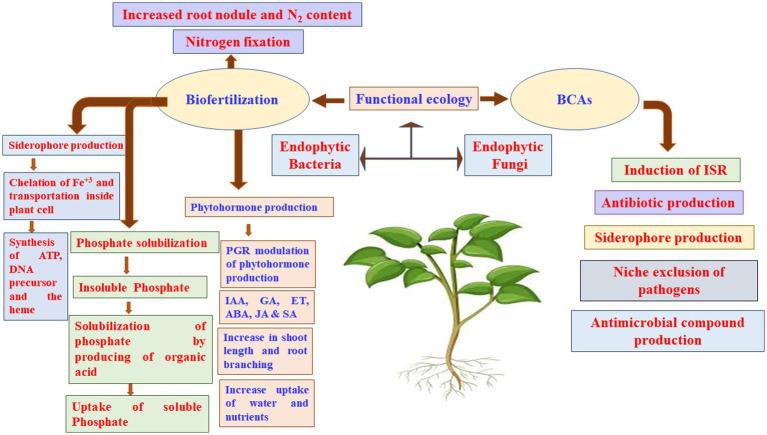
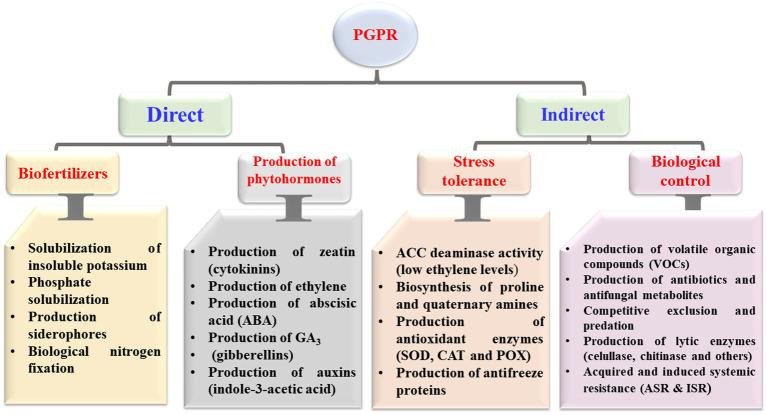
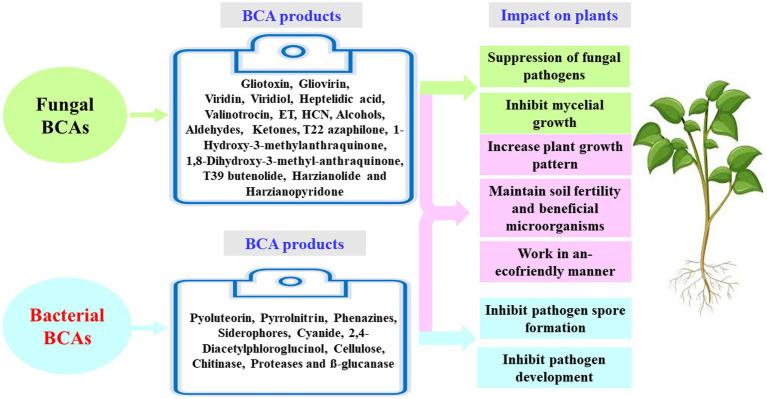
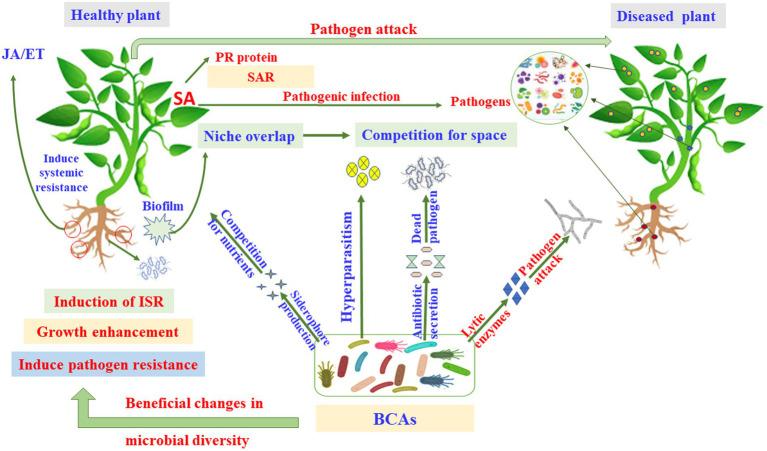
Plant diseases and pests are risk factors that threaten global food security. Excessive chemical pesticide applications are commonly used to reduce the effects of plant diseases caused by bacterial and fungal pathogens. A major concern, as we strive toward more sustainable agriculture, is to increase crop yields for the increasing population. Microbial biological control agents (MBCAs) have proved their efficacy to be a green strategy to manage plant diseases, stimulate plant growth and performance, and increase yield. Besides their role in growth enhancement, plant growth-promoting rhizobacteria/fungi (PGPR/PGPF) could suppress plant diseases by producing inhibitory chemicals and inducing immune responses in plants against phytopathogens. As biofertilizers and biopesticides, PGPR and PGPF are considered as feasible, attractive economic approach for sustainable agriculture; thus, resulting in a "win-win" situation. Several PGPR and PGPF strains have been identified as effective BCAs under environmentally controlled conditions. In general, any MBCA must overcome certain challenges before it can be registered or widely utilized to control diseases/pests. Successful MBCAs offer a practical solution to improve greenhouse crop performance with reduced fertilizer inputs and chemical pesticide applications. This current review aims to fill the gap in the current knowledge of plant growth-promoting microorganisms (PGPM), provide attention about the scientific basis for policy development, and recommend further research related to the applications of PGPM used for commercial purposes.
植物病虫害是威胁全球粮食安全的风险因素。人们通常大量使用化学农药来减轻由细菌和真菌病原体引起的植物病害的影响。在我们努力实现更可持续农业的过程中,一个主要问题是要为不断增长的人口提高作物产量。微生物生物防治剂已证明其作为管理植物病害、刺激植物生长和性能以及提高产量的绿色策略的有效性。除了其在促进生长方面的作用外,植物促生根际细菌/真菌(PGPR/PGPF)还可以通过产生抑制性化学物质和诱导植物对植物病原体的免疫反应来抑制植物病害。作为生物肥料和生物农药,PGPR和PGPF被认为是可持续农业可行且有吸引力的经济方法;因此,产生了一种“双赢”局面。在环境控制条件下,几种PGPR和PGPF菌株已被鉴定为有效的生物防治剂。一般来说,任何微生物生物防治剂在能够注册或广泛用于控制病虫害之前都必须克服某些挑战。成功的微生物生物防治剂提供了一种切实可行的解决方案,可在减少肥料投入和化学农药使用的情况下提高温室作物的性能。本综述旨在填补目前关于植物促生微生物(PGPM)知识的空白,关注政策制定的科学依据,并推荐与用于商业目的的PGPM应用相关的进一步研究。

 Zotero 插件