
新冠疫情封锁对印度钦奈佩伦古迪地区颗粒物的影响。
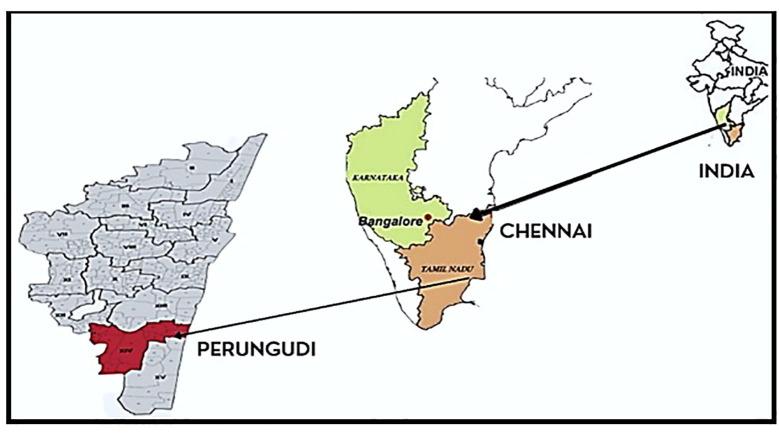
Impact of COVID-19 lockdown on the particulate matter over Perungudi, Chennai, India.
作者信息
Tamil Selvi S, Najma Nikkath S, Mahalakshmi N
机构信息
Department of Physics, KCG College of Technology, Chennai, India.
Department of Physics, Bhaktavatsalam Memorial College for Women, Chennai, India.
出版信息
Mater Today Proc. 2022;55:280-286. doi: 10.1016/j.matpr.2021.07.296. Epub 2021 Jul 21.
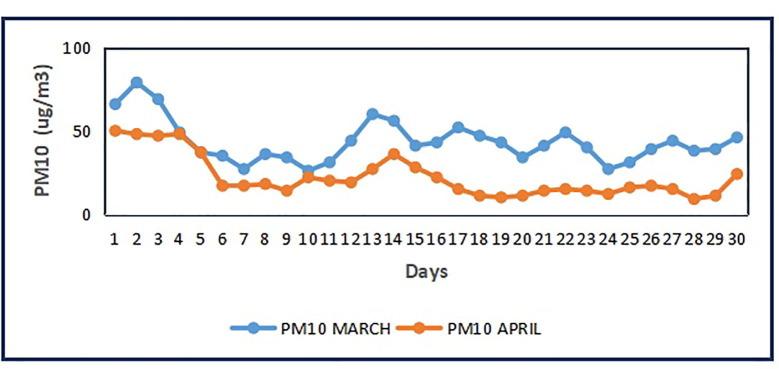
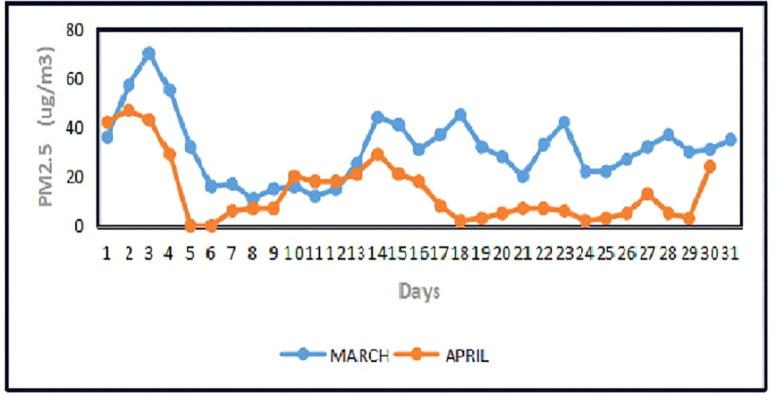
The nationwide lockdown of Phase-1 in India was started from March 25 to April 14, 2020 and Phase-2 from April 15 to May 3, 2020 with severe restrictions on public activities in India. Utilizing the particulate matter PM and PM data recorded during this adverse time, the present study is undertaken to assess the impact of phase 1 and 2 lockdown on the air quality of Perungudi, Chennai, India. The data obtained from the Tamil Nadu Pollution Control Board was assessed for lockdown phase. We compared particulate matter data for the unlock phase with a coinciding period in March 2020 to determine the changes in pollutant concentrations during the lockdown period of April 2020. The descriptive analysis of PM continuous data was performed to determine the mean, standard deviation, variance, skew and kurtosis to identify the nature of data. Correlogram analysis gives the information that the data under study has non-stationary behaviour and not random. Along with this linear regression analysis were performed to determine the relationship and trend for the data. The results revealed decreasing trend in the concentrations (PM, PM).
印度第一阶段的全国封锁于2020年3月25日至4月14日开始,第二阶段从2020年4月15日至5月3日,期间印度的公共活动受到严格限制。利用在此不利时期记录的颗粒物PM和PM数据,本研究旨在评估第一阶段和第二阶段封锁对印度钦奈佩伦古迪空气质量的影响。对从泰米尔纳德邦污染控制委员会获得的数据进行了封锁阶段评估。我们将解封阶段的颗粒物数据与2020年3月的同期数据进行比较,以确定2020年4月封锁期间污染物浓度的变化。对PM连续数据进行描述性分析,以确定均值、标准差、方差、偏度和峰度,从而识别数据的性质。相关图分析表明,所研究的数据具有非平稳行为且并非随机。与此同时,进行了线性回归分析以确定数据的关系和趋势。结果显示浓度(PM、PM)呈下降趋势。



 Zotero 插件