
晨起进行 SARS-CoV-2 检测,由于唾液和鼻腔拭子中病毒载量较高,可提高感染检出率。
Morning SARS-CoV-2 Testing Yields Better Detection of Infection Due to Higher Viral Loads in Saliva and Nasal Swabs upon Waking.
机构信息
California Institute of Technologygrid.20861.3d, Pasadena, California, USA.
City of Pasadena Public Health Department, Pasadena, California, USA.
出版信息
Microbiol Spectr. 2022 Dec 21;10(6):e0387322. doi: 10.1128/spectrum.03873-22. Epub 2022 Oct 26.
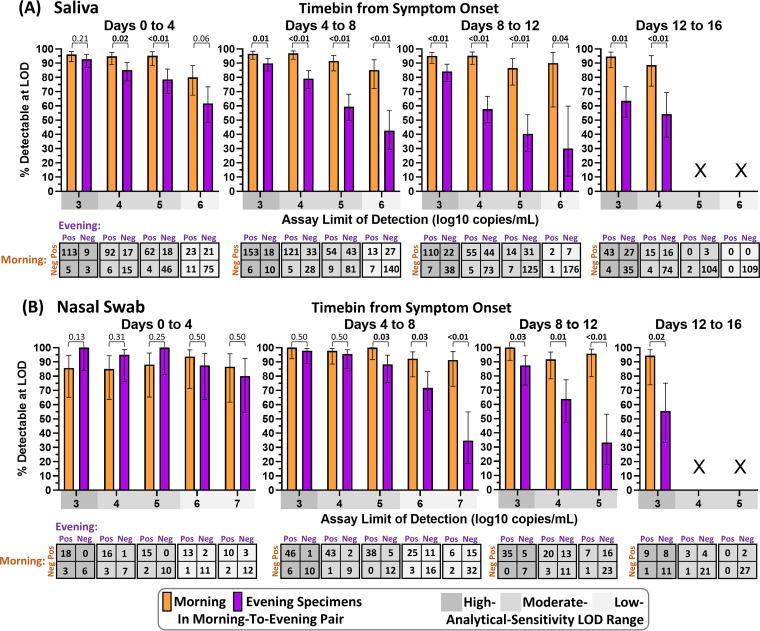
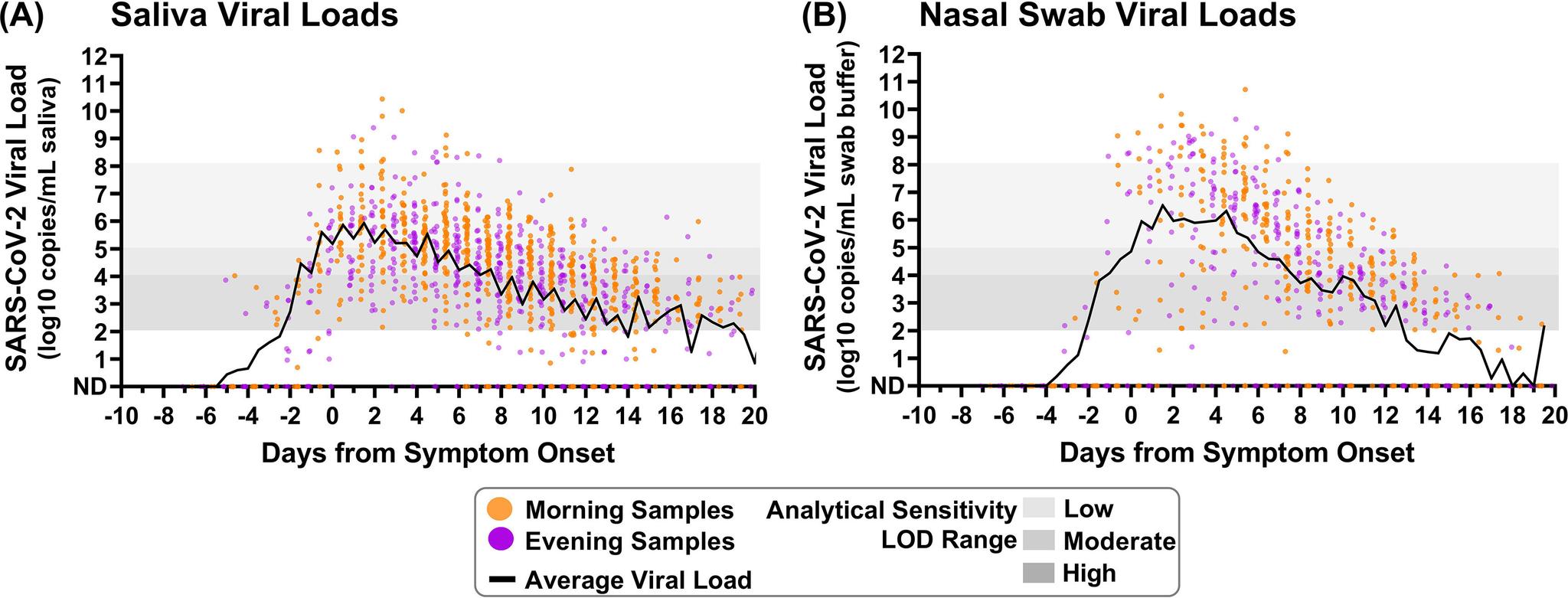
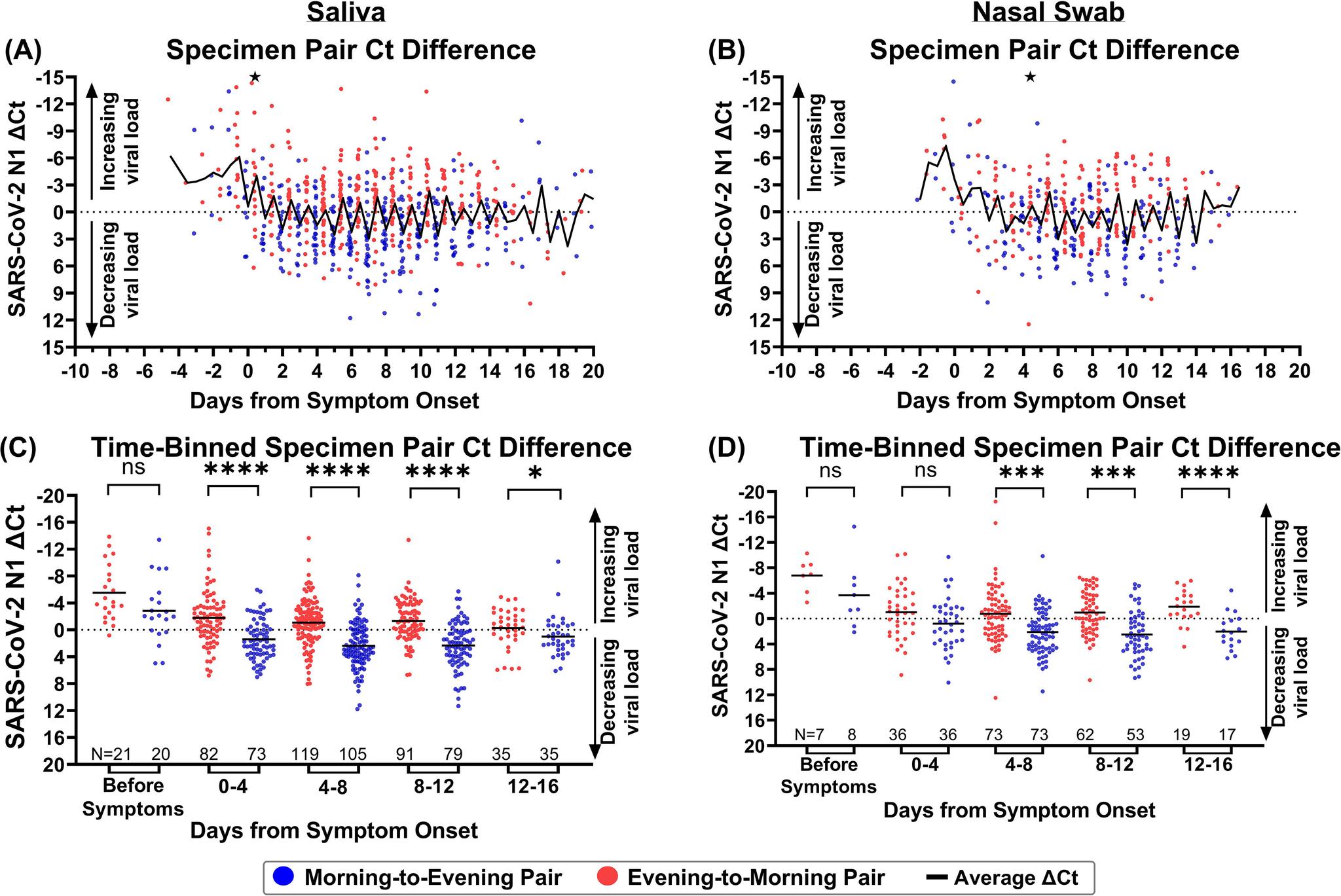
Optimizing specimen collection methods to achieve the most reliable SARS-CoV-2 detection for a given diagnostic sensitivity would improve testing and minimize COVID-19 outbreaks. From September 2020 to April 2021, we performed a household-transmission study in which participants self-collected specimens every morning and evening throughout acute SARS-CoV-2 infection. Seventy mildly symptomatic participants collected saliva, and of those, 29 also collected nasal swab specimens. Viral load was quantified in 1,194 saliva and 661 nasal swab specimens using a high-analytical-sensitivity reverse transcription-quantitative PCR (RT-qPCR) assay. Viral loads in both saliva and nasal swab specimens were significantly higher in morning-collected specimens than in evening-collected specimens after symptom onset. This aspect of the biology of SARS-CoV-2 infection has implications for diagnostic testing. We infer that morning collection would have resulted in significantly improved detection and that this advantage would be most pronounced for tests with low to moderate analytical sensitivity. Collecting specimens for COVID-19 testing in the morning offers a simple and low-cost improvement to clinical diagnostic sensitivity of low- to moderate-analytical-sensitivity tests. Our findings suggest that collecting saliva and nasal swab specimens in the morning immediately after waking yields higher SARS-CoV-2 viral loads than collection later in the day. The higher viral loads from morning specimen collection are predicted to significantly improve detection of SARS-CoV-2 in symptomatic individuals, particularly when using moderate- to low-analytical-sensitivity COVID-19 diagnostic tests, such as rapid antigen tests.
优化标本采集方法,以在给定的诊断灵敏度下实现最可靠的 SARS-CoV-2 检测,将有助于提高检测效率并最大限度地减少 COVID-19 疫情的爆发。2020 年 9 月至 2021 年 4 月,我们进行了一项家庭传播研究,参与者在急性 SARS-CoV-2 感染期间每天早晚自行采集标本。70 名症状轻微的参与者采集了唾液样本,其中 29 名还采集了鼻腔拭子标本。我们使用高分析灵敏度的逆转录定量 PCR(RT-qPCR)检测法,对 1194 份唾液样本和 661 份鼻腔拭子标本中的病毒载量进行了定量检测。在症状出现后,早晨采集的样本中的唾液和鼻腔拭子标本中的病毒载量均明显高于晚上采集的样本。SARS-CoV-2 感染生物学的这一方面对诊断检测具有重要意义。我们推断,早晨采集将显著提高检测的敏感性,对于分析灵敏度较低或中等的检测方法,这种优势将最为显著。对于 COVID-19 检测,在早晨采集标本是一种简单且低成本的方法,可以提高低至中等分析灵敏度测试的临床诊断敏感性。我们的研究结果表明,与当天晚些时候采集相比,在早晨醒来后立即采集唾液和鼻腔拭子标本可获得更高的 SARS-CoV-2 病毒载量。早晨采集标本的更高病毒载量有望显著提高对症状个体中 SARS-CoV-2 的检测,尤其是在使用中等至低分析灵敏度的 COVID-19 诊断测试(如快速抗原检测)时。
 Zotero 插件