
铁死亡诱导和YAP抑制作为胃肠道间质瘤(GISTs)的新治疗靶点
Ferroptosis Induction and YAP Inhibition as New Therapeutic Targets in Gastrointestinal Stromal Tumors (GISTs).
作者信息
Delvaux Marine, Hagué Perrine, Craciun Ligia, Wozniak Agnieszka, Demetter Pieter, Schöffski Patrick, Erneux Christophe, Vanderwinden Jean-Marie
机构信息
Laboratory of Neurophysiology, Faculty of Medicine, Université Libre de Bruxelles, 1070 Brussels, Belgium.
Department of Pathology, Institut Jules Bordet, Université Libre de Bruxelles, 1070 Brussels, Belgium.
出版信息
Cancers (Basel). 2022 Oct 15;14(20):5050. doi: 10.3390/cancers14205050.
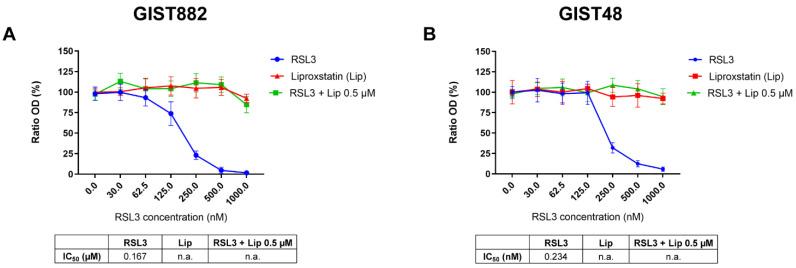
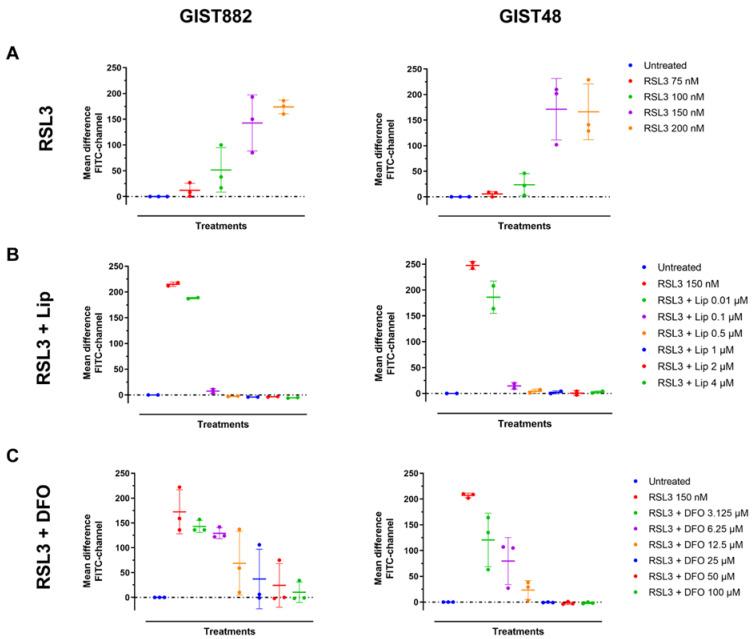
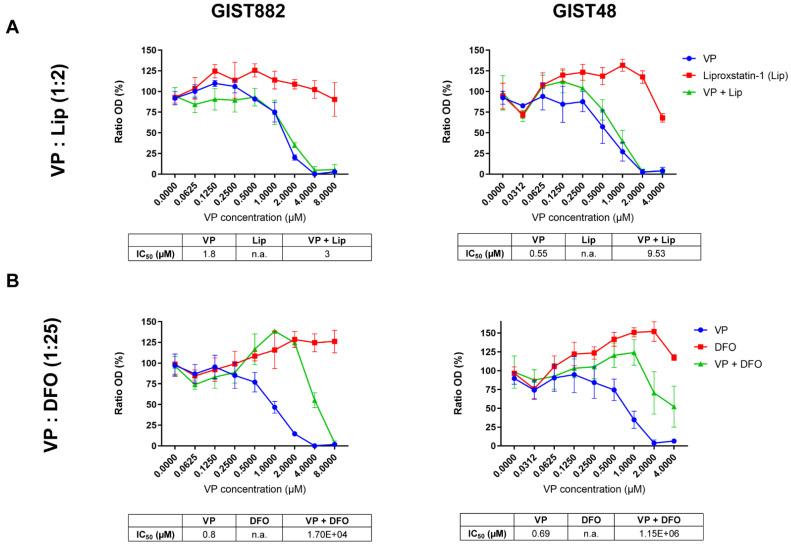
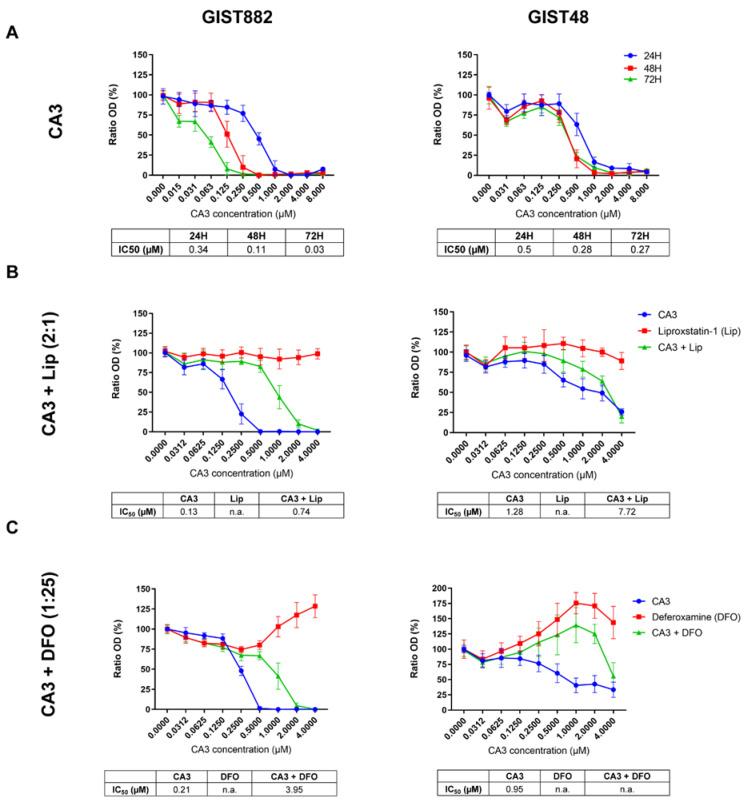
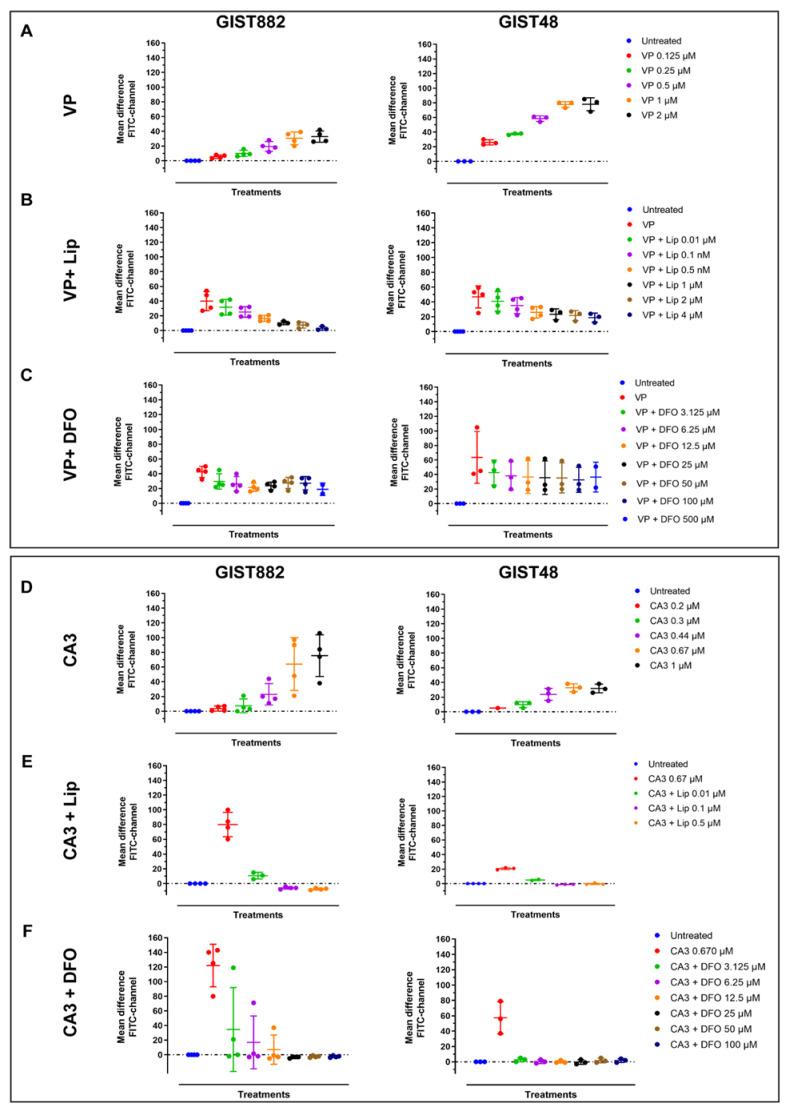
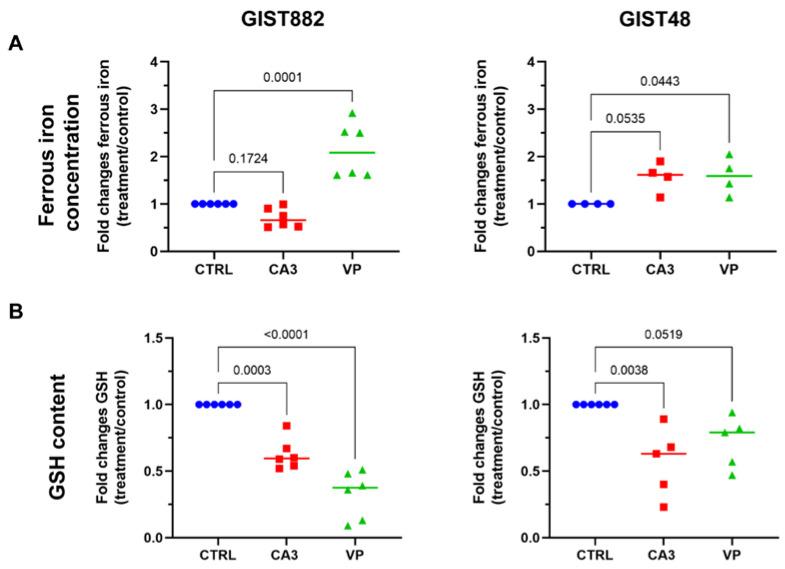
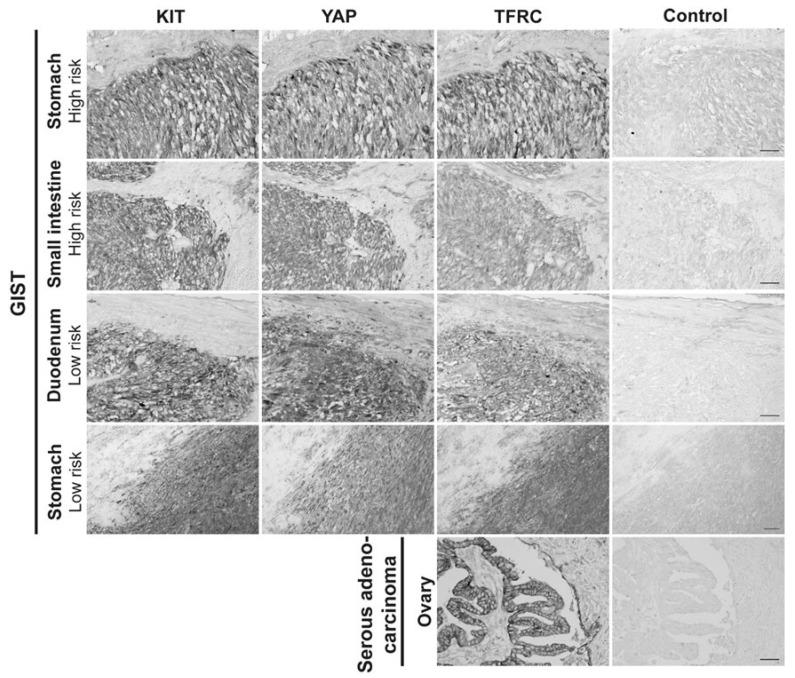
GISTs are sarcomas of the gastrointestinal tract often associated with gain-of-function mutations in KIT or PDGFRA receptor genes. While most GISTs initially respond to tyrosine kinase inhibitors, relapses due to acquired resistance frequently occur. The induction of ferroptosis, an iron-dependent form of non-apoptotic cell death, emerged as a novel therapeutic approach in cancers and remains poorly characterized in GISTs. We studied hallmarks of ferroptosis, i.e., lipid peroxidation, iron and glutathione content, and GPX4 protein expression in imatinib-sensitive (GIST882) and -resistant (GIST48) GIST cell lines. GIST cells were highly sensitive to the induction of ferroptosis by RSL3, which was reversed by liproxstatin and deferoxamine. Lipid peroxidation and ferroptosis were mediated by VP and CA3 in GIST cells through a significant decrease in antioxidant defenses. Moreover, VP, but surprisingly not CA3, inhibited a series of target genes downstream of YAP in GIST cells. The ferroptosis marker TFRC was also investigated by immunohistochemistry in GIST tissue arrays. TFRC expression was observed in all samples. High TFRC expression was positively correlated with high-risk GISTs, elevated mitotic count, and YAP nuclear localization, reflecting YAP activation. This study highlights ferroptosis as a novel cell death mechanism in GISTs, and a potential therapeutic target to overcome resistance to tyrosine kinase inhibitors.
胃肠道间质瘤(GISTs)是胃肠道肉瘤,常与KIT或血小板衍生生长因子受体α(PDGFRA)基因的功能获得性突变相关。虽然大多数GISTs最初对酪氨酸激酶抑制剂有反应,但由于获得性耐药导致的复发经常发生。铁死亡是一种铁依赖性的非凋亡性细胞死亡形式,其诱导已成为癌症治疗的一种新方法,而在GISTs中的特征仍不清楚。我们研究了铁死亡的特征,即脂质过氧化、铁和谷胱甘肽含量以及在伊马替尼敏感(GIST882)和耐药(GIST48)的GIST细胞系中谷胱甘肽过氧化物酶4(GPX4)蛋白表达。GIST细胞对RSL3诱导的铁死亡高度敏感,liproxstatin和去铁胺可逆转这种敏感性。在GIST细胞中,脂质过氧化和铁死亡由维生素E琥珀酸酯(VP)和喜树碱(CA3)介导,通过抗氧化防御的显著降低实现。此外,VP,但令人惊讶的是CA3没有,抑制了GIST细胞中Yes相关蛋白(YAP)下游的一系列靶基因。还通过免疫组织化学在GIST组织阵列中研究了铁死亡标志物转铁蛋白受体(TFRC)。在所有样本中均观察到TFRC表达。高TFRC表达与高危GISTs、有丝分裂计数升高和YAP核定位呈正相关,反映了YAP的激活。这项研究强调了铁死亡是GISTs中的一种新的细胞死亡机制,也是克服对酪氨酸激酶抑制剂耐药性的潜在治疗靶点。




 Zotero 插件