
患有新冠后综合征伴呼吸困难患者的电阻抗断层扫描(EIT):病例报告
Electrical Impedance Tomography (EIT) in a Patient Suffering from Post-COVID Syndrome with Dyspnea: A Case Report.
作者信息
Katzer Katrin, Gremme Yvonne, Moshmosh Alsabbagh Majd, Stallmach Andreas, Reuken Philipp, Lewejohann Jan-Christoph
机构信息
Department of Internal Medicine IV, Jena University Hospital, Friedrich-Schiller-University, 07747 Jena, Germany.
Center for Sepsis Control and Care (CSCC), Jena University Hospital, Friedrich-Schiller-University, 07747 Jena, Germany.
出版信息
Diagnostics (Basel). 2022 Sep 21;12(10):2284. doi: 10.3390/diagnostics12102284.
BACKGROUND
Long-term health consequences following COVID-19 disease constitute an increasing problem worldwide. A considerable number of patients still suffer from various symptoms, most commonly dyspnea, months or even years after the acute infection. In these patients, a classical pulmonary function test often yields no significant findings. Subsequently, treating those patients is a challenge for any physician as there are currently no evidence-based treatment plans.
CASE AND METHODS
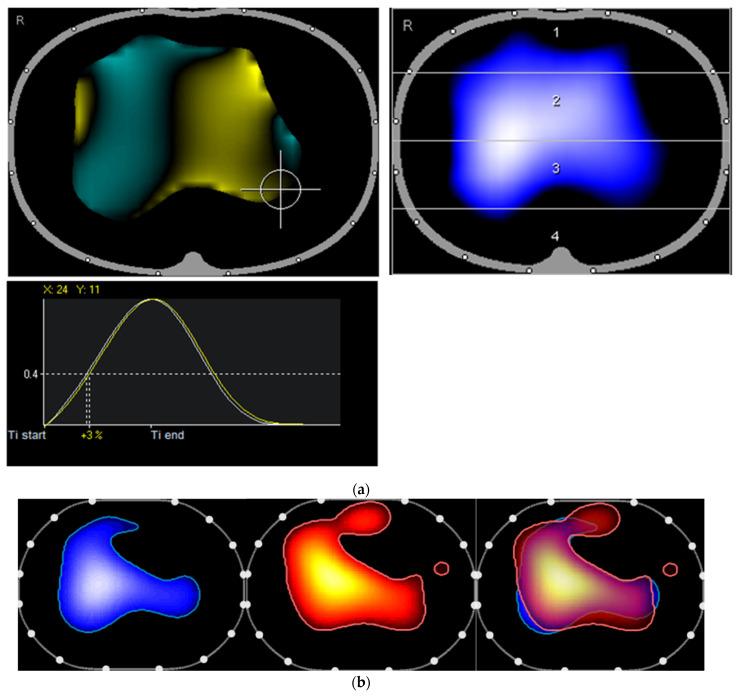
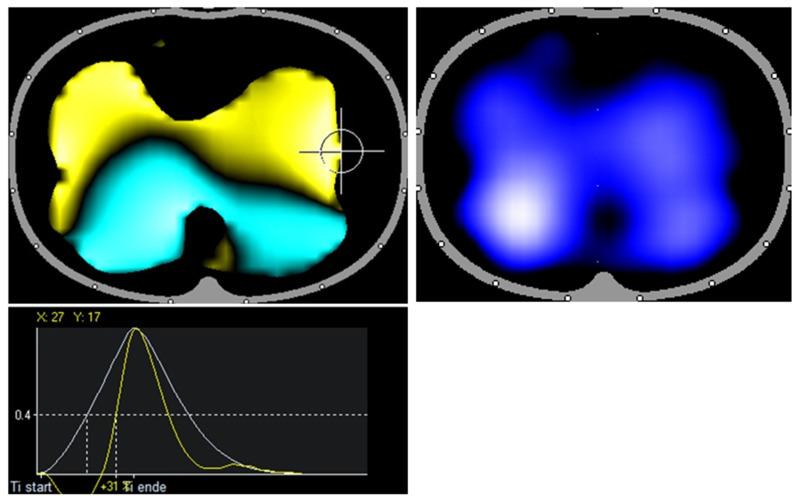
We reported the case of a 58-year-old patient who was still suffering from resting dyspnea six months after severe COVID-19 pneumonia. The dyspnea was so pronounced that the patient was supplied with home oxygen, which they used as needed. The regional distribution of ventilation in the lungs was studied twice utilizing noninvasive electrical impedance tomography (EIT). The first examination showed distinct inhomogeneities of regional ventilation, a regional ventilation delay (RVD) of 15%, and pronounced pendelluft phenomena. Seven weeks after treatment with budesonide and physical therapy, the patient reported a clear subjective improvement in complaints. Accordingly, the regional distribution of ventilation also improved.
CONCLUSION
Electrical impedance tomography might be a promising method to assess lung function in post-COVID patients; however, controlled and larger studies are necessary.
背景
新型冠状病毒肺炎(COVID-19)后的长期健康后果在全球范围内正成为一个日益严重的问题。相当数量的患者在急性感染数月甚至数年后仍患有各种症状,最常见的是呼吸困难。在这些患者中,经典的肺功能测试往往没有显著结果。因此,对于任何医生来说,治疗这些患者都是一项挑战,因为目前尚无基于证据的治疗方案。
病例与方法
我们报告了一例58岁患者的病例,该患者在严重COVID-19肺炎六个月后仍患有静息性呼吸困难。呼吸困难非常明显,以至于患者在家中按需使用氧气。利用无创电阻抗断层扫描(EIT)对肺部通气的区域分布进行了两次研究。第一次检查显示区域通气存在明显不均匀性,区域通气延迟(RVD)为15%,并有明显的摆动气现象。在接受布地奈德治疗和物理治疗七周后,患者报告主观症状有明显改善。相应地,通气的区域分布也得到了改善。
结论
电阻抗断层扫描可能是评估COVID-19后患者肺功能的一种有前景的方法;然而,需要进行对照的、更大规模的研究。

 Zotero 插件