
PCSK9 影响星形胶质细胞胆固醇代谢并减少体外神经元的胆固醇供应:在阿尔茨海默病中的潜在影响。
PCSK9 Affects Astrocyte Cholesterol Metabolism and Reduces Neuron Cholesterol Supplying In Vitro: Potential Implications in Alzheimer's Disease.
机构信息
Department of Food and Drug, University of Parma, 43124 Parma, Italy.
Department of Medicine and Surgery, University of Parma, 43125 Parma, Italy.
出版信息
Int J Mol Sci. 2022 Oct 13;23(20):12192. doi: 10.3390/ijms232012192.
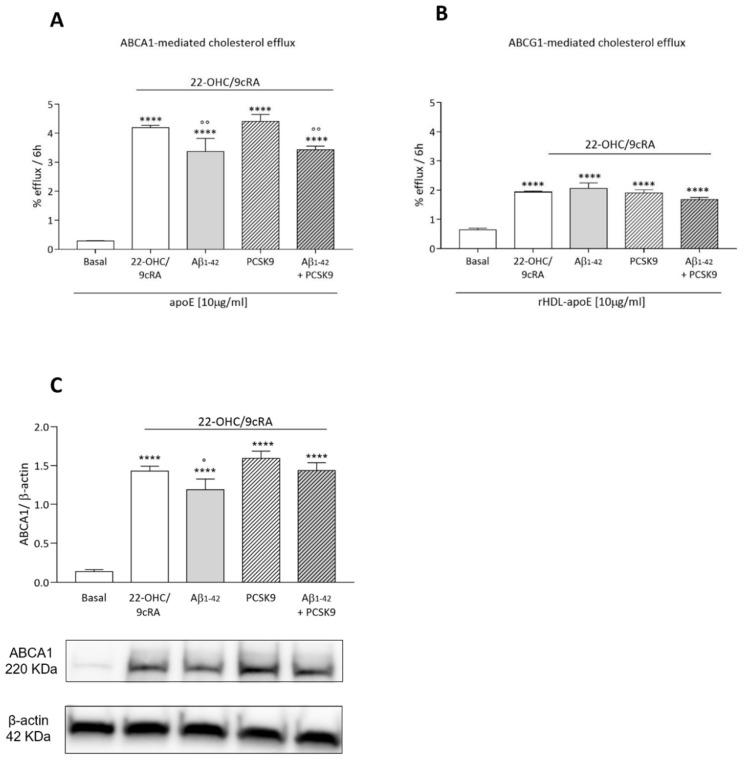
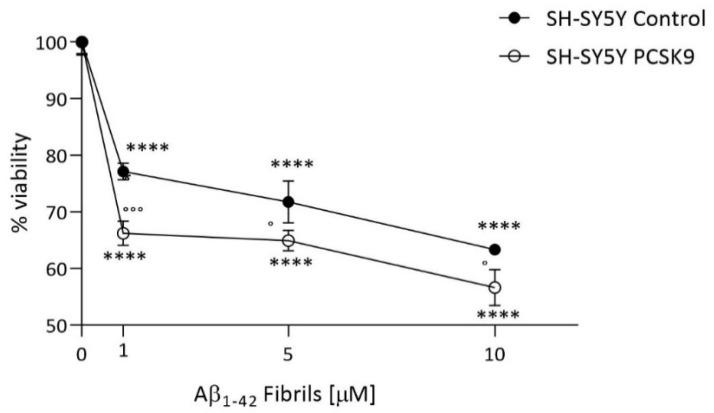
The Proprotein Convertase Subtilisin/Kexin Type 9 (PCSK9) involvement in Alzheimer’s disease (AD) is poorly investigated. We evaluated the in vitro PCSK9 modulation of astrocyte cholesterol metabolism and neuronal cholesterol supplying, which is fundamental for neuronal functions. Moreover, we investigated PCSK9 neurotoxic effects. In human astrocytoma cells, PCSK9 reduced cholesterol content (−20%; p < 0.05), with a greater effect in presence of beta amyloid peptide (Aβ) (−37%; p < 0.01). PCSK9 increased cholesterol synthesis and reduced the uptake of apoE-HDL-derived cholesterol (−36%; p < 0.0001), as well as the LDL receptor (LDLR) and the apoE receptor 2 (ApoER2) expression (−66% and −31%, respectively; p < 0.01). PCSK9 did not modulate ABCA1- and ABCG1-cholesterol efflux, ABCA1 levels, or membrane cholesterol. Conversely, ABCA1 expression and activity, as well as membrane cholesterol, were reduced by Aβ (p < 0.05). In human neuronal cells, PCSK9 reduced apoE-HDL-derived cholesterol uptake (−41%; p < 0.001) and LDLR/apoER2 expression (p < 0.05). Reduced cholesterol internalization occurred also in PCSK9-overexpressing neurons exposed to an astrocyte-conditioned medium (−39%; p < 0.001). PCSK9 reduced neuronal cholesterol content overall (−29%; p < 0.05) and increased the Aβ-induced neurotoxicity (p < 0.0001). Our data revealed an interfering effect of PCSK9, in cooperation with Aβ, on brain cholesterol metabolism leading to neuronal cholesterol reduction, a potentially deleterious effect. PCSK9 also exerted a neurotoxic effect, and thus represents a potential pharmacological target in AD.
前蛋白转化酶枯草溶菌素 9(PCSK9)在阿尔茨海默病(AD)中的作用尚未得到充分研究。我们评估了 PCSK9 在体外对星形胶质细胞胆固醇代谢和神经元胆固醇供应的调节作用,这对神经元功能至关重要。此外,我们还研究了 PCSK9 的神经毒性作用。在人星形细胞瘤细胞中,PCSK9 降低胆固醇含量(-20%;p<0.05),在存在β淀粉样肽(Aβ)时效果更大(-37%;p<0.01)。PCSK9 增加胆固醇合成并减少载脂蛋白 E 高密度脂蛋白(apoE-HDL)衍生胆固醇的摄取(-36%;p<0.0001),以及 LDL 受体(LDLR)和载脂蛋白 E 受体 2(ApoER2)的表达(-66%和-31%,分别;p<0.01)。PCSK9 不调节 ABCA1-和 ABCG1-胆固醇外排、ABCA1 水平或膜胆固醇。相反,Aβ 降低 ABCA1 表达和活性以及膜胆固醇(p<0.05)。在人神经元细胞中,PCSK9 减少 apoE-HDL 衍生胆固醇摄取(-41%;p<0.001)和 LDLR/ApoER2 表达(p<0.05)。在暴露于星形胶质细胞条件培养基的 PCSK9 过表达神经元中,也观察到胆固醇内化减少(-39%;p<0.001)。PCSK9 总体上降低神经元胆固醇含量(-29%;p<0.05)并增加 Aβ 诱导的神经毒性(p<0.0001)。我们的数据揭示了 PCSK9 与 Aβ 合作对大脑胆固醇代谢的干扰作用,导致神经元胆固醇减少,这是一种潜在的有害作用。PCSK9 还具有神经毒性作用,因此它是 AD 的潜在药物靶点。




 Zotero 插件