
鉴定天然化合物作为丙酮酸激酶 M2 的抑制剂用于癌症治疗。
Identification of Natural Compounds as Inhibitors of Pyruvate Kinase M2 for Cancer Treatment.
机构信息
Department of Zoology, Faculty of Life Sciences, Government College University Faisalabad, Faisalabad 38000, Pakistan.
Department of Chemistry, Faculty of Sciences, Cankiri Karatekin University, Cankiri 18100, Turkey.
出版信息
Molecules. 2022 Oct 21;27(20):7113. doi: 10.3390/molecules27207113.
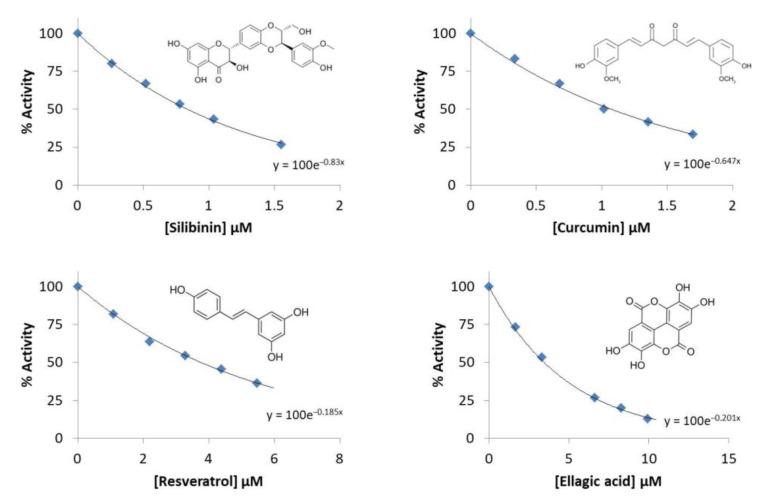
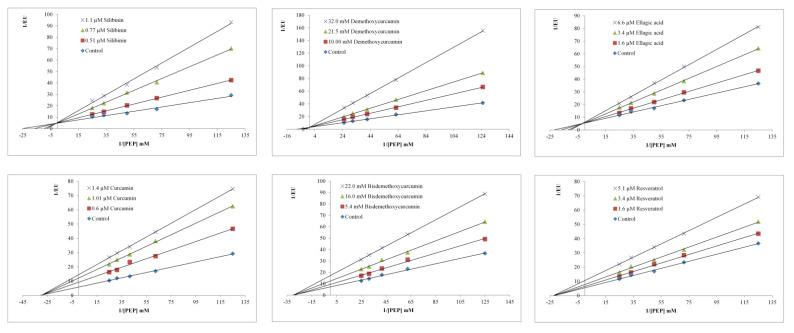
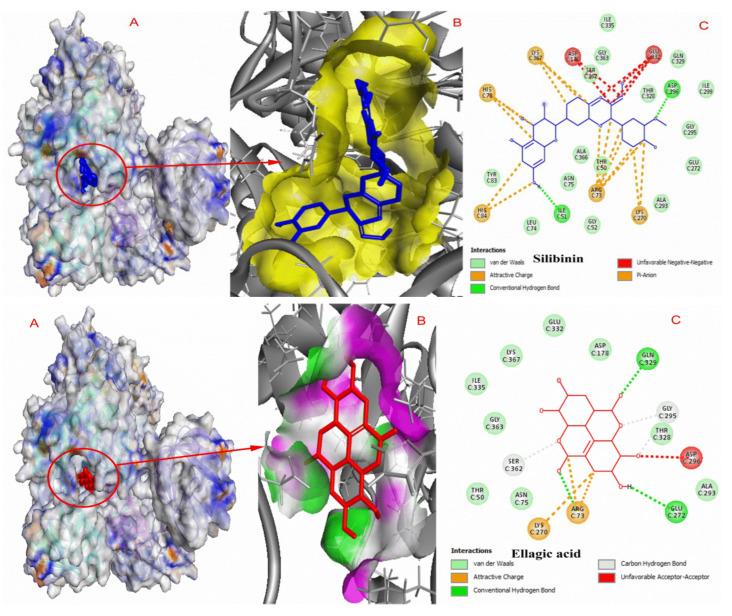
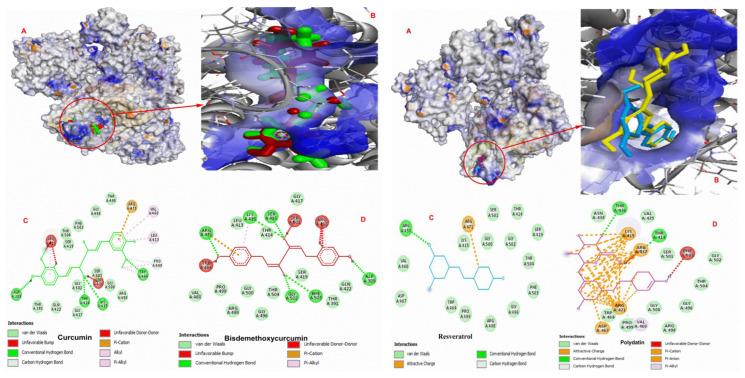
The reliance of tumor cells on aerobic glycolysis is one of the emerging hallmarks of cancer. Pyruvate kinase M2 (PKM2), an important enzyme of glycolytic pathway, is highly expressed in a number of cancer cells. Tumor cells heavily depend on PKM2 to fulfill their divergent energetic and biosynthetic requirements, suggesting it as novel drug target for cancer therapies. Based on this context, we performed enzymatic-assay-based screening of the in-house phenolic compounds library for the identification of PKM2 inhibitors. This screening identified silibinin, curcumin, resveratrol, and ellagic acid as potential inhibitors of PKM2 with IC values of 0.91 µM, 1.12 µM, 3.07 µM, and 4.20 µM respectively. For the determination of Ki constants and the inhibition type of hit compounds, Lineweaver-Burk graphs were plotted. Silibinin and ellagic acid performed the competitive inhibition of PKM2 with Ki constants of 0.61 µM and 5.06 µM, while curcumin and resveratrol were identified as non-competitive inhibitors of PKM2 with Ki constants of 1.20 µM and 7.34 µM. The in silico screening of phenolic compounds against three binding sites of PKM2 provided insight into the binding pattern and functionally important amino residues of PKM2. Further, the evaluation of cytotoxicity via MTT assay demonstrated ellagic acid as potent inhibitor of cancer cell growth (IC = 20 µM). These results present ellagic acid, silibinin, curcumin, and resveratrol as inhibitors of PKM2 to interrogate metabolic reprogramming in cancer cells. This study has also provided the foundation for further research to validate the potential of identified bioactive entities for PKM2 targeted-cancer therapies.
肿瘤细胞对有氧糖酵解的依赖是癌症的新兴特征之一。丙酮酸激酶 M2(PKM2)是糖酵解途径中的一种重要酶,在许多癌细胞中高度表达。肿瘤细胞严重依赖 PKM2 来满足其不同的能量和生物合成需求,这表明它是癌症治疗的新药物靶点。基于此背景,我们对内部酚类化合物库进行了基于酶活性的筛选,以鉴定 PKM2 抑制剂。该筛选鉴定出水飞蓟素、姜黄素、白藜芦醇和鞣花酸分别为 PKM2 的潜在抑制剂,IC 值分别为 0.91 µM、1.12 µM、3.07 µM 和 4.20 µM。为了确定 Ki 常数和命中化合物的抑制类型,我们绘制了 Lineweaver-Burk 图。水飞蓟素和鞣花酸对 PKM2 表现出竞争性抑制,Ki 常数分别为 0.61 µM 和 5.06 µM,而姜黄素和白藜芦醇被鉴定为 PKM2 的非竞争性抑制剂,Ki 常数分别为 1.20 µM 和 7.34 µM。对酚类化合物针对 PKM2 的三个结合位点进行的计算机筛选,深入了解了 PKM2 的结合模式和功能重要的氨基酸残基。此外,通过 MTT 测定评估细胞毒性表明鞣花酸是一种有效的癌细胞生长抑制剂(IC = 20 µM)。这些结果表明,鞣花酸、水飞蓟素、姜黄素和白藜芦醇是 PKM2 的抑制剂,可研究癌细胞中的代谢重编程。本研究还为进一步研究提供了基础,以验证鉴定的生物活性实体在 PKM2 靶向癌症治疗中的潜力。



 Zotero 插件