
循环中含细胞外囊泡的微小RNA揭示了阿尔茨海默病的潜在发病机制。
Circulating extracellular vesicle-containing microRNAs reveal potential pathogenesis of Alzheimer's disease.
作者信息
Wang Yi, Yuan Ping, Ding Lu, Zhu Jie, Qi Xinrui, Zhang Yanyan, Li Yunxia, Xia Xiaohuan, Zheng Jialin C
机构信息
Translational Research Center, Shanghai Yangzhi Rehabilitation Hospital Affiliated to Tongji University School of Medicine, Shanghai, China.
Department of Cardio-Pulmonary Circulation, School of Medicine, Shanghai Pulmonary Hospital, Tongji University, Shanghai, China.
出版信息
Front Cell Neurosci. 2022 Oct 20;16:955511. doi: 10.3389/fncel.2022.955511. eCollection 2022.
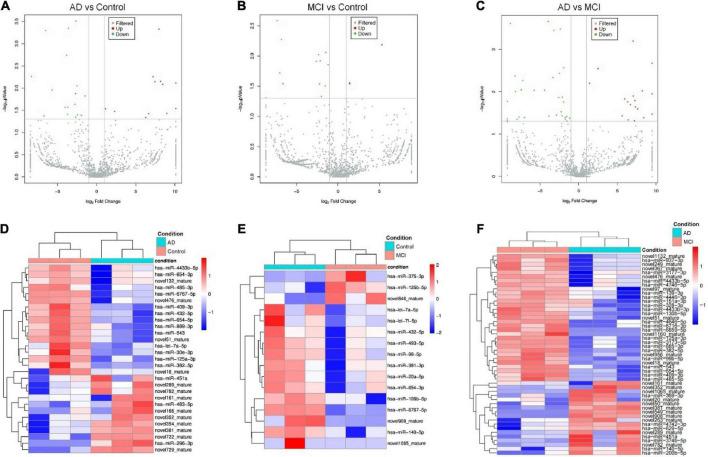
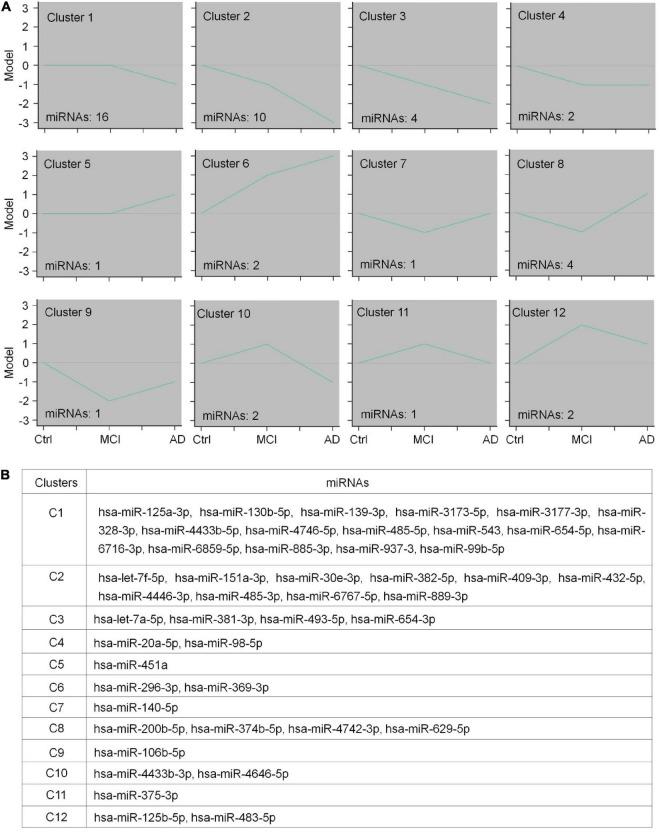
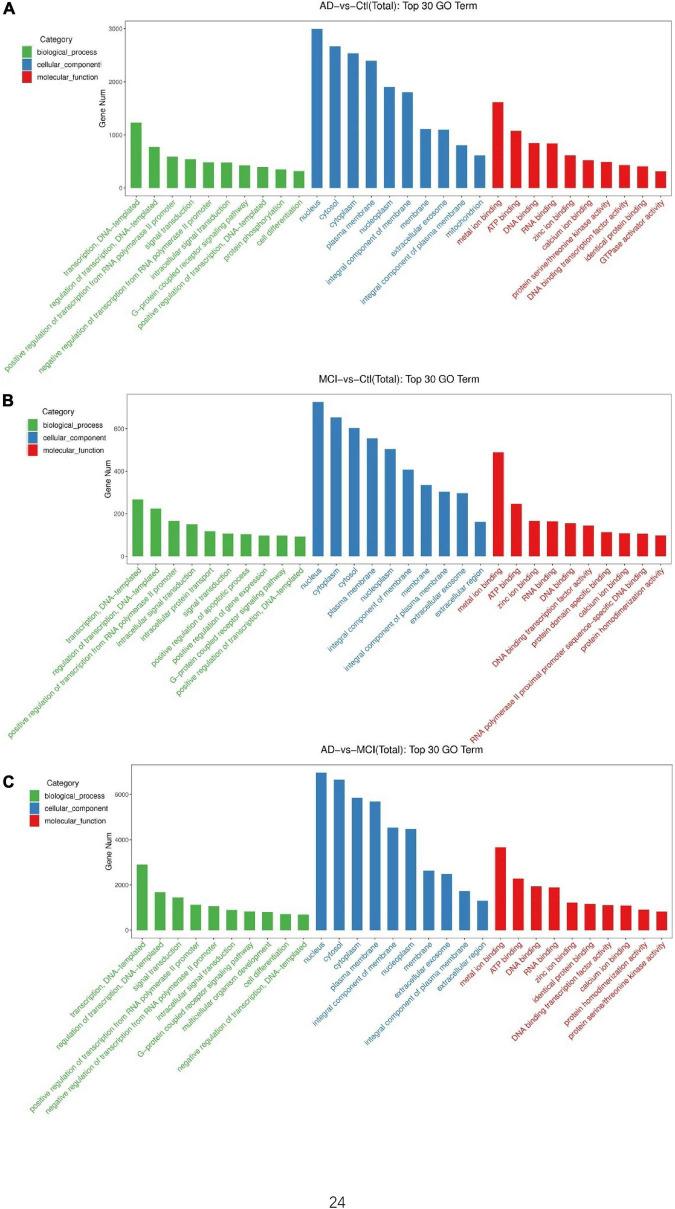
The pathogenesis of Alzheimer's disease (AD) remains unknown till today, hindering the research and development of AD therapeutics and diagnostics. Circulating extracellular vesicles (EVs) can be utilized as a new window to spy upon AD pathogenesis. Altered microRNA profiles were noted in both the cerebrospinal fluid (CSF)- and blood-isolated EVs of AD patients, implying the outstanding potential of circulating EV-containing miRNAs (CEmiRs) to serve as important regulators in AD pathogenesis. Although several CEmiRs were found to play a part in AD, the association of globally altered miRNA profiles in patients' serum-derived EVs with AD pathogenesis remains unclear. In this study, we first investigated the miRNA profile in serum-derived EVs from AD, mild cognitive impairment (MCI) patients, and healthy individuals. We observed differential expression patterns of CEmiRs and classified them into 10 clusters. We identified the predicted targets of these differentially expressed CEmiRs (DECEmiRs) and analyzed their biological functions and interactions. Our study revealed the temporal regulation of complex and precise signaling networks on AD pathogenesis, shedding light on the development of novel therapeutic strategies, including multi-target drug combination for AD treatment.
直至今日,阿尔茨海默病(AD)的发病机制仍不明晰,这阻碍了AD治疗方法和诊断技术的研发。循环细胞外囊泡(EVs)可作为窥探AD发病机制的新窗口。在AD患者的脑脊液(CSF)和血液中分离出的EVs中均发现了微小RNA(miRNA)谱的改变,这意味着循环中含EV的miRNA(CEmiRs)在AD发病机制中作为重要调节因子具有巨大潜力。尽管已发现几种CEmiRs在AD中发挥作用,但患者血清来源的EVs中整体改变的miRNA谱与AD发病机制之间的关联仍不清楚。在本研究中,我们首先调查了AD患者、轻度认知障碍(MCI)患者和健康个体血清来源的EVs中的miRNA谱。我们观察到CEmiRs的差异表达模式,并将它们分为10个簇。我们确定了这些差异表达的CEmiRs(DECEmiRs)的预测靶点,并分析了它们的生物学功能和相互作用。我们的研究揭示了AD发病机制中复杂而精确的信号网络的时间调控,为新治疗策略的开发提供了线索,包括用于AD治疗的多靶点药物联合。

 Zotero 插件