
真核 wobble 碱基 tRNA 脱氨酶 ADAT2/3 进行序列非依赖性底物选择的结构基础。
Structural basis for sequence-independent substrate selection by eukaryotic wobble base tRNA deaminase ADAT2/3.
机构信息
EMBL Grenoble, 71 Avenue des Martyrs, 38042, Grenoble, France.
Department of Microbiology and The Center for RNA Biology, The Ohio State University, Columbus, OH, USA.
出版信息
Nat Commun. 2022 Nov 8;13(1):6737. doi: 10.1038/s41467-022-34441-z.
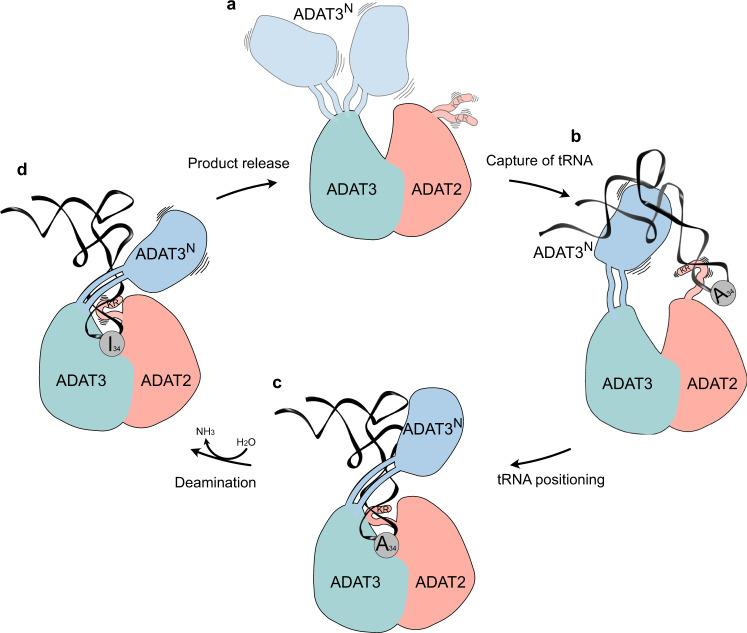
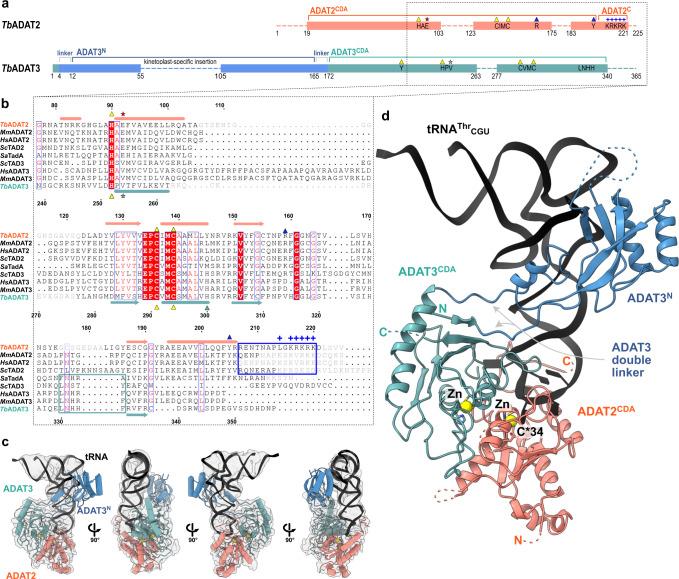
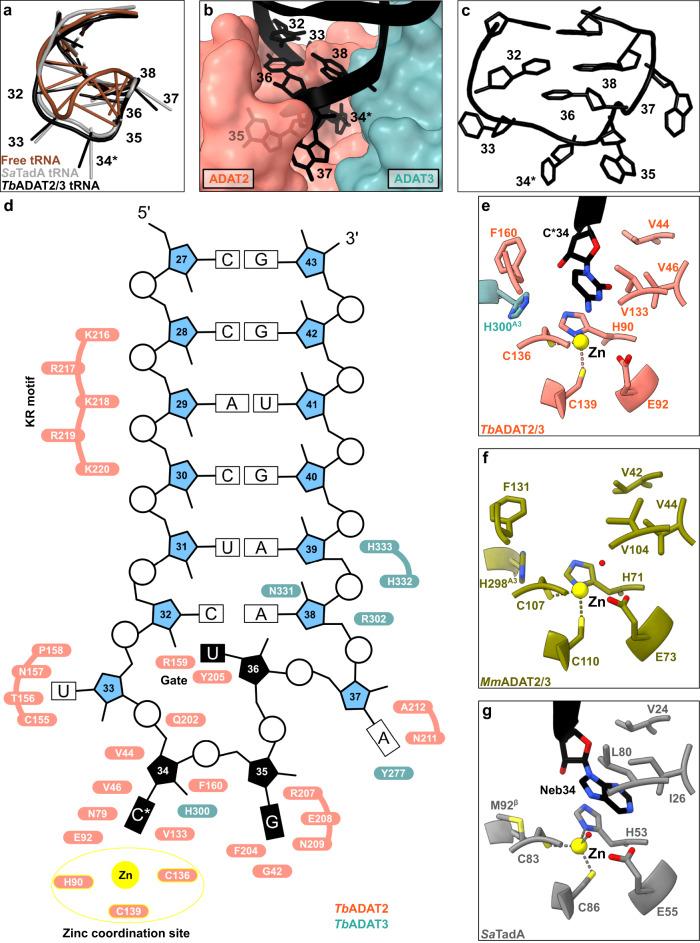
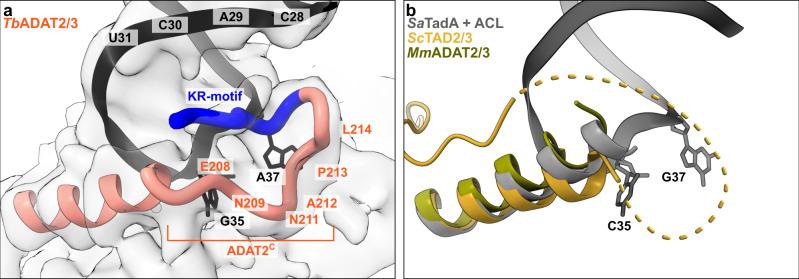
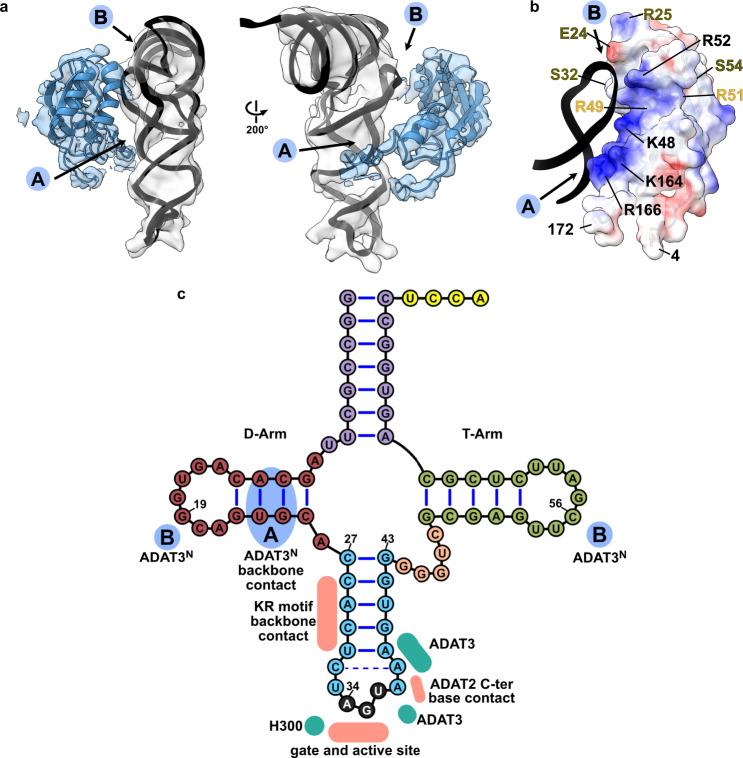
The essential deamination of adenosine A to inosine at the wobble base is the individual tRNA modification with the greatest effects on mRNA decoding, empowering a single tRNA to translate three different codons. To date, many aspects of how eukaryotic deaminases specifically select their multiple substrates remain unclear. Here, using cryo-EM, we present the structure of a eukaryotic ADAT2/3 deaminase bound to a full-length tRNA, revealing that the enzyme distorts the anticodon loop, but in contrast to the bacterial enzymes, selects its substrate via sequence-independent contacts of eukaryote-acquired flexible or intrinsically unfolded motifs distal from the conserved catalytic core. A gating mechanism for substrate entry to the active site is identified. Our multi-step tRNA recognition model yields insights into how RNA editing by A deamination evolved, shaped the genetic code, and directly impacts the eukaryotic proteome.
腺苷 A 在摆动碱基处发生必需的脱氨作用,形成次黄嘌呤,这是对 mRNA 解码影响最大的单个 tRNA 修饰,使单个 tRNA 能够翻译三个不同的密码子。迄今为止,关于真核脱氨酶如何特异性选择其多种底物的许多方面仍不清楚。在这里,我们使用冷冻电镜技术展示了一个真核 ADAT2/3 脱氨酶与全长 tRNA 结合的结构,揭示了该酶扭曲了反密码子环,但与细菌酶不同的是,它通过与保守催化核心远端的真核获得的柔性或固有无规卷曲模体的序列非依赖性接触来选择其底物。鉴定了底物进入活性位点的门控机制。我们的多步骤 tRNA 识别模型深入了解了 A 脱氨作用介导的 RNA 编辑如何进化,塑造遗传密码,并直接影响真核蛋白质组。

 Zotero 插件