
神经退行性变的新见解:炎性细胞因子与血脑屏障。
New insight into neurological degeneration: Inflammatory cytokines and blood-brain barrier.
作者信息
Yang Jie, Ran Mingzi, Li Hongyu, Lin Ye, Ma Kui, Yang Yuguang, Fu Xiaobing, Yang Siming
机构信息
Research Centre for Tissue Repair and Regeneration Affiliated to the Medical Innovation Research Department, PLA General Hospital, PLA Medical College, Beijing, China.
Department of Dermatology, 4th Medical Centre, PLA General Hospital, Beijing, China.
出版信息
Front Mol Neurosci. 2022 Oct 24;15:1013933. doi: 10.3389/fnmol.2022.1013933. eCollection 2022.
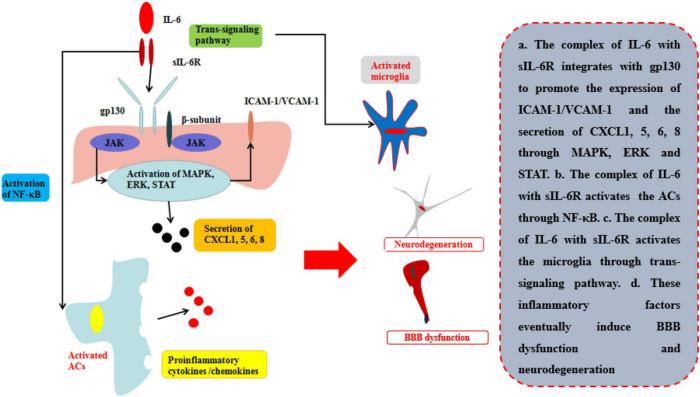
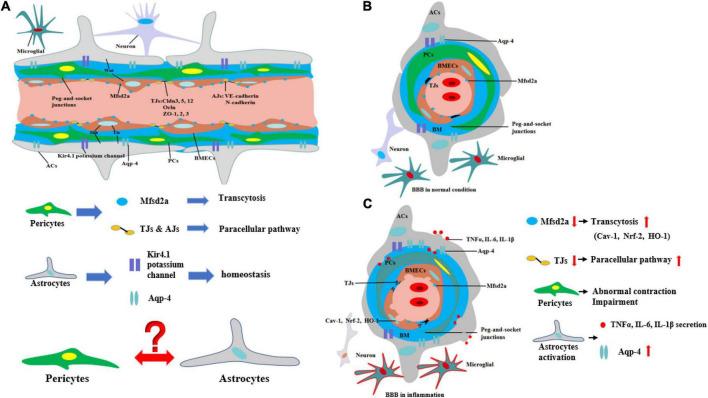
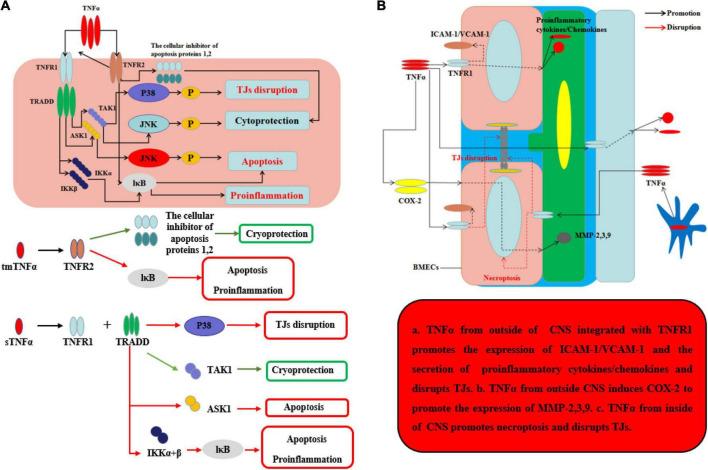
Neurological degeneration after neuroinflammation, such as that resulting from Alzheimer's disease (AD), stroke, multiple sclerosis (MS), and post-traumatic brain injury (TBI), is typically associated with high mortality and morbidity and with permanent cognitive dysfunction, which places a heavy economic burden on families and society. Diagnosing and curing these diseases in their early stages remains a challenge for clinical investigation and treatment. Recent insight into the onset and progression of these diseases highlights the permeability of the blood-brain barrier (BBB). The primary factor that influences BBB structure and function is inflammation, especially the main cytokines including IL-1β, TNFα, and IL-6, the mechanism on the disruption of which are critical component of the aforementioned diseases. Surprisingly, the main cytokines from systematic inflammation can also induce as much worse as from neurological diseases or injuries do. In this review, we will therefore discuss the physiological structure of BBB, the main cytokines including IL-1β, TNFα, IL-6, and their mechanism on the disruption of BBB and recent research about the main cytokines from systematic inflammation inducing the disruption of BBB and cognitive impairment, and we will eventually discuss the need to prevent the disruption of BBB.
神经炎症后的神经退行性变,如阿尔茨海默病(AD)、中风、多发性硬化症(MS)和创伤性脑损伤(TBI)所导致的神经退行性变,通常与高死亡率和高发病率以及永久性认知功能障碍相关,这给家庭和社会带来了沉重的经济负担。在疾病早期对这些疾病进行诊断和治疗仍然是临床研究和治疗面临的挑战。最近对这些疾病的发病和进展的深入了解突出了血脑屏障(BBB)的通透性。影响血脑屏障结构和功能的主要因素是炎症,尤其是主要细胞因子,包括白细胞介素-1β(IL-1β)、肿瘤坏死因子α(TNFα)和白细胞介素-6(IL-6),其破坏机制是上述疾病的关键组成部分。令人惊讶的是,系统性炎症产生的主要细胞因子也能像神经疾病或损伤产生的细胞因子一样,导致同样严重的破坏。因此,在本综述中,我们将讨论血脑屏障的生理结构、包括IL-1β、TNFα、IL-6在内的主要细胞因子及其对血脑屏障的破坏机制,以及关于系统性炎症产生的主要细胞因子导致血脑屏障破坏和认知障碍的最新研究,最终我们将讨论预防血脑屏障破坏的必要性。


 Zotero 插件