
肠道微生物群与人类健康:探索益生菌属如何调节免疫反应。
Gut microbiome and human health: Exploring how the probiotic genus modulate immune responses.
作者信息
Rastogi Sonakshi, Singh Aditi
机构信息
Amity Institute of Biotechnology, Amity University Uttar Pradesh, Lucknow, India.
出版信息
Front Pharmacol. 2022 Oct 24;13:1042189. doi: 10.3389/fphar.2022.1042189. eCollection 2022.
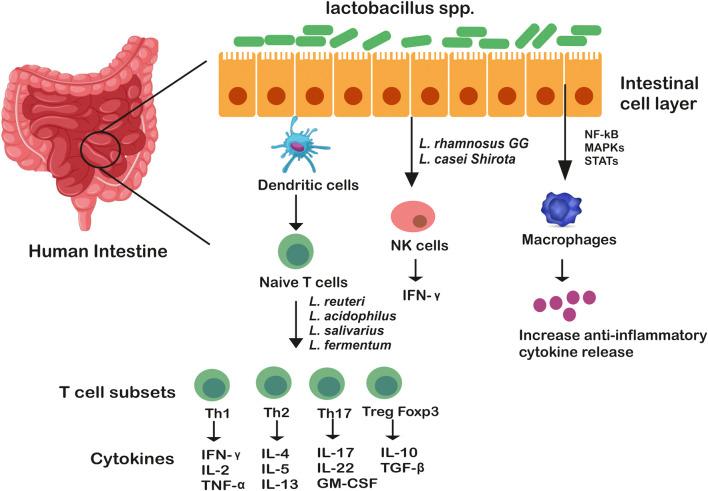
The highest density of microbes resides in human gastrointestinal tract, known as "Gut microbiome". Of note, the members of the genus that belong to phyla Firmicutes are the most important probiotic bacteria of the gut microbiome. These gut-residing species not only communicate with each other but also with the gut epithelial lining to balance the gut barrier integrity, mucosal barrier defence and ameliorate the host immune responses. The human body suffers from several inflammatory diseases affecting the gut, lungs, heart, bone or neural tissues. Mounting evidence supports the significant role of spp. and their components (such as metabolites, peptidoglycans, and/or surface proteins) in modulatingimmune responses, primarily through exchange of immunological signals between gastrointestinal tract and distant organs. This bidirectional crosstalk which is mediated by spp. promotes anti-inflammatory response, thereby supporting the improvement of symptoms pertaining to asthma, chronic obstructive pulmonary disease (COPD), neuroinflammatory diseases (such as multiple sclerosis, alzheimer's disease, parkinson's disease), cardiovascular diseases, inflammatory bowel disease (IBD) and chronic infections in patients. The metabolic disorders, obesity and diabetes are characterized by a low-grade inflammation. Genus alleviates metabolic disorders by regulating the oxidative stress response and inflammatory pathways. Osteoporosis is also associated with bone inflammation and resorption. The spp. and their metabolites act as powerful immune cell controllers and exhibit a regulatory role in bone resorption and formation, supporting bone health. Thus, this review demonstrated the mechanisms and summarized the evidence of the benefit of spp. in alleviating inflammatory diseases pertaining to different organs from animal and clinical trials. The present narrative review explores in detail the complex interactions between the gut-dwelling spp. and the immune components in distant organs to promote host's health.
微生物密度最高的部位存在于人类胃肠道,即所谓的“肠道微生物群”。值得注意的是,属于厚壁菌门的该属成员是肠道微生物群中最重要的益生菌。这些肠道内的物种不仅彼此相互交流,还与肠道上皮内层进行沟通,以平衡肠道屏障完整性、黏膜屏障防御并改善宿主免疫反应。人体会患上多种影响肠道、肺部、心脏、骨骼或神经组织的炎症性疾病。越来越多的证据支持该属物种及其成分(如代谢产物、肽聚糖和/或表面蛋白)在调节免疫反应中发挥重要作用,主要是通过胃肠道与远处器官之间的免疫信号交换。这种由该属物种介导的双向串扰促进抗炎反应,从而有助于改善哮喘、慢性阻塞性肺疾病(COPD)、神经炎症性疾病(如多发性硬化症、阿尔茨海默病、帕金森病)、心血管疾病、炎症性肠病(IBD)患者的症状以及慢性感染。代谢紊乱、肥胖和糖尿病的特征是低度炎症。该属通过调节氧化应激反应和炎症途径来缓解代谢紊乱。骨质疏松症也与骨炎症和骨吸收有关。该属物种及其代谢产物可作为强大的免疫细胞调节剂,并在骨吸收和形成中发挥调节作用,有助于骨骼健康。因此,本综述阐述了其机制,并总结了来自动物和临床试验的该属物种在缓解不同器官炎症性疾病方面有益作用的证据。本叙述性综述详细探讨了肠道内该属物种与远处器官免疫成分之间促进宿主健康的复杂相互作用。

 Zotero 插件