
基于适体的生物传感器和细胞内化 SELEX 技术在诊断和治疗应用中的进展。
Advances in Aptamer-Based Biosensors and Cell-Internalizing SELEX Technology for Diagnostic and Therapeutic Application.
机构信息
Faculty of Biotechnology and Biomolecular Sciences, Universiti Putra Malaysia, Serdang 43400, SGR, Malaysia.
Faculty of Science, Universiti Putra Malaysia, Serdang 43400, SGR, Malaysia.
出版信息
Biosensors (Basel). 2022 Oct 25;12(11):922. doi: 10.3390/bios12110922.
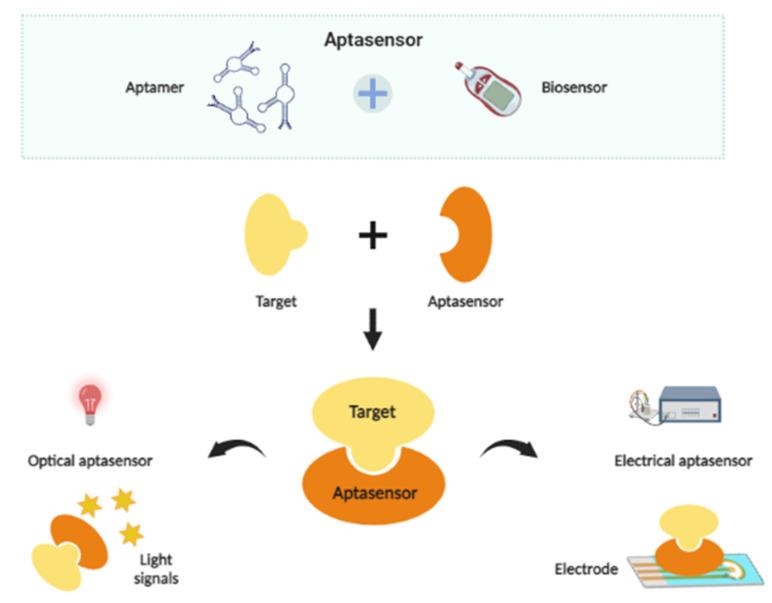
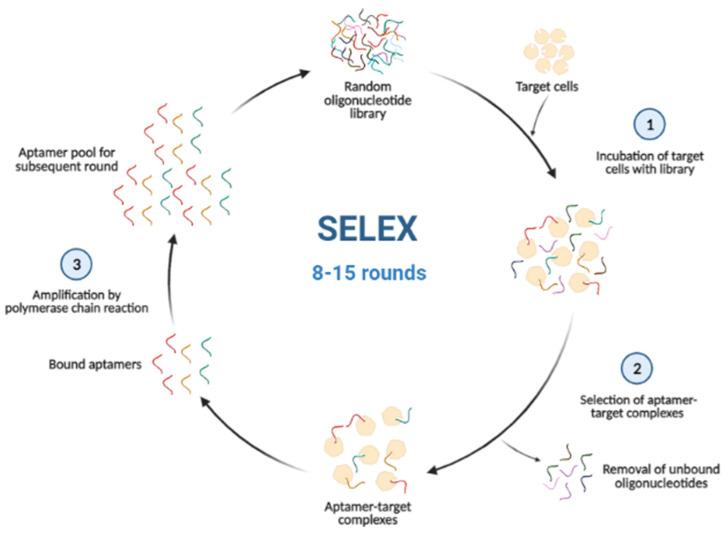
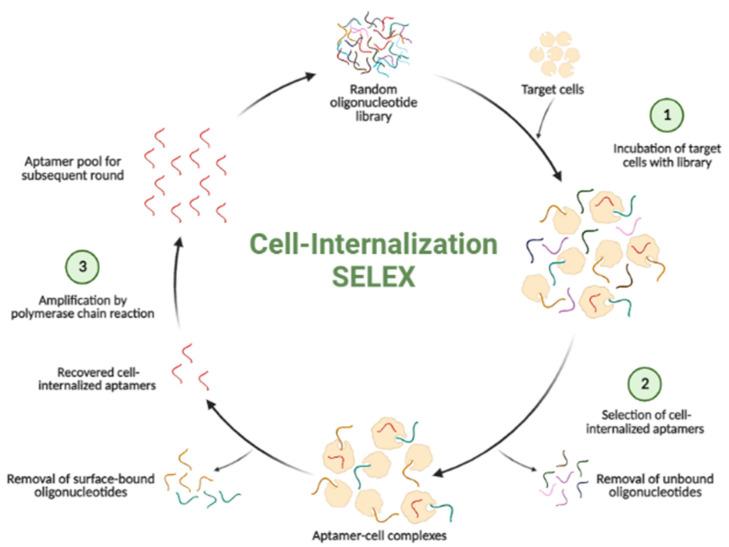
Aptamers are a group of synthetic single-stranded nucleic acids. They are generated from a random library of single-stranded DNA or RNA by a technology named systematic evolution of ligands by exponential enrichment (SELEX). SELEX is a repetitive process to select and identify suitable aptamers that show high affinity and specificity towards target cells. Great strides have been achieved in the design, construction, and use of aptamers up to this point. However, only a small number of aptamer-based applications have achieved widespread commercial and clinical acceptance. Additionally, finding more effective ways to acquire aptamers with high affinity remains a challenge. Therefore, it is crucial to thoroughly examine the existing dearth and advancement in aptamer-related technologies. This review focuses on aptamers that are generated by SELEX to detect pathogenic microorganisms and mammalian cells, as well as in cell-internalizing SELEX for diagnostic and therapeutic purposes. The development of novel aptamer-based biosensors using optical and electrical methods for microbial detection is reported. The applications and limitations of aptamers are also discussed.
适配体是一组合成的单链核酸。它们是通过一种名为指数富集的配体系统进化(SELEX)的技术从单链 DNA 或 RNA 的随机文库中产生的。SELEX 是一个重复的过程,用于选择和鉴定对靶细胞具有高亲和力和特异性的合适适配体。在这一点上,适配体的设计、构建和使用已经取得了巨大的进展。然而,只有少数基于适配体的应用已经获得了广泛的商业和临床认可。此外,寻找更有效的方法来获得具有高亲和力的适配体仍然是一个挑战。因此,彻底检查现有的缺乏和进展在适配体相关技术是至关重要的。这篇综述集中在通过 SELEX 产生的适配体,用于检测致病微生物和哺乳动物细胞,以及用于诊断和治疗目的的细胞内化 SELEX。报告了使用光学和电学方法用于微生物检测的新型基于适配体的生物传感器的开发。还讨论了适配体的应用和局限性。
 Zotero 插件