
蛋白磷酸酶调控肝癌发生发展中的肝微环境。
Protein phosphatases regulate the liver microenvironment in the development of hepatocellular carcinoma.
机构信息
Department of Molecular Cell Biology, Samsung Medical Center, Sungkyunkwan University School of Medicine, Suwon, 16419, Republic of Korea.
Department of Health Sciences and Technology, SAIHST, Sungkyunkwan University, Seoul, 06351, Republic of Korea.
出版信息
Exp Mol Med. 2022 Nov;54(11):1799-1813. doi: 10.1038/s12276-022-00883-0. Epub 2022 Nov 15.
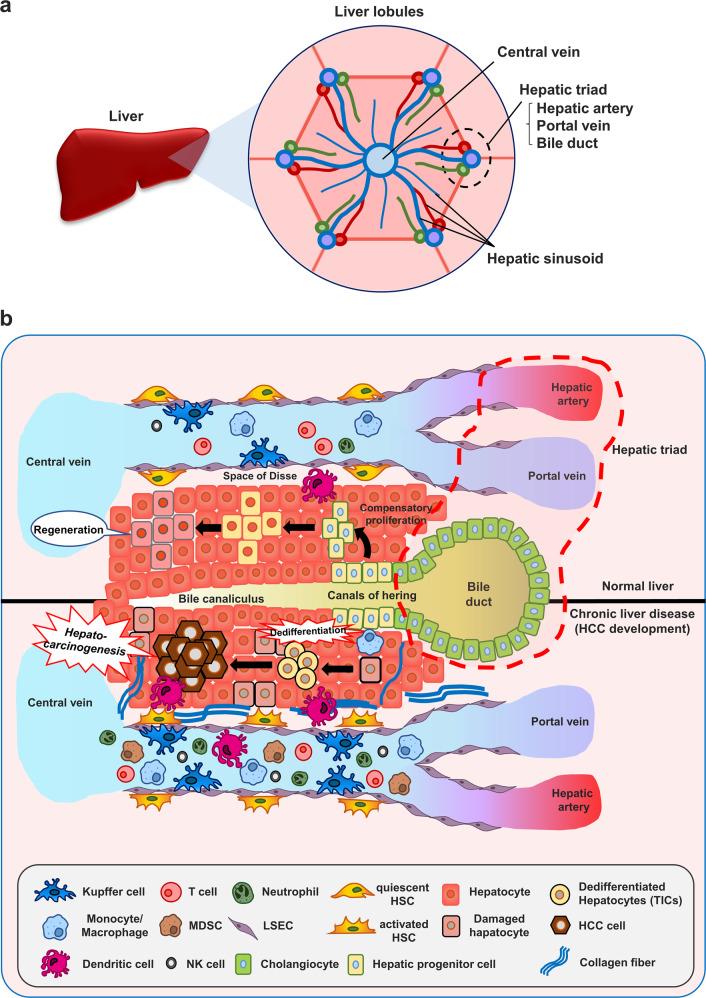
The liver is a complicated heterogeneous organ composed of different cells. Parenchymal cells called hepatocytes and various nonparenchymal cells, including immune cells and stromal cells, are distributed in liver lobules with hepatic architecture. They interact with each other to compose the liver microenvironment and determine its characteristics. Although the liver microenvironment maintains liver homeostasis and function under healthy conditions, it also shows proinflammatory and profibrogenic characteristics that can induce the progression of hepatitis and hepatic fibrosis, eventually changing to a protumoral microenvironment that contributes to the development of hepatocellular carcinoma (HCC). According to recent studies, phosphatases are involved in liver diseases and HCC development by regulating protein phosphorylation in intracellular signaling pathways and changing the activities and characteristics of liver cells. Therefore, this review aims to highlight the importance of protein phosphatases in HCC development and in the regulation of the cellular components in the liver microenvironment and to show their significance as therapeutic targets.
肝脏是一个复杂的异质器官,由不同的细胞组成。实质细胞(如肝细胞)和各种非实质细胞(如免疫细胞和基质细胞)分布在肝小叶中,构成了肝脏的组织结构。它们相互作用,构成了肝脏的微环境,并决定了其特征。尽管肝脏微环境在健康状态下维持着肝脏的内稳态和功能,但它也表现出促炎和促纤维化的特征,可诱导肝炎和肝纤维化的进展,最终转变为有利于肝细胞癌(HCC)发展的促肿瘤微环境。根据最近的研究,磷酸酶通过调节细胞内信号通路中的蛋白质磷酸化以及改变肝细胞的活性和特征,参与肝脏疾病和 HCC 的发生发展。因此,本综述旨在强调蛋白磷酸酶在 HCC 发展以及调节肝脏微环境中细胞成分方面的重要性,并展示它们作为治疗靶点的意义。


 Zotero 插件