
SARS-CoV-2 木瓜蛋白酶样蛋白酶的氨基酸变异对药物结合有影响。
Amino acid variants of SARS-CoV-2 papain-like protease have impact on drug binding.
机构信息
Centre of New Technologies, University of Warsaw, Warsaw, Poland.
Department of Drug Chemistry, Faculty of Pharmacy, Medical University of Warsaw, Warsaw, Poland.
出版信息
PLoS Comput Biol. 2022 Nov 21;18(11):e1010667. doi: 10.1371/journal.pcbi.1010667. eCollection 2022 Nov.
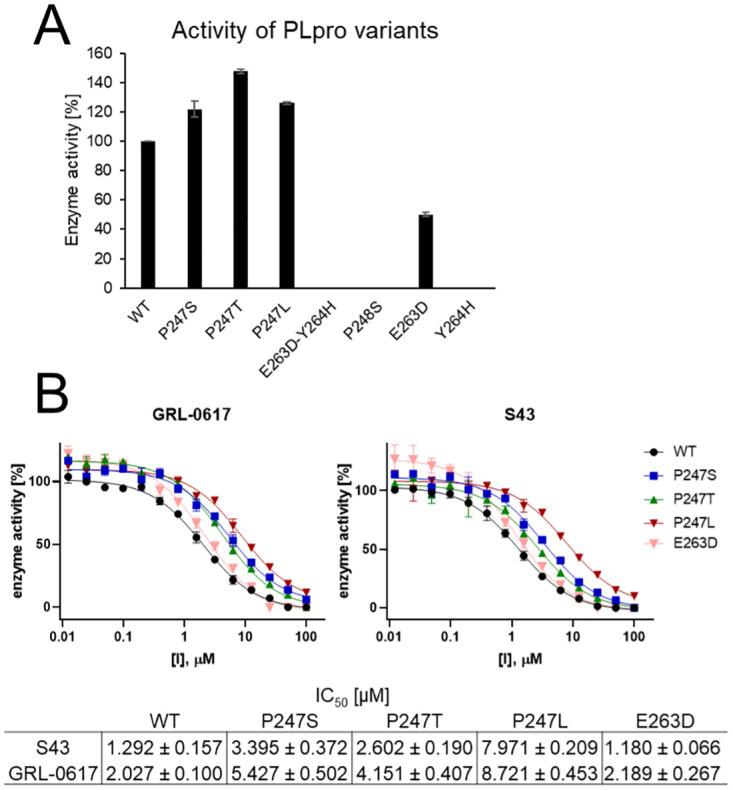
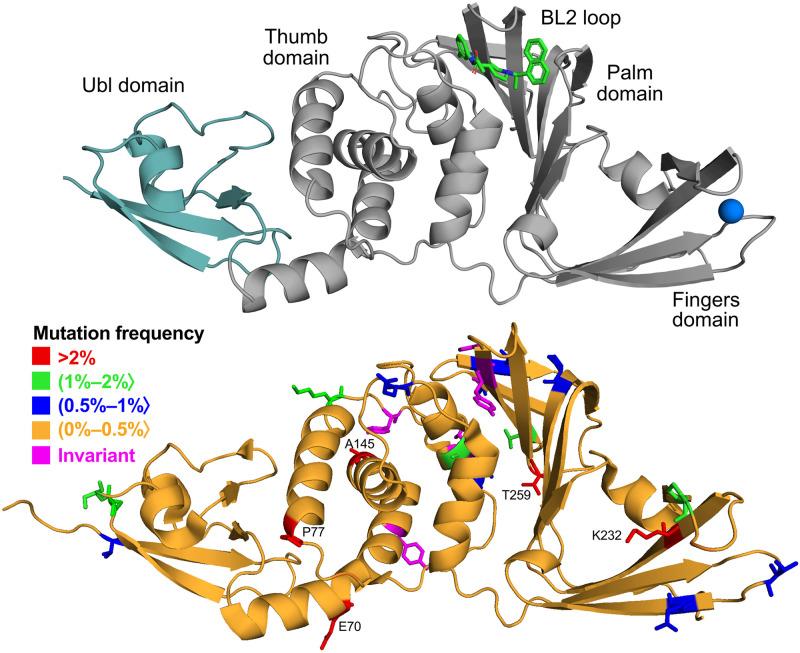
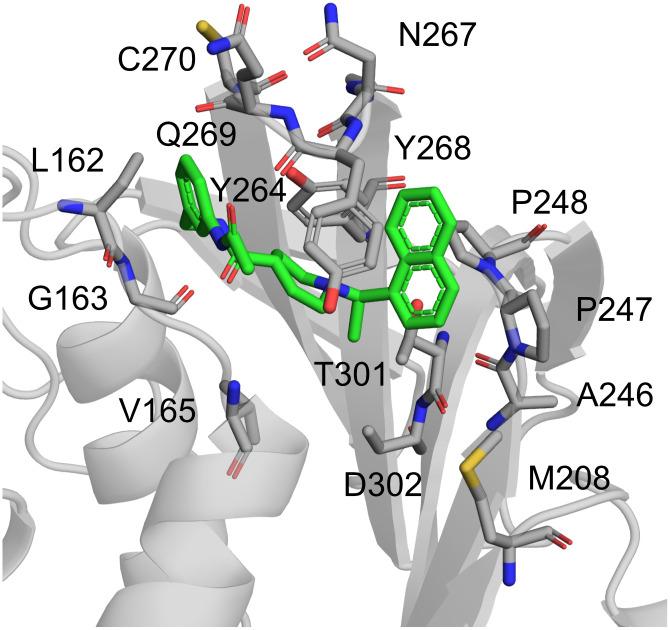
The novel severe acute respiratory syndrome coronavirus 2 (SARS-CoV-2) has caused both a health and economic crisis around the world. Its papain-like protease (PLpro) is one of the protein targets utilized in designing new drugs that would aid vaccines in the fight against the virus. Although there are already several potential candidates for a good inhibitor of this protein, the degree of variability of the protein itself is not taken into account. As an RNA virus, SARS-CoV-2 can mutate to a high degree, but PLpro variability has not been studied to date. Based on sequence data available in databases, we analyzed the mutational potential of this protein. We focused on the effect of observed mutations on inhibitors' binding mode and their efficacy as well as protein's activity. Our analysis identifies five mutations that should be monitored and included in the drug design process: P247S, E263D-Y264H and T265A-Y268C.
新型严重急性呼吸综合征冠状病毒 2(SARS-CoV-2)在全球范围内引发了健康和经济危机。其木瓜样蛋白酶(PLpro)是用于设计新药物的蛋白质靶标之一,这些药物将有助于疫苗对抗该病毒。尽管已经有几种针对这种蛋白质的潜在抑制剂候选物,但该蛋白质本身的变异性并未被考虑在内。作为一种 RNA 病毒,SARS-CoV-2 可以高度突变,但迄今为止尚未对 PLpro 的变异性进行研究。基于数据库中可用的序列数据,我们分析了该蛋白质的突变潜力。我们专注于观察到的突变对抑制剂结合模式及其效力以及蛋白质活性的影响。我们的分析确定了五个应监测并包含在药物设计过程中的突变:P247S、E263D-Y264H 和 T265A-Y268C。

 Zotero 插件